Overview
Digital lending platform with e-KYC for an NBFC: loan applications in an app, video KYC, AI document checks, credit rules, e-sign and e-NACH repayments.
- Client
- A non-banking finance company (NBFC) in Kolkata
- Industry
- Financial services
- Location
- Kolkata, West Bengal, India
- Year
- 2024
- Duration
- 8 months
At a glance
- The challenge
Loans took days, and borrowers dropped out along the way.
- The rules we designed around
We mapped every step of the loan journey against the RBI's digital lending rules with the NBFC's compliance team before designing anything.
- The borrower journey and KYC in one sitting
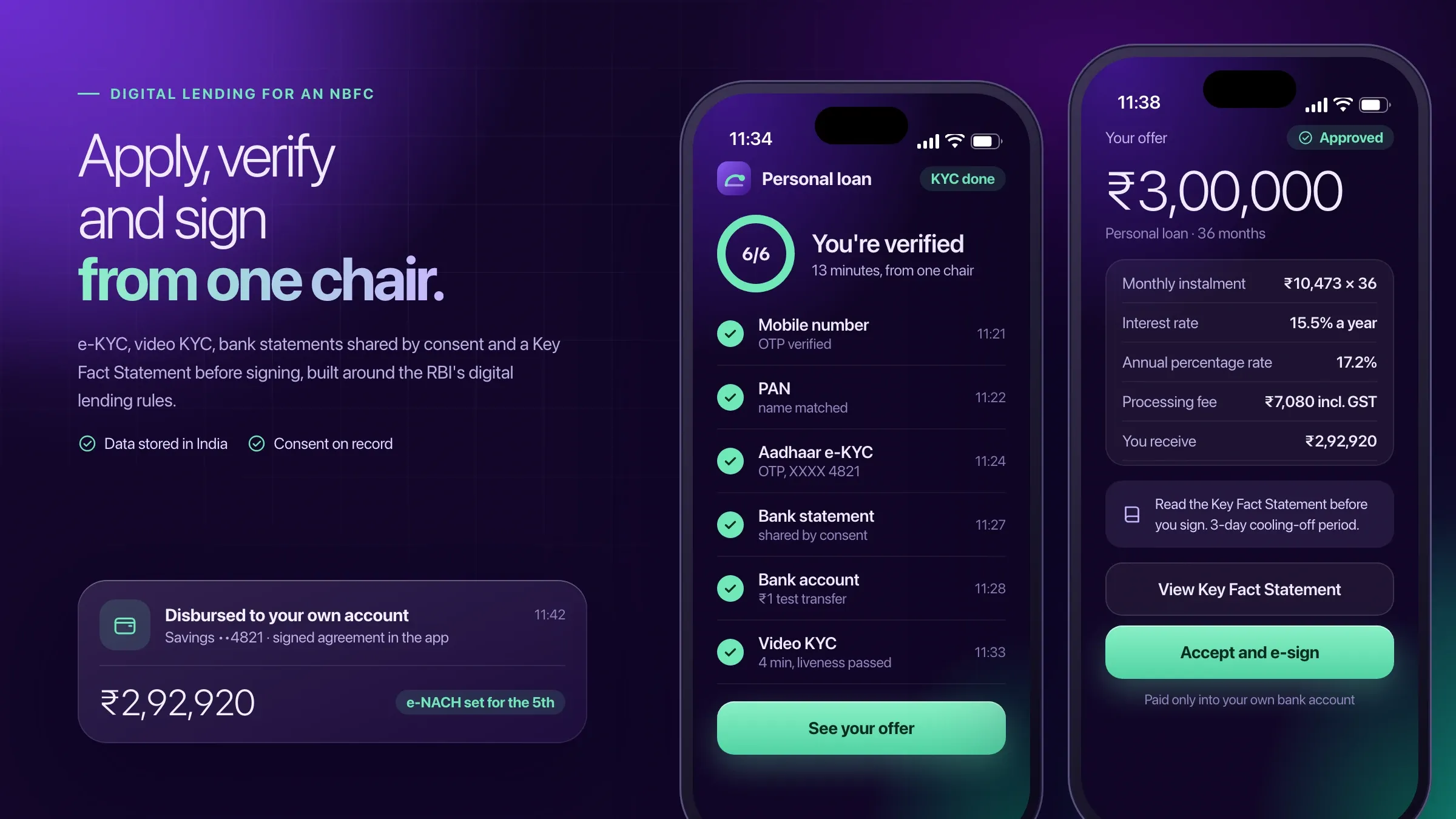
Borrowers apply in the app or on the web.
- Reading documents with AI
Bank statements arrive through the Account Aggregator framework, with the borrower's consent, straight from their bank.
- Credit decisions the team controls
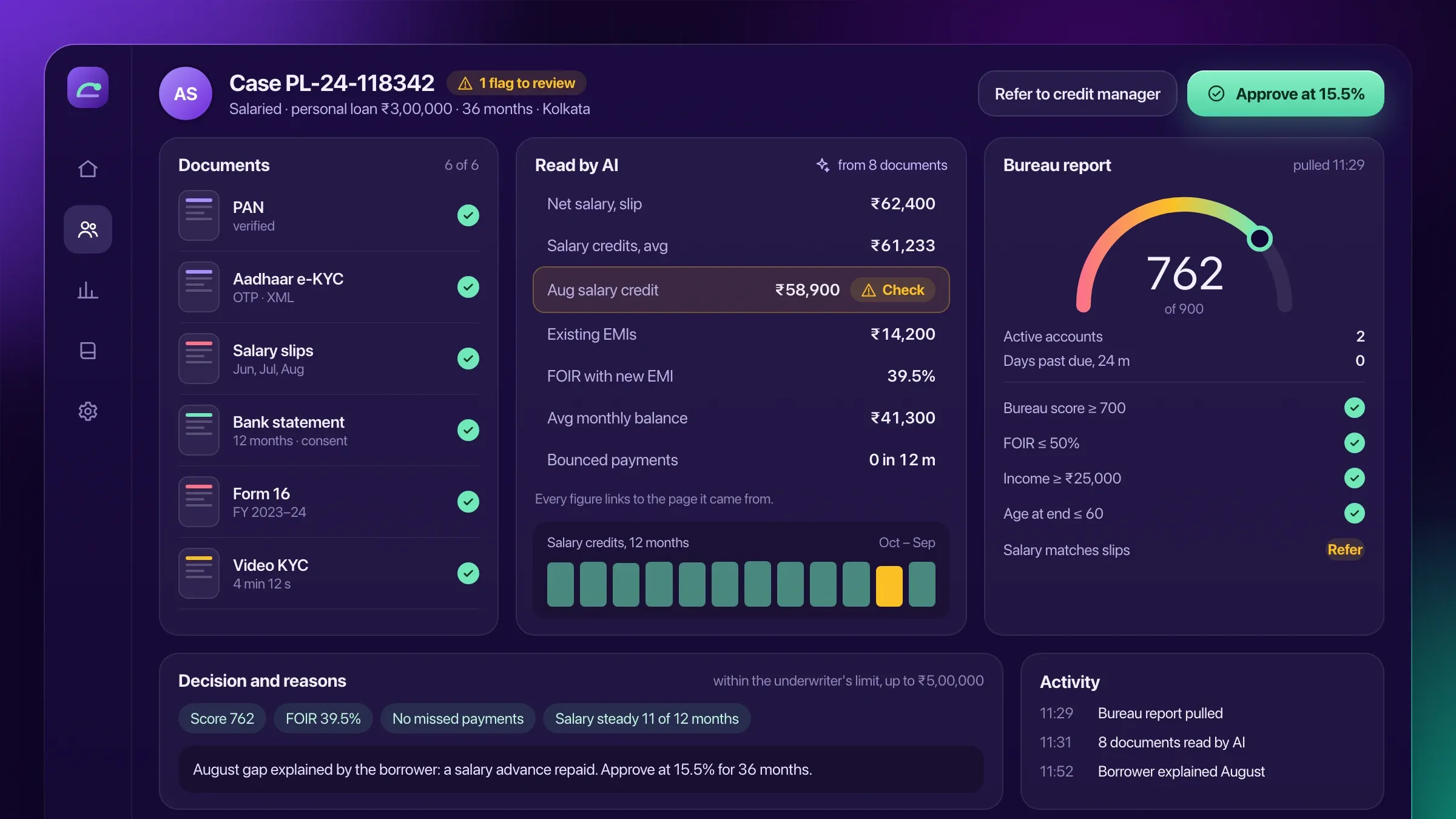
The credit bureau report is pulled automatically.
- Signing, mandate and disbursal
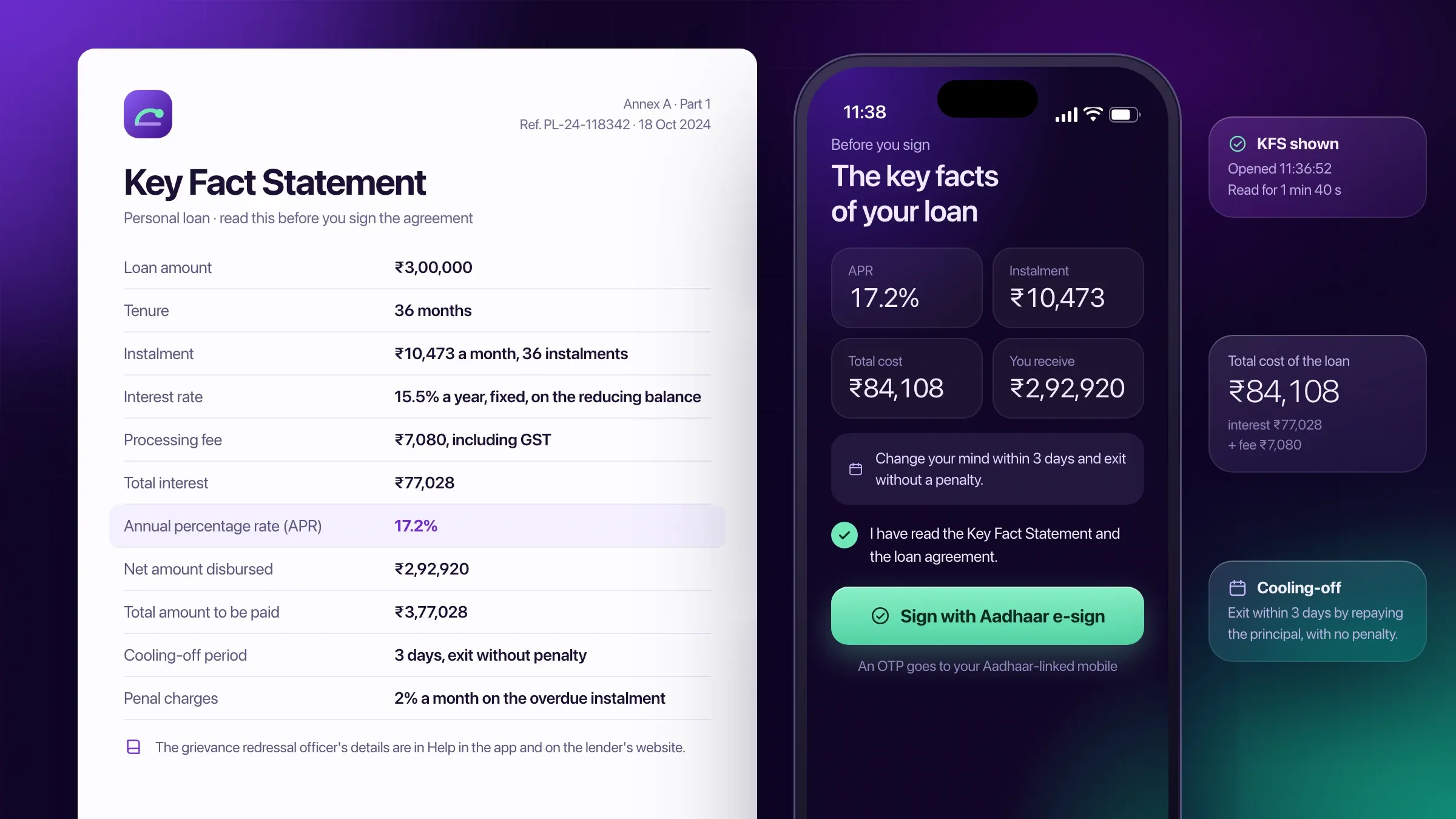
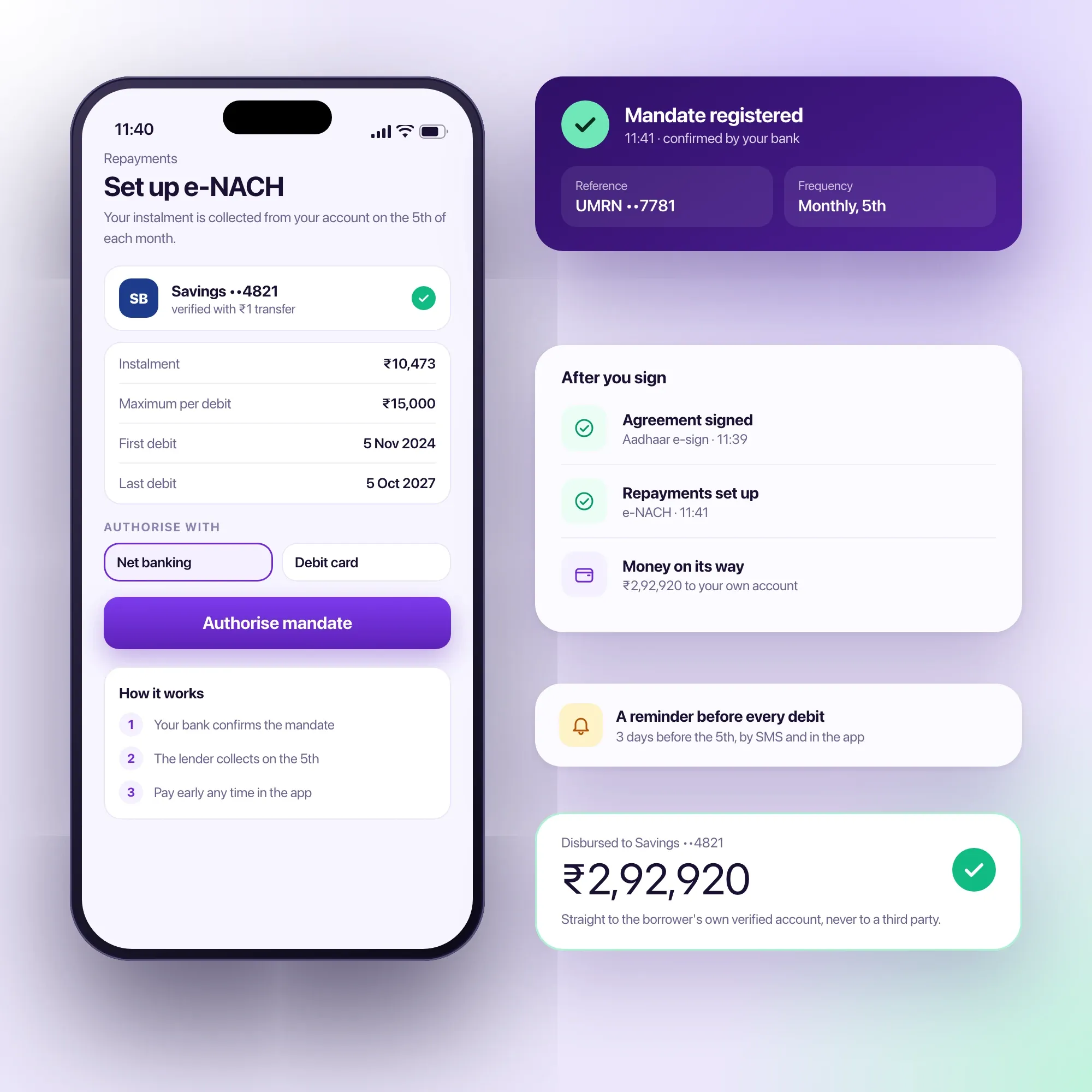
Approved borrowers see their offer and the Key Fact Statement, sign the agreement with Aadhaar e-sign, and set up repayments by e-NACH.
- After disbursal
Loan servicing runs on the same platform.
- Security, data and audit
All borrower data is stored in India, on AWS's Mumbai region, and encrypted in transit and at rest.
- How it's built
The core platform is Java and Spring Boot on PostgreSQL, with Apache Kafka carrying events between services, from KYC to credit to servicing.
- The outcome
Borrowers now apply from their phone, complete KYC in one sitting, and receive money straight in their bank account.
The challenge
Loans took days, and borrowers dropped out along the way. The NBFC lends to small businesses and salaried borrowers across eastern India, through branches and loan agents.
Paper files were couriered to head office. KYC documents and bank statements were checked line by line by hand, and underwriters spent more time typing figures than judging risk. The new journey also had to be digital lending done right: built around the RBI’s digital lending rules from the first screen, not patched afterwards.
The rules we designed around
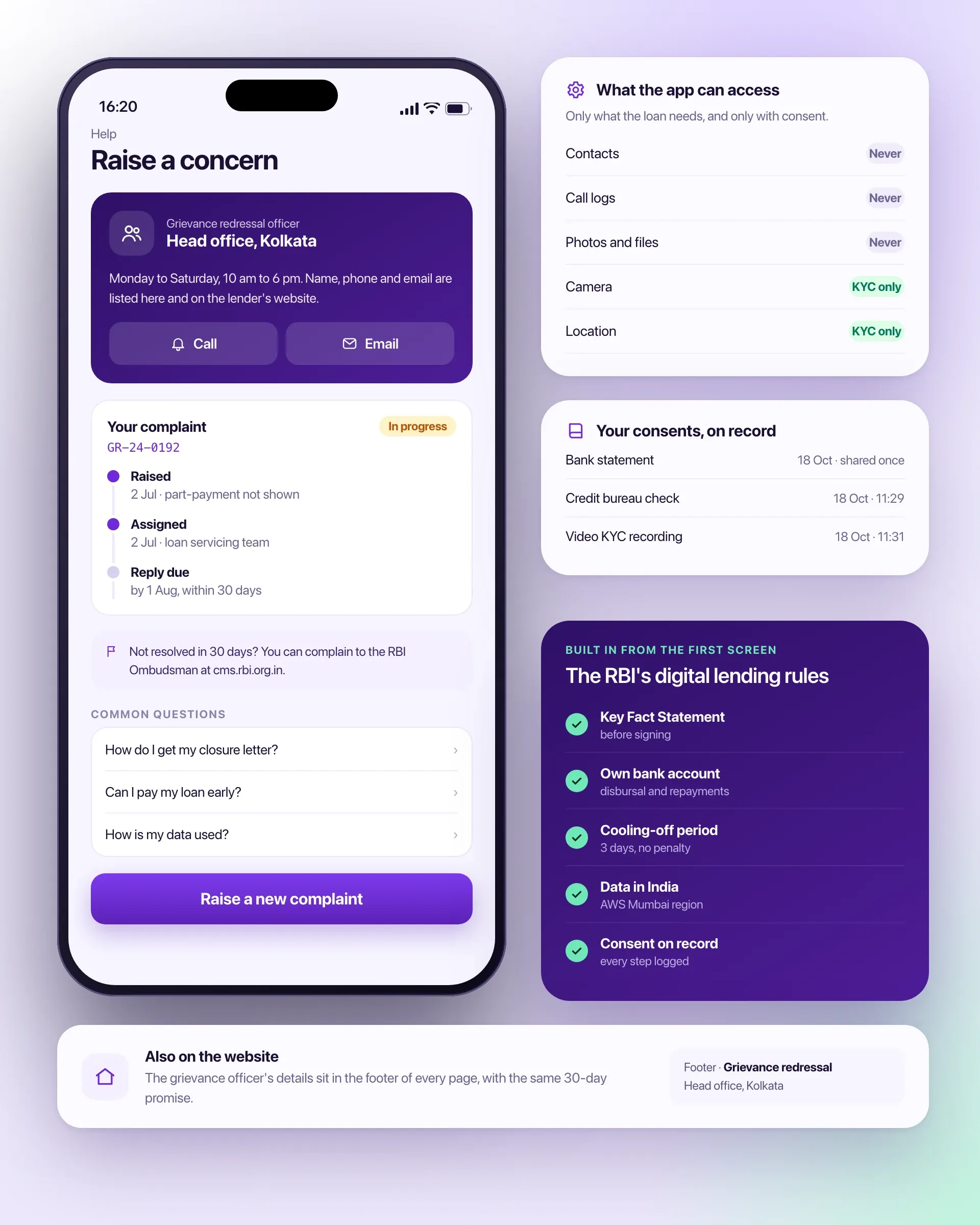
We mapped every step of the loan journey against the RBI’s digital lending rules with the NBFC’s compliance team before designing anything. They shaped the product as much as any user need:
- a Key Fact Statement with the annual percentage rate and total cost, shown before the borrower signs;
- disbursal straight to the borrower’s own bank account, and repayments straight to the lender;
- a cooling-off period in which the borrower can exit the loan without a penalty;
- need-based data, collected with consent, with no access to the phone’s contacts, call logs or photos;
- data stored in India, and every consent and decision kept on record;
- the grievance officer’s details visible in the app and on the website.
The borrower journey and KYC in one sitting
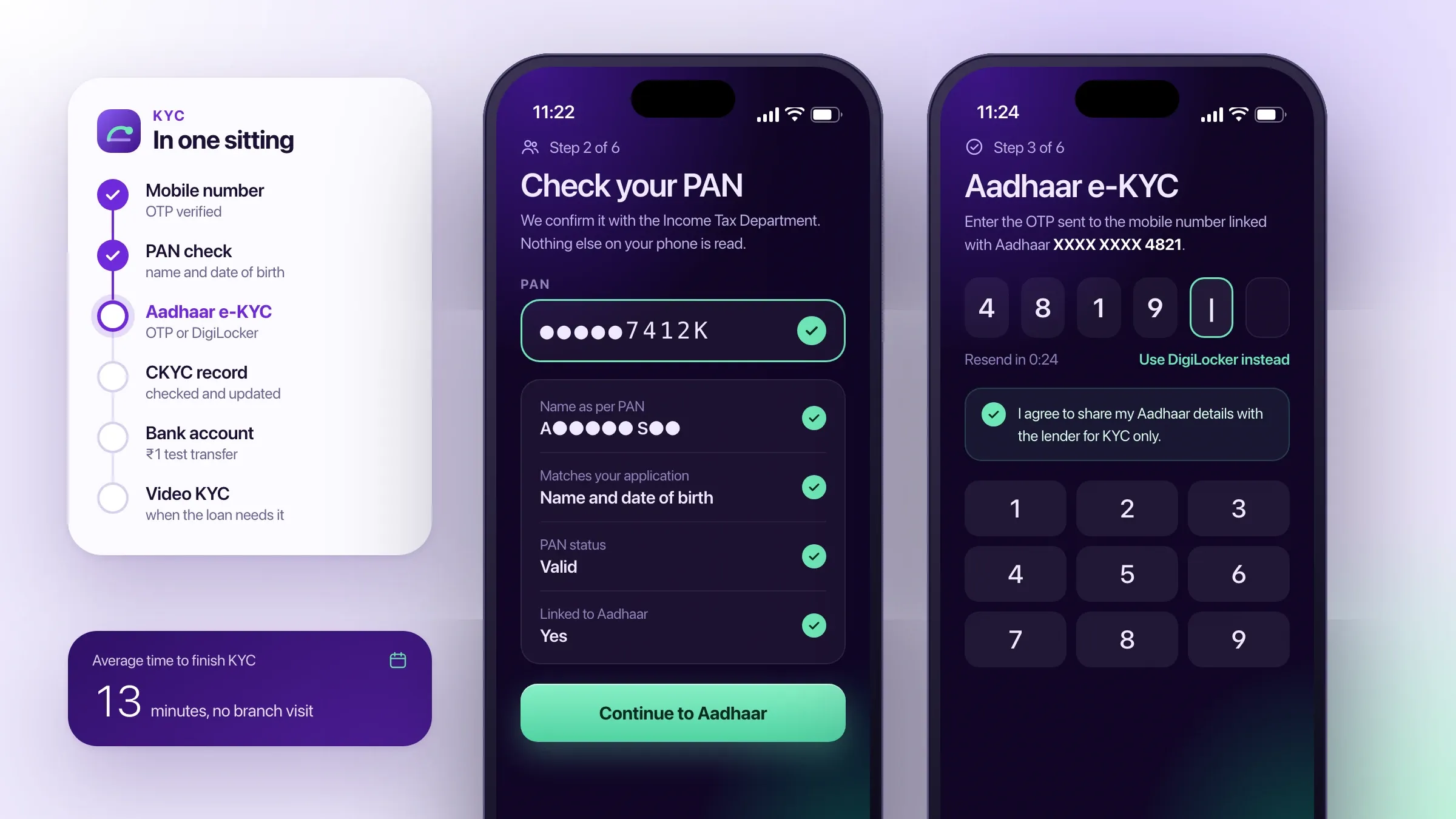
Borrowers apply in the app or on the web. They verify their mobile number, enter their PAN, and complete e-KYC through Aadhaar OTP or DigiLocker. Their CKYC record is checked and updated, and their bank account is verified with a small test transfer before any money moves.
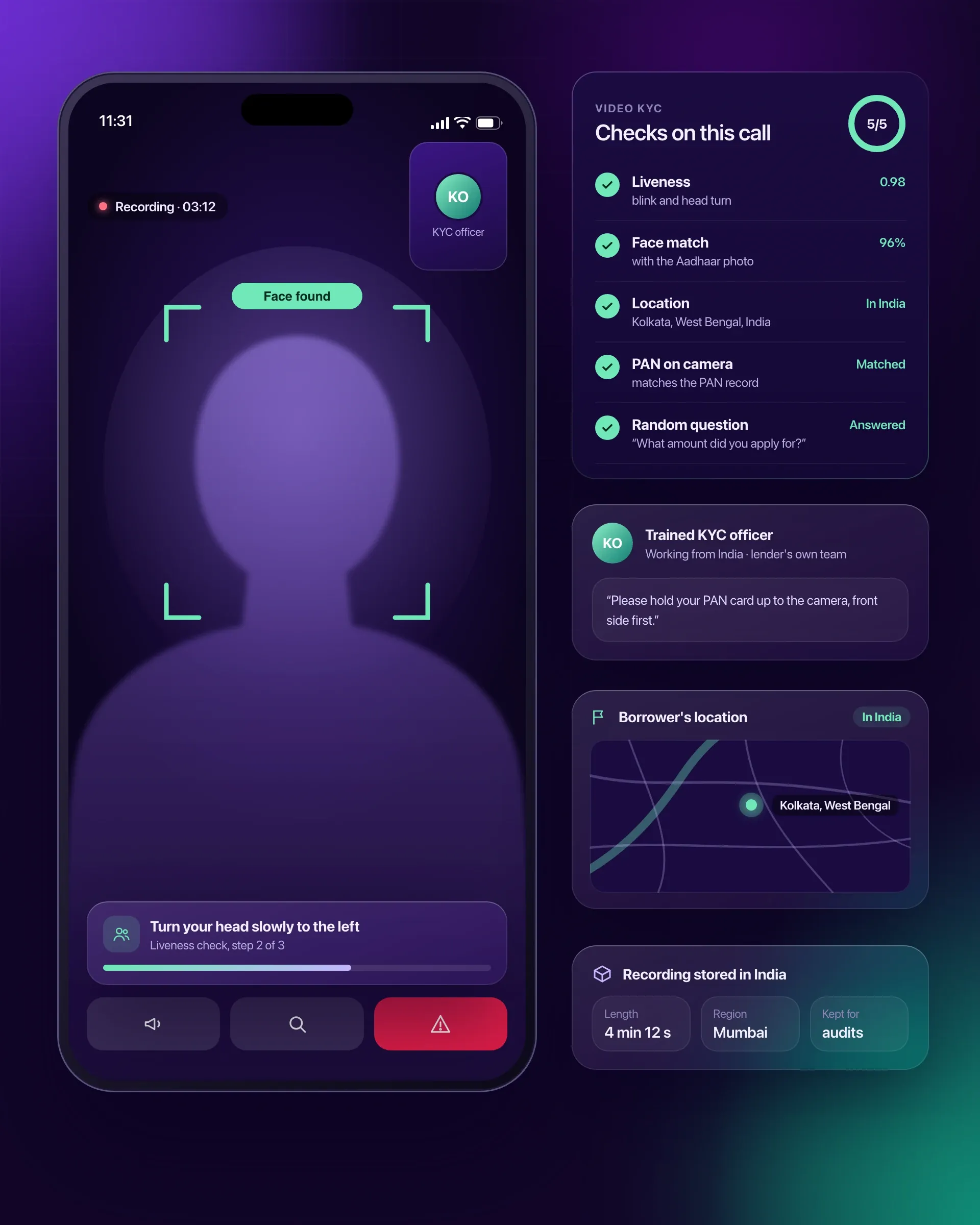
Where the loan needs it, video KYC follows in the same sitting: a live call with a trained agent in India, with liveness and face-match checks, a location check, and a random question to confirm the borrower is present. Most borrowers finish KYC without leaving their chair.
Reading documents with AI
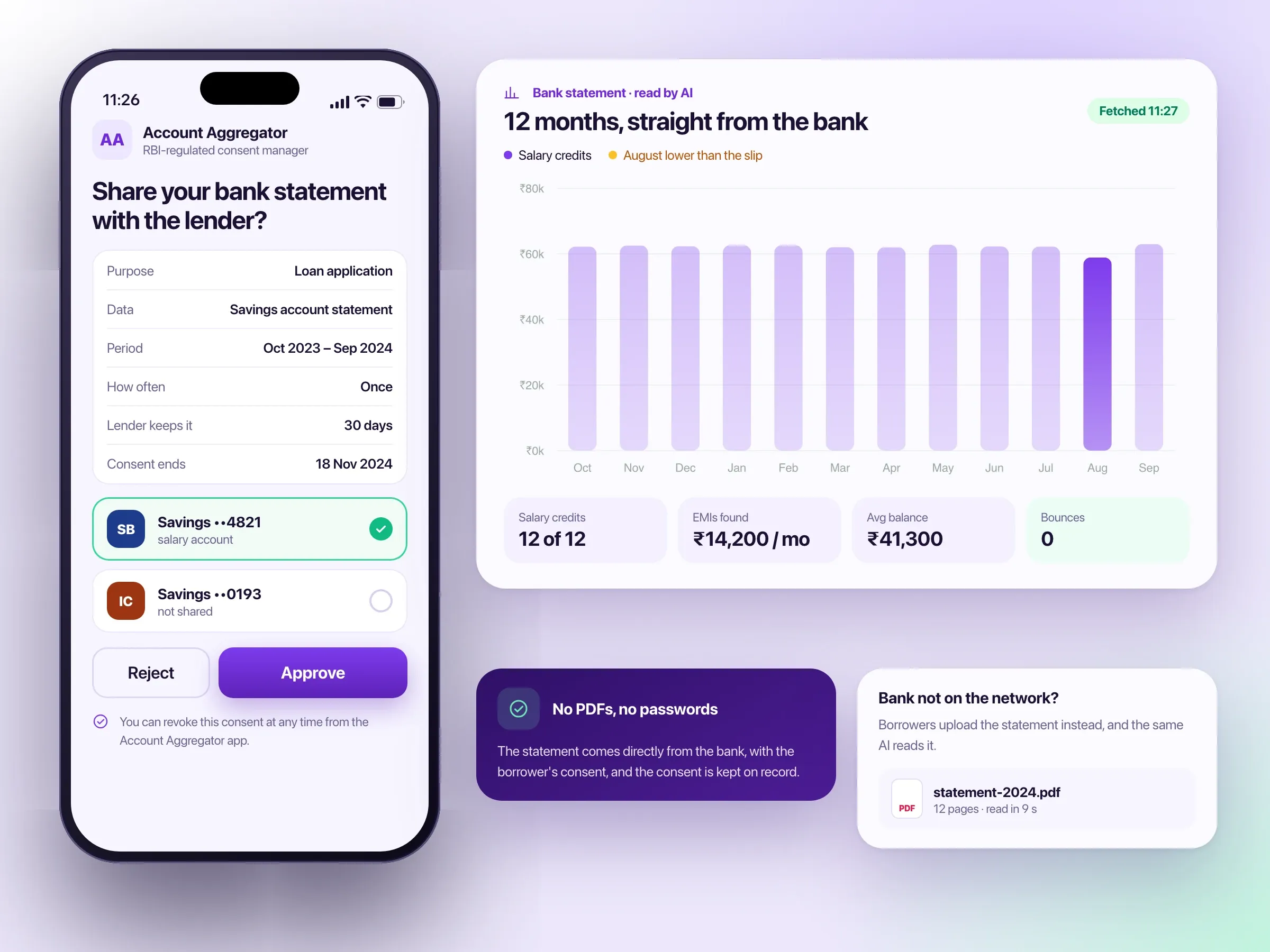
Bank statements arrive through the Account Aggregator framework, with the borrower’s consent, straight from their bank. Where that isn’t possible, borrowers upload them.
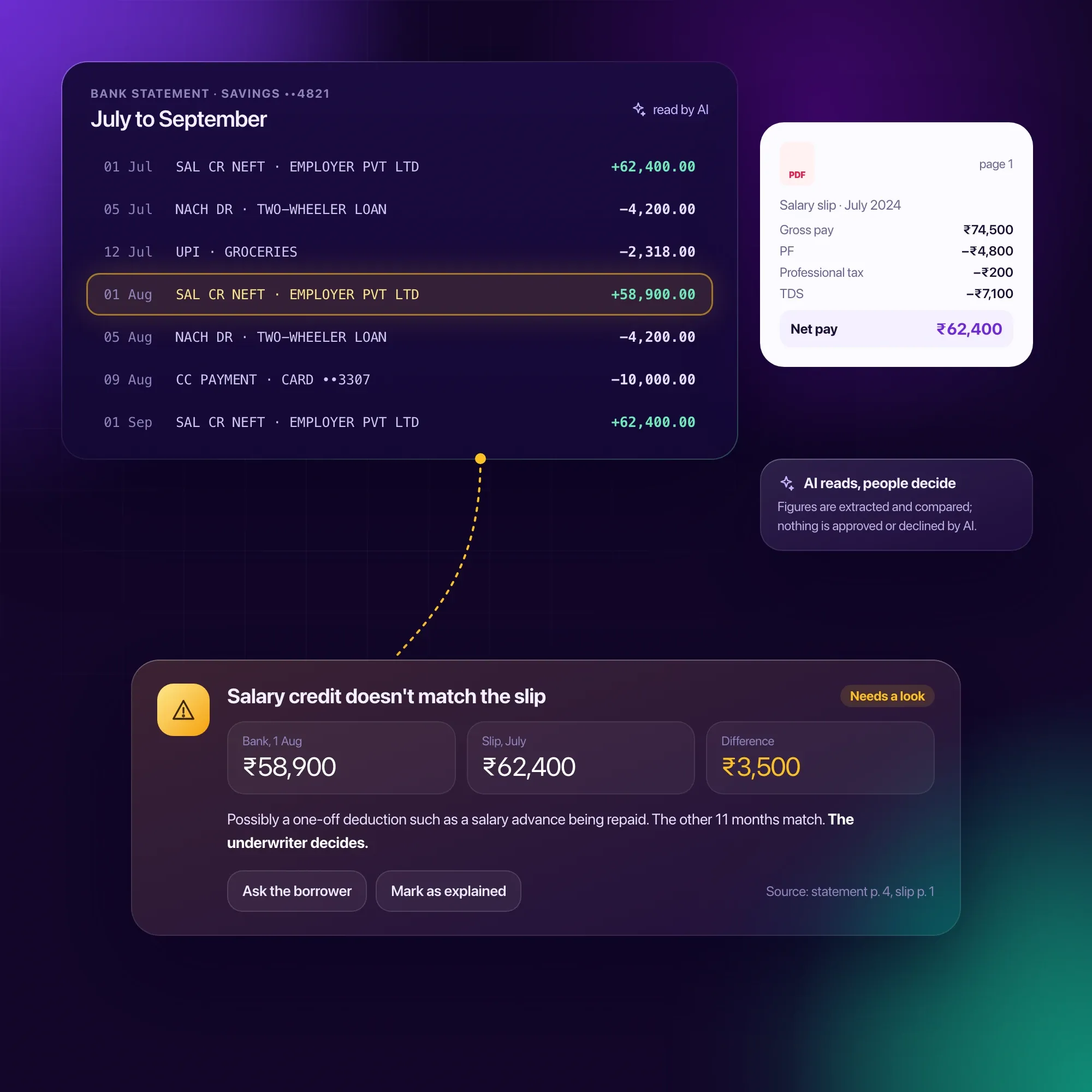
AI then reads statements, salary slips, income tax returns and GST returns. It extracts the figures underwriters need, such as income, obligations, bounced payments and turnover, and flags anything that doesn’t match, like a salary credit that differs from the slip. People still decide. AI only removes the data entry and points to what deserves a second look.
Credit decisions the team controls
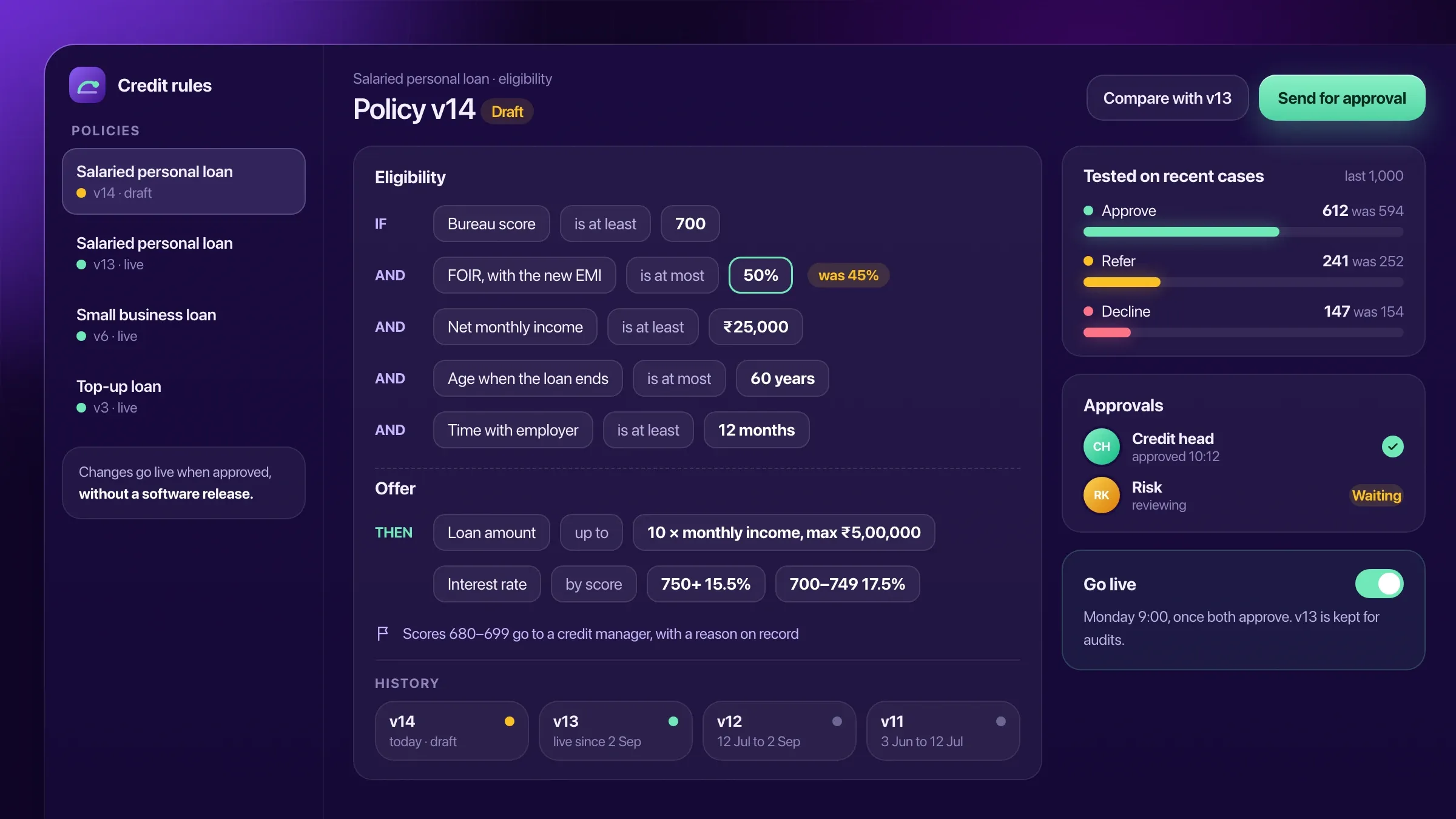
The credit bureau report is pulled automatically. A rules engine that the credit team configures itself runs the scorecards, eligibility and policy checks, and works out the loan amount and terms each applicant qualifies for.
Applications that need judgement go to an underwriter with the whole case on one screen: KYC, documents, extracted figures, bureau report, rule results and flags. Deviations from policy follow an approval matrix, and every decision records its reasons. When the credit team changes a policy, it goes live without waiting for a software release.
Signing, mandate and disbursal
Approved borrowers see their offer and the Key Fact Statement, sign the agreement with Aadhaar e-sign, and set up repayments by e-NACH. The loan is disbursed straight to the borrower’s own bank account, and the borrower receives the signed agreement and repayment schedule in the app.
After disbursal
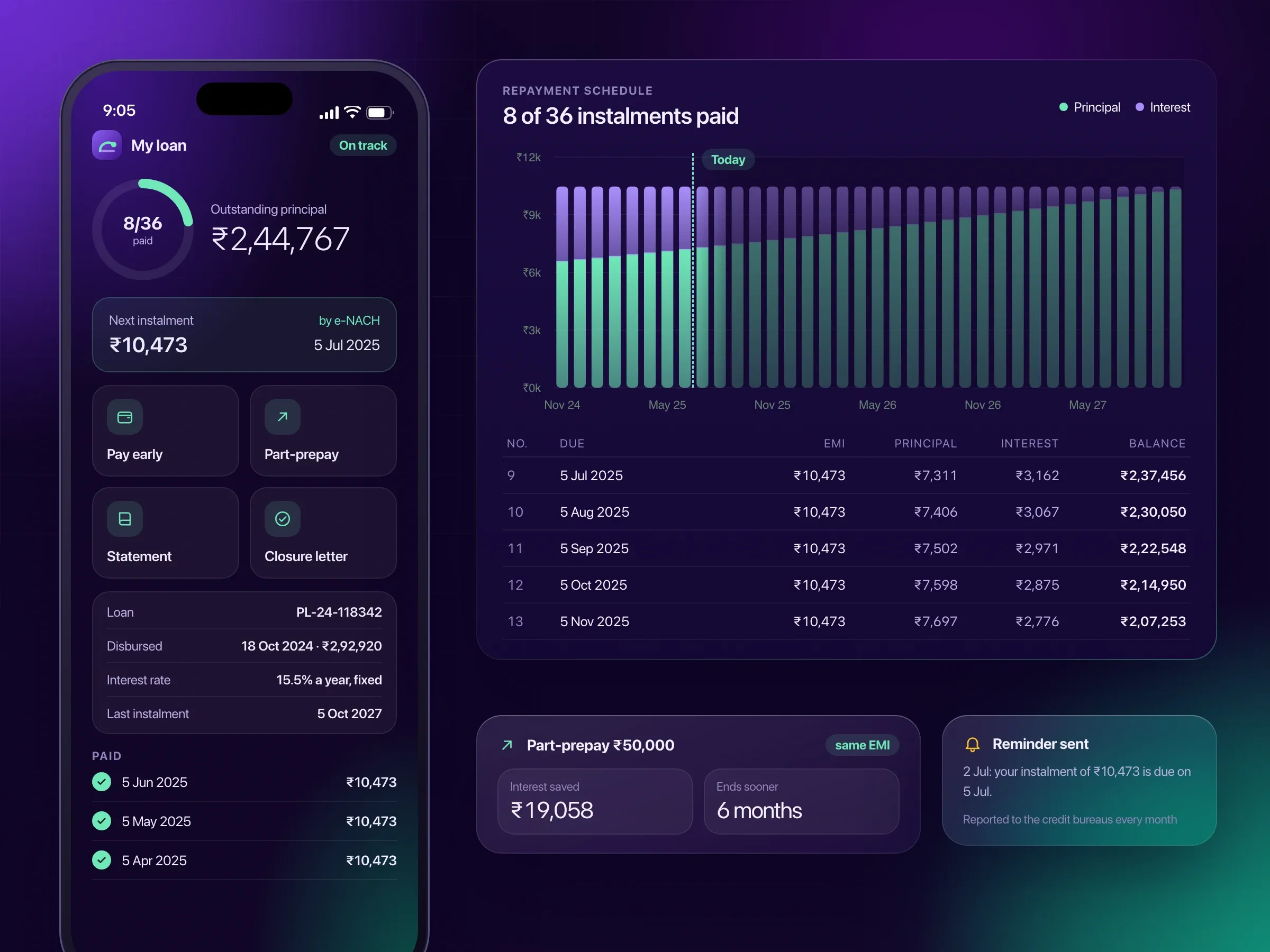
Loan servicing runs on the same platform. Borrowers see their repayment schedule, pay early or part-prepay, download statements and request a closure letter. Reminders go out before each instalment, and the collections team sees missed payments the day they happen. Loan data is reported to the credit bureaus every month.
Security, data and audit
All borrower data is stored in India, on AWS’s Mumbai region, and encrypted in transit and at rest. Each staff role sees only what it needs, and every step, consent and decision is logged for audits. Before launch, the platform passed independent vulnerability assessment and penetration testing, and every finding was fixed.
How it’s built
The core platform is Java and Spring Boot on PostgreSQL, with Apache Kafka carrying events between services, from KYC to credit to servicing. The borrower app is built in Flutter and the staff workbench in React. Document reading uses Amazon Textract and Amazon Bedrock, within AWS in India, and Python services run the analysis of bank statements. The platform launched one loan product at a time, starting with salaried personal loans, then loans for small businesses.
The outcome
Borrowers now apply from their phone, complete KYC in one sitting, and receive money straight in their bank account. Underwriters spend their time on judgement instead of typing, the credit team changes policy without a release, and every consent and decision is ready for an audit.
How the project ran
8 months in 6 phases
- Month 1
Discovery and compliance
Workshops with credit, operations, compliance and collections, and every step of the loan journey mapped against the RBI's digital lending rules.
- Months 2–4
Borrower journey and KYC
The borrower app and web journey, e-KYC, video KYC, CKYC, bank account checks and bank statements through the Account Aggregator framework.
- Months 4–6
Credit and documents
AI document reading, the credit bureau link, the rules engine and the underwriting screen, tested on past applications.
- Months 6–7
Signing, disbursal and servicing
Key Fact Statement, e-sign, e-NACH, disbursal, repayment schedules, statements and collections reminders.
- Month 8
Security testing and launch
Independent security testing, fixes, and a phased launch, one loan product at a time.
- 2025 onwards
Support
New loan products, policy changes and updates as the RBI's digital lending directions evolved.
What we delivered
- IT consulting
- Compliance mapping
- Product design
- Web app
- Mobile app
- AI agents and automation
- Cloud
- Security testing
- Maintenance and support
Inside the project
7 pictures
Questions and answers
10 answered
What did FIRELIFE Ventures build for an NBFC in Kolkata?
FIRELIFE Ventures built a digital lending platform for an NBFC in Kolkata. Borrowers apply in an app, complete e-KYC and video KYC in one sitting and share bank statements by consent. AI reads their documents, the credit team's rules decide, and loans are signed, mandated and disbursed digitally.
What is a digital lending platform?
A digital lending platform runs the whole loan journey online: application, KYC, document checks, credit decision, loan agreement, disbursal and repayments. Borrowers apply from their phone, and the lender processes and services every loan in one system.
What is the difference between e-KYC and video KYC?
e-KYC verifies a borrower's identity digitally, through Aadhaar OTP or DigiLocker. Video KYC adds a live video call with a trained agent, who checks the borrower's face, documents and location, so the loan can be completed without a branch visit.
How does AI help in loan processing?
AI reads salary slips, tax returns, GST returns and bank statements, pulls out the figures underwriters need and flags anything that doesn't match. Credit rules and people make the decisions; AI removes the manual data entry.
What is the Account Aggregator framework?
The Account Aggregator framework lets a borrower share their bank statements with a lender digitally, with their consent, straight from the bank. It replaces uploaded PDFs and makes the data more reliable.
What is a Key Fact Statement?
A Key Fact Statement is a short, standard summary of a loan that RBI rules require lenders to show before the borrower signs. It includes the annual percentage rate, the total cost, the repayment schedule and how to raise a complaint.
What do the RBI's digital lending rules require?
Among other things, they require a Key Fact Statement before signing, disbursal straight to the borrower's own bank account, a cooling-off period to exit the loan, only need-based data collected with consent, and the borrower's data stored in India.
Does the borrower app access contacts or photos?
No. In line with the RBI's rules, the app does not access the phone's contacts, call logs or photo library. It asks only for what the loan needs, with the borrower's consent.
How long does it take to build a digital lending platform?
The platform took eight months, delivered in stages from the borrower journey and KYC to credit, signing, disbursal and loan servicing, and then launched one loan product at a time after independent security testing.
Can FIRELIFE Ventures build a lending platform for my NBFC?
Yes. FIRELIFE Ventures builds digital lending, KYC and loan servicing platforms for NBFCs and lenders, designed around current RBI rules, and supports them after launch. Start a project through the contact page.
More from the portfolio
All portfolio-
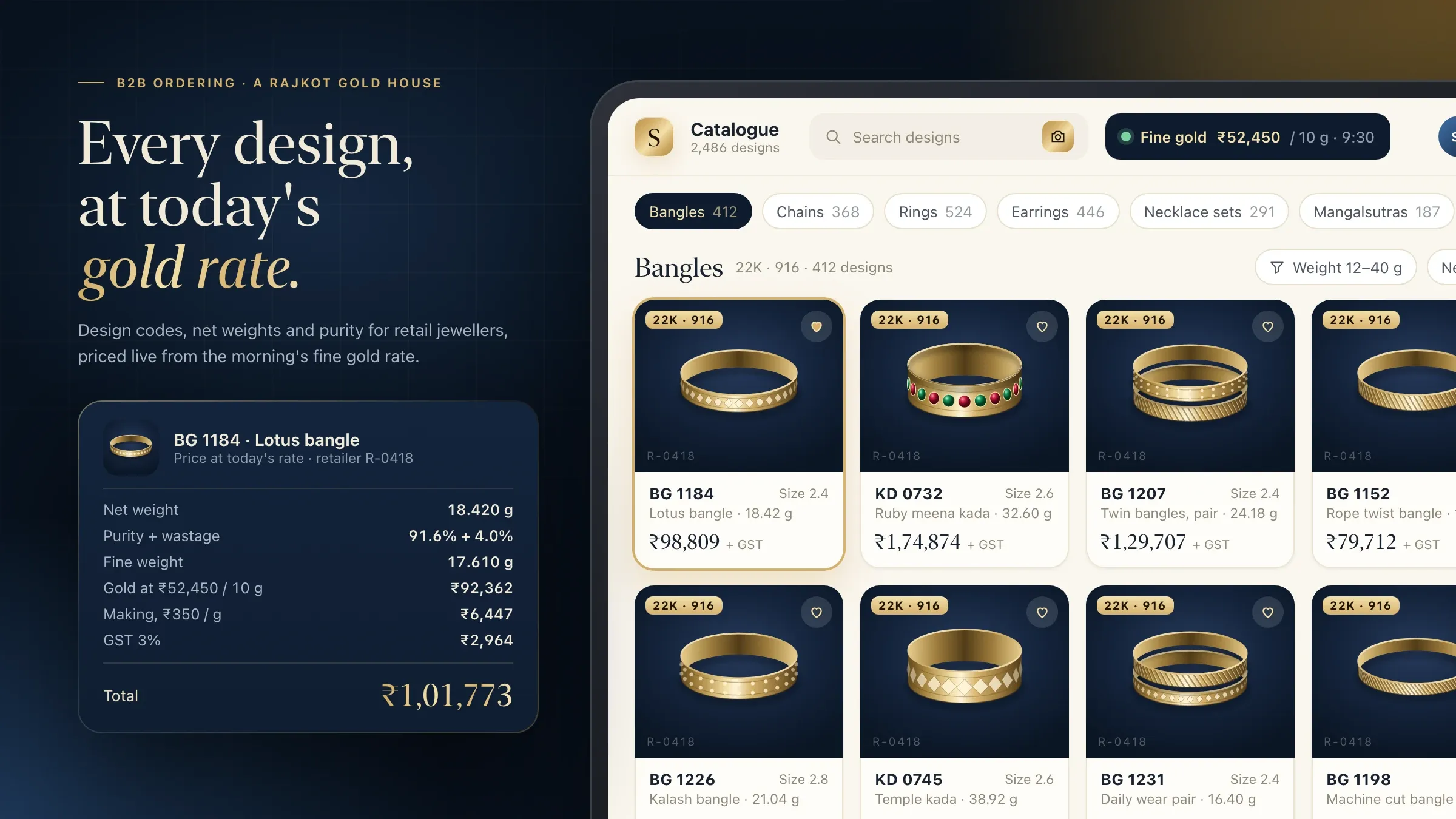 Jewellery Catalogue and Ordering App A B2B jewellery ordering app for a gold jewellery wholesaler in Rajkot: a live catalogue, gold-rate pricing, search by photo, and every order tracked from karigar to hallmark to dispatch.
-
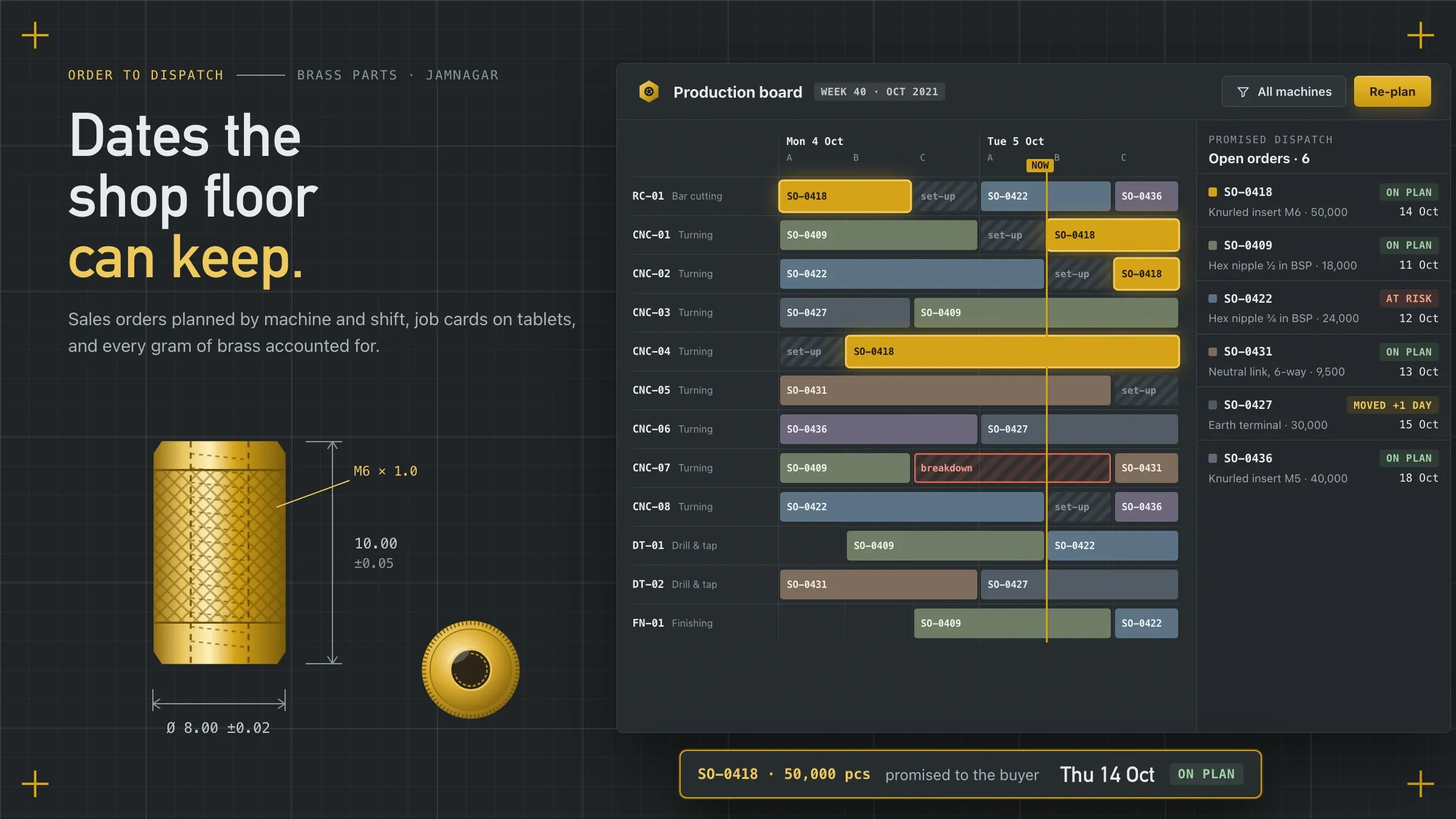 Order-to-Dispatch System Order-to-dispatch software for a brass precision components manufacturer in Jamnagar: delivery dates based on real capacity, shop-floor job cards, brass yield and scrap tracked to the gram, job work challans, and e-invoices straight from dispatch.
-
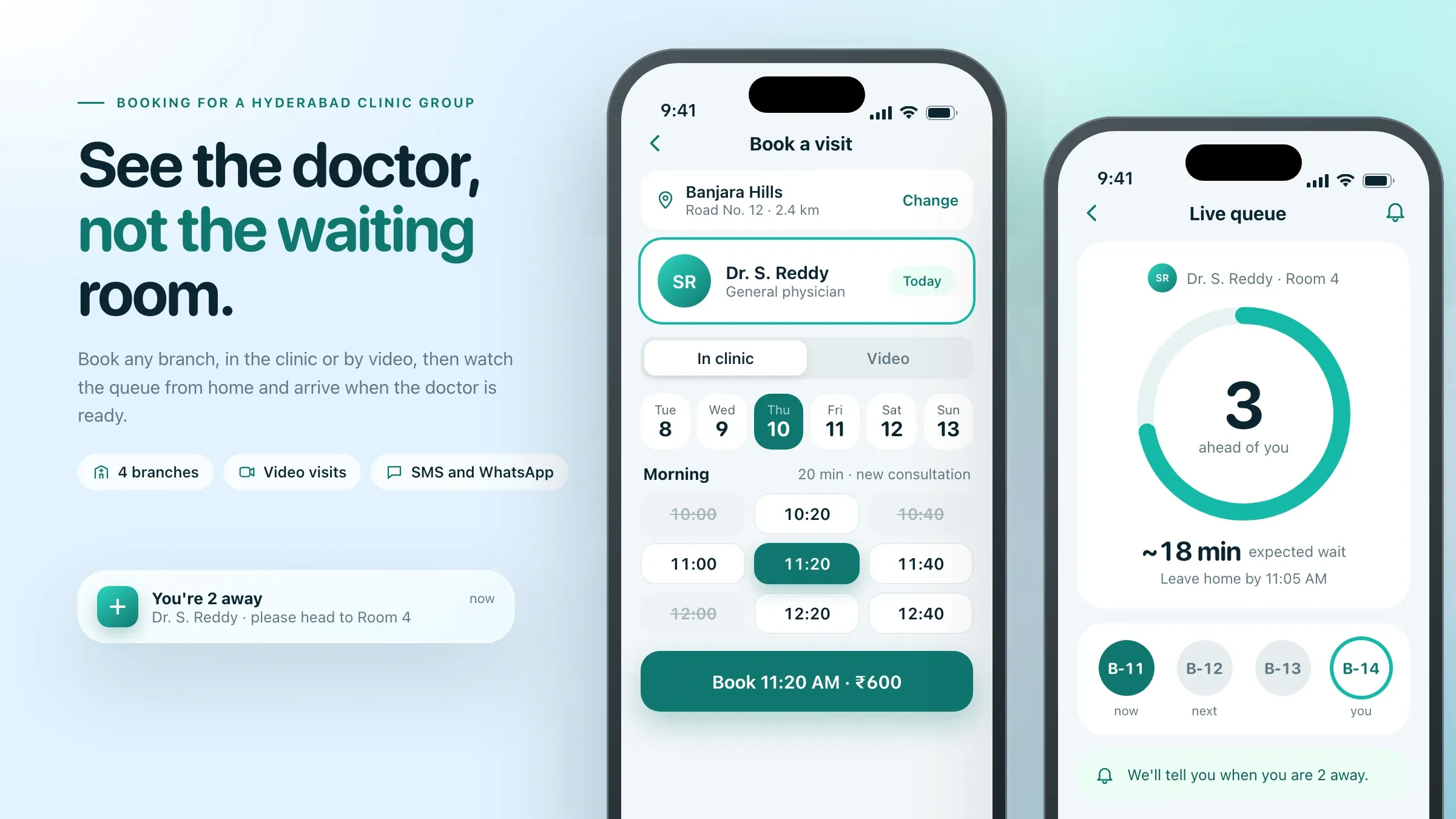 Clinic Booking and Live Queue A clinic appointment booking system for a multi-speciality clinic group in Hyderabad: online booking for every branch, a live patient queue, video consultations and reminders on SMS and WhatsApp.
Need something like this built?
Tell us what you want to build and where you are with it, and we'll get back to you.
Start a project