Overview
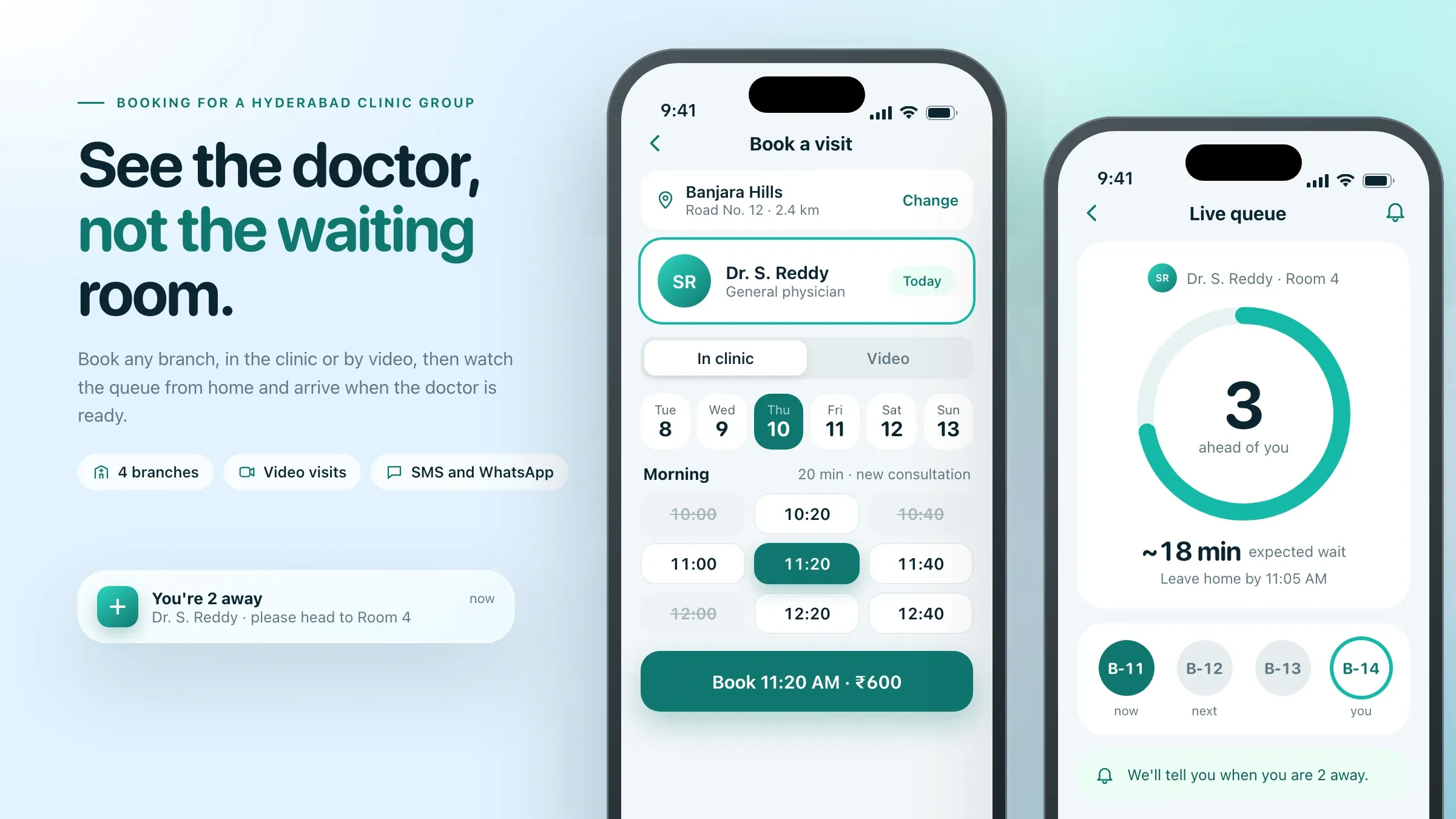
Clinic appointment booking system for a multi-speciality clinic group: online booking, video consultations, a live queue and automatic reminders.
- Client
- A multi-speciality clinic group in Hyderabad
- Industry
- Healthcare
- Location
- Hyderabad, Telangana, India
- Year
- 2020
- Duration
- 4 months
At a glance
- The challenge
Every branch booked appointments by phone, and only during opening hours.
- What we saw at the front desk
We spent mornings at the front desks of two branches before designing anything.
- One booking system for every branch
We gave the whole group one clinic appointment booking system: a booking website, a patient app for Android and iPhone, and one shared calendar for every doctor at every branch.
- The live queue
The live queue replaced paper tokens.
- Video consultations
Video consultations run inside the patient app and the browser, under India's Telemedicine Practice Guidelines of 2020.
- Reminders and fewer missed appointments
Reminders go out by SMS and WhatsApp the day before each appointment and on the morning of it.
- Payments and patient records
Video consultations are paid online when booking.
- How it's built
The patient app is built in React Native for Android and iPhone, and the booking website and staff consoles in React.
- Pilot and roll-out
One branch went first.
- The outcome
Patients now book, move and cancel at any hour without calling, and arrive when their doctor is ready.
The challenge
Every branch booked appointments by phone, and only during opening hours. At peak times calls queued and went unanswered, and reception spent most mornings on the phone while patients waited at the desk.
In 2020, crowded waiting rooms became a real risk, just as patients most needed to keep their distance. Regular patients asked to see their own doctor without travelling, and India’s new telemedicine guidelines made that possible, but the clinics had no way to offer it. Missed appointments left gaps in the calendar that nobody could fill in time.
What we saw at the front desk
We spent mornings at the front desks of two branches before designing anything. Four things stood out.
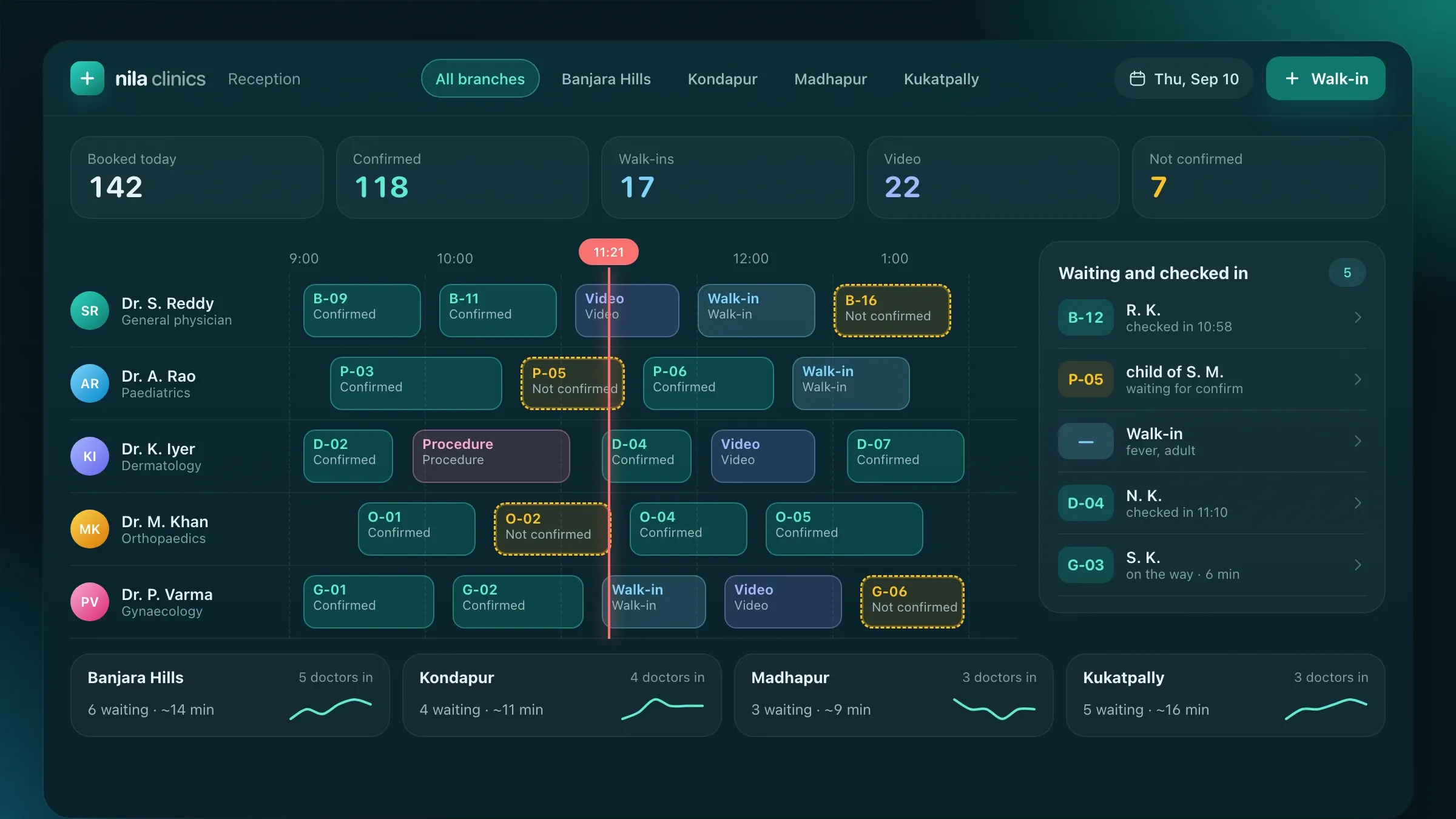
- Reception was doing three jobs at once: answering phones, checking in walk-ins and taking payments, all at the same counter.
- Paper tokens hid the real wait. When a doctor ran late, nobody waiting knew, and the questions at the desk kept coming.
- Schedules lived in different places. Doctors who worked at more than one branch were sometimes booked at two branches at once.
- No-shows were invisible until the slot was already lost. Nobody had confirmed in advance, so nobody could offer the slot to someone else.
One booking system for every branch
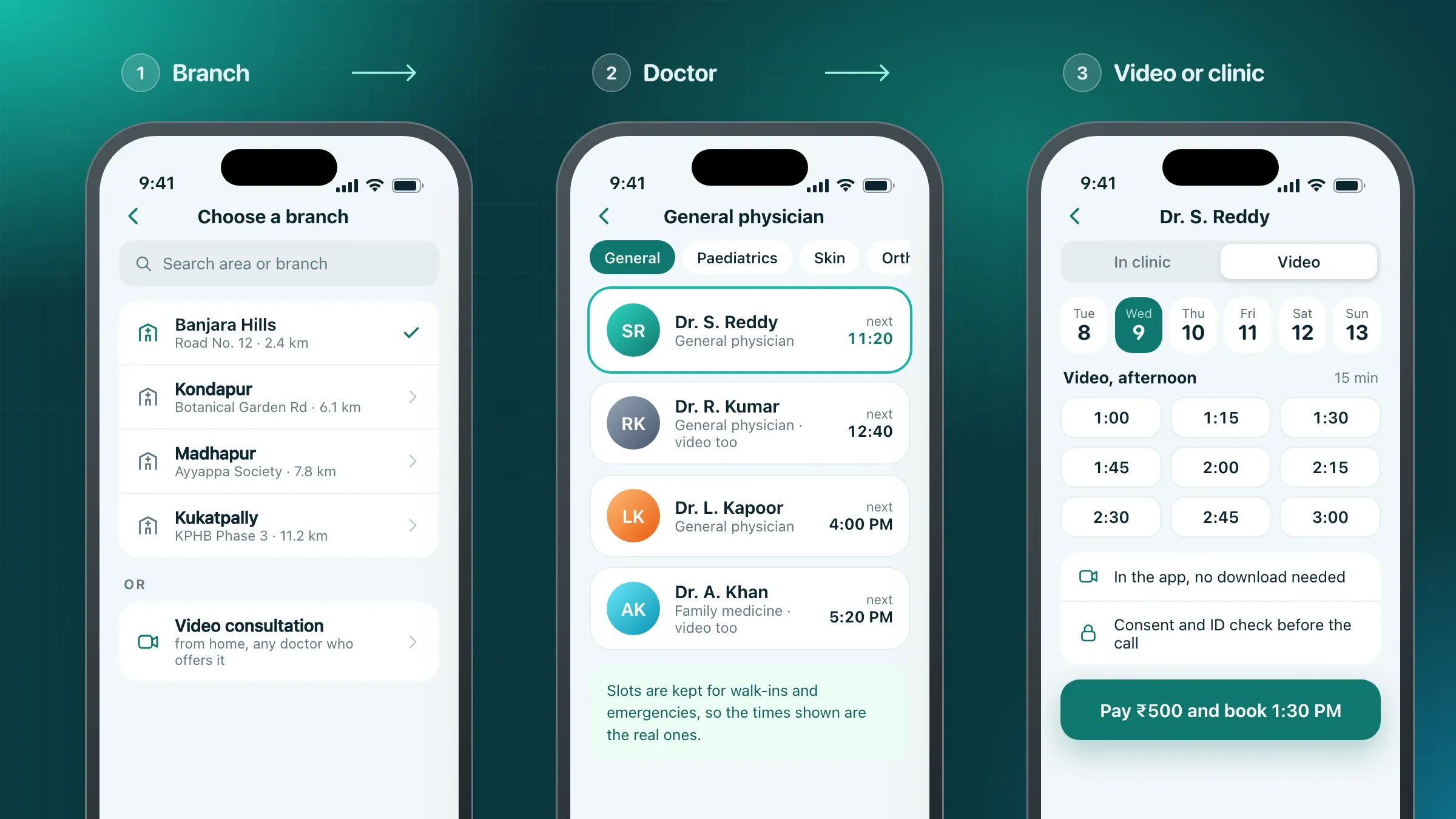
We gave the whole group one clinic appointment booking system: a booking website, a patient app for Android and iPhone, and one shared calendar for every doctor at every branch.
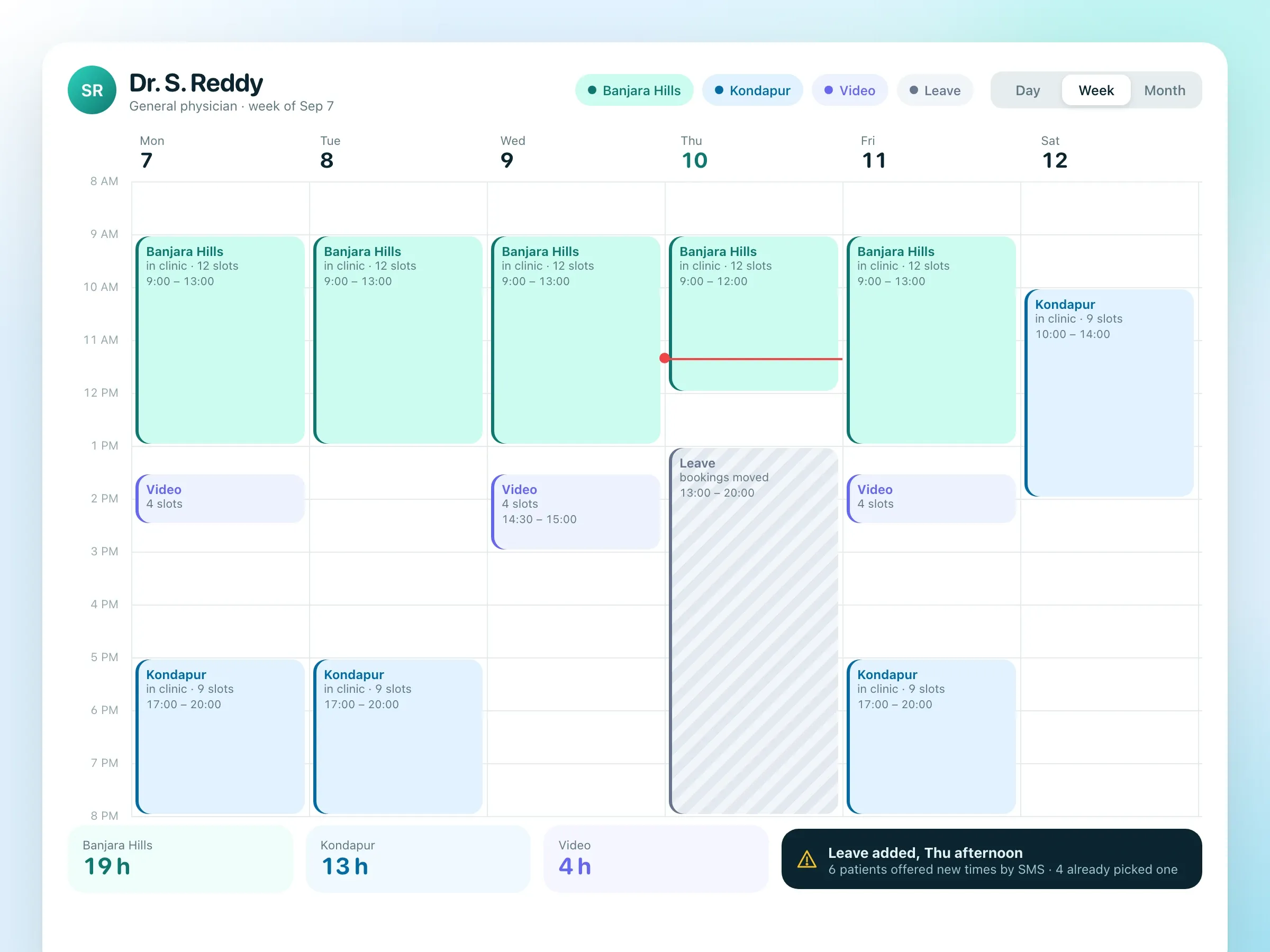
Each doctor’s calendar holds their hours at each branch and their video consultation times. Slot rules follow how the clinic actually works:
- new consultations, follow-ups and procedures each have their own length;
- some slots are kept for walk-ins and emergencies;
- a doctor’s leave or late start updates every affected booking at once.
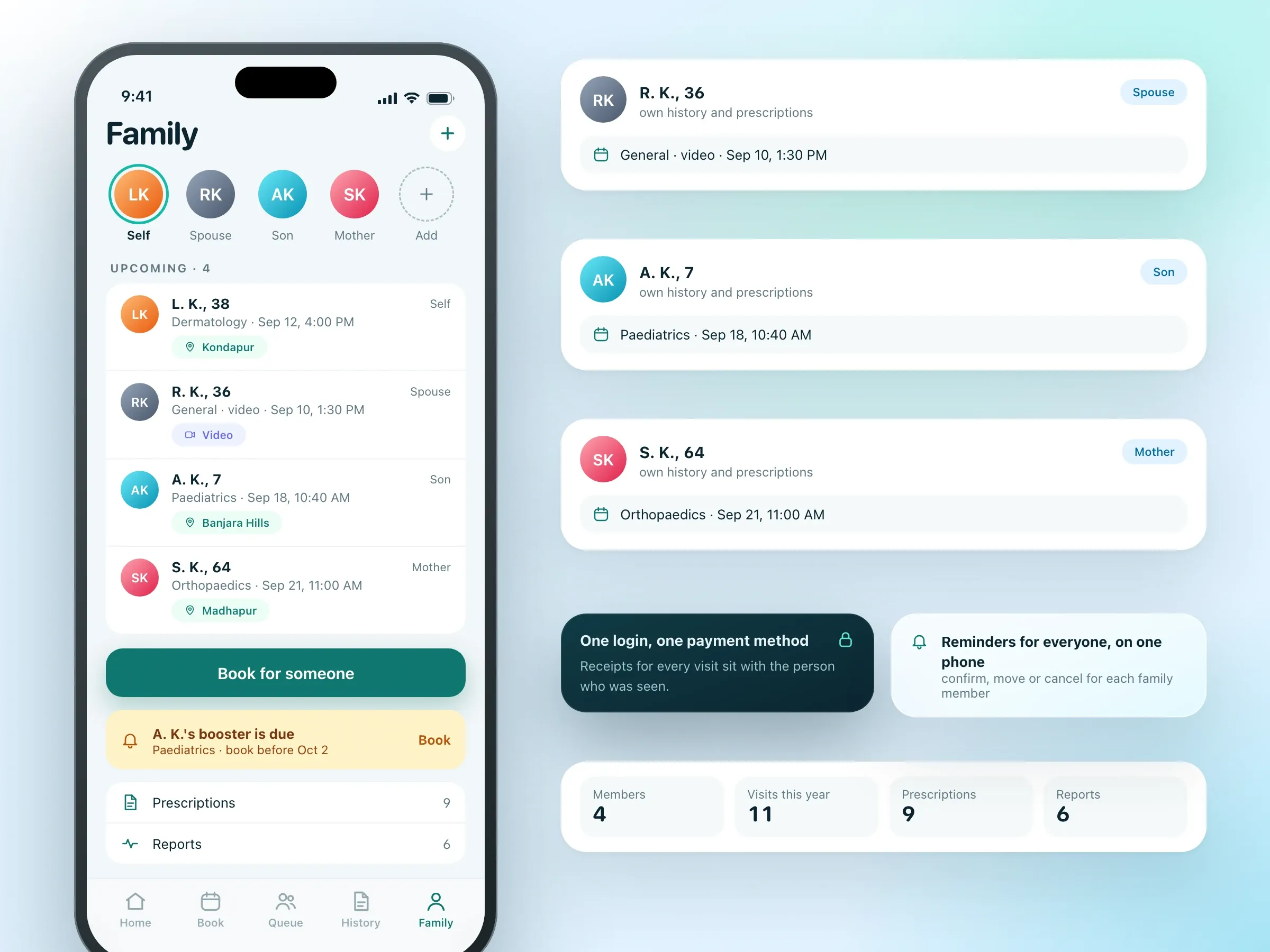
Patients choose a branch, a speciality, a doctor and a time, in the clinic or by video. One account can book for the whole family, and every family member keeps their own history. Reception uses a console that shows the whole day across branches and books walk-ins into the same calendar.
The live queue
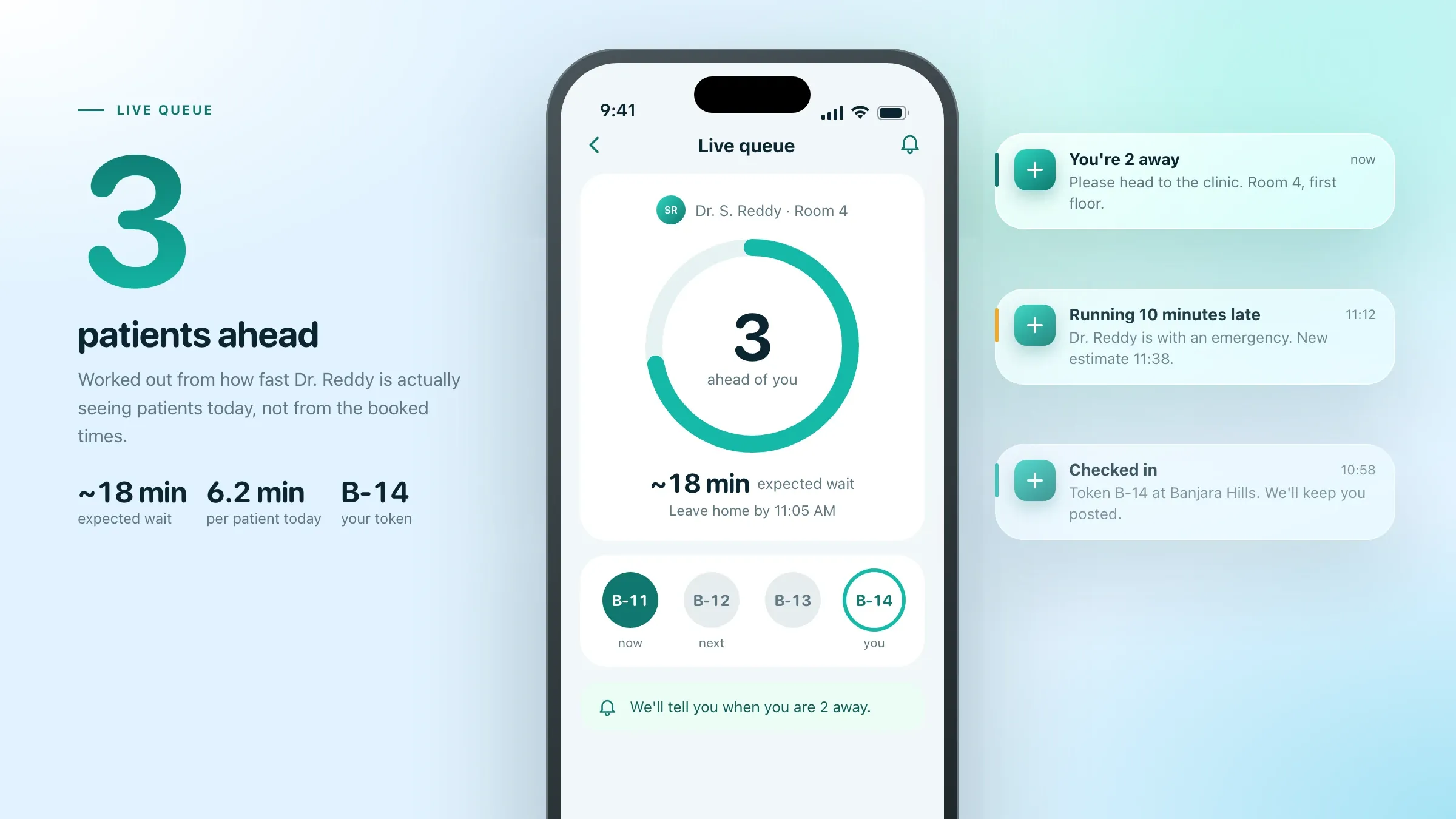
The live queue replaced paper tokens. Every patient gets a token when they book or check in, and the system tracks how fast each doctor is actually seeing patients that day.
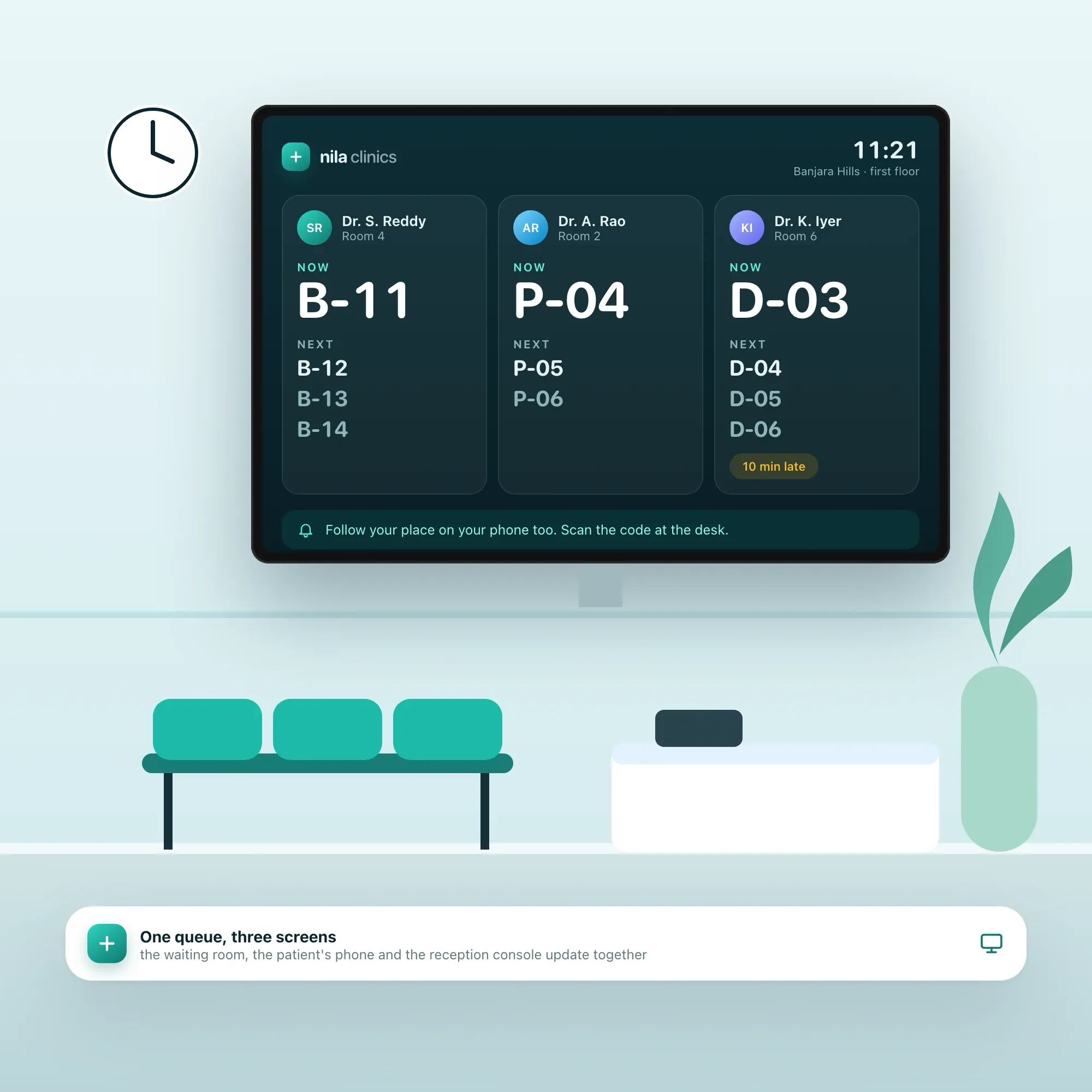
Patients see their place in the queue and their expected waiting time on their phone, with a notification when they are a few patients away. They arrive when the doctor is ready instead of waiting in a crowded room. If a doctor is running late, every waiting patient is told at once, without a single phone call from reception. A screen at each branch shows the queue for each doctor.
Video consultations
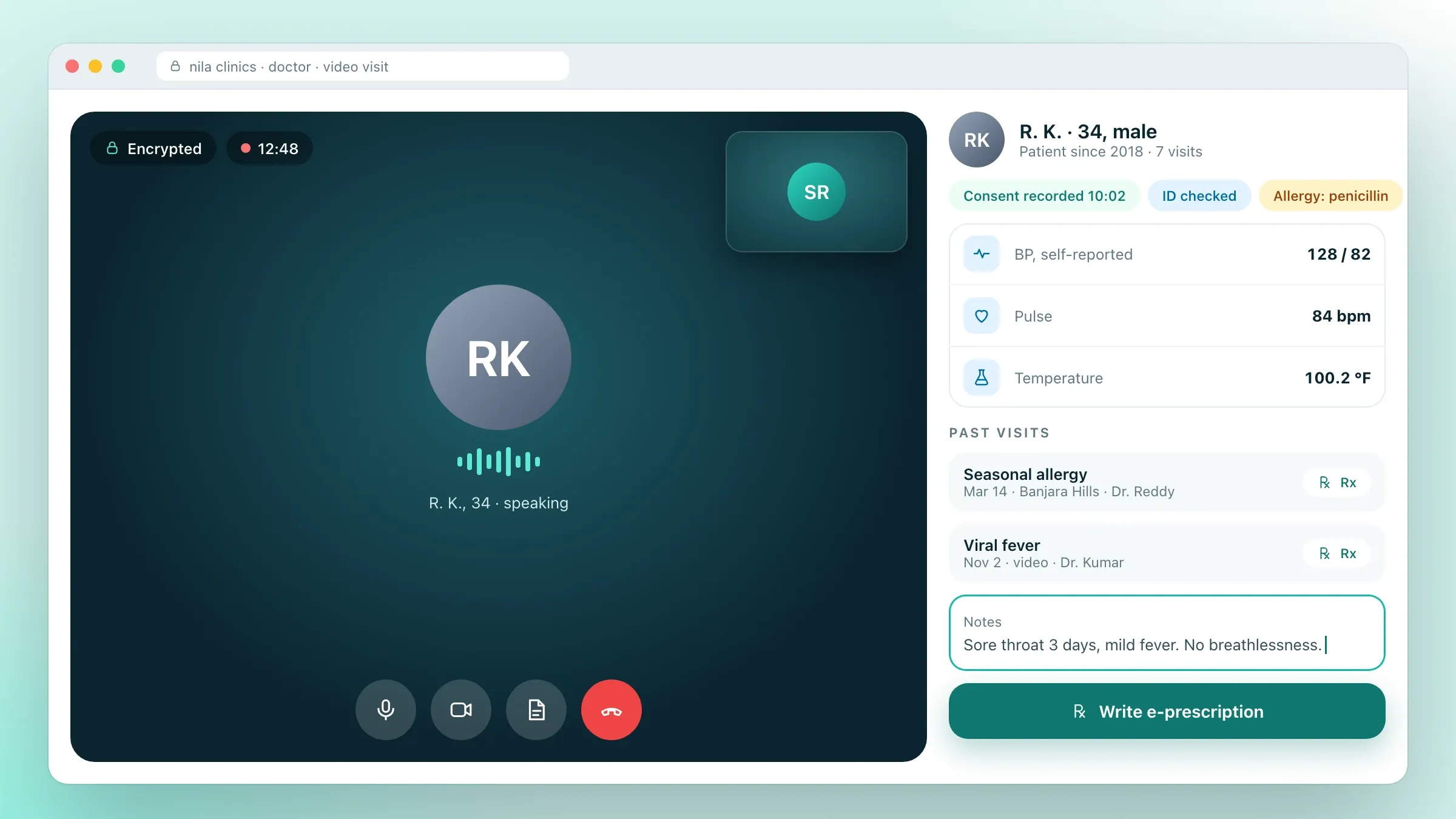
Video consultations run inside the patient app and the browser, under India’s Telemedicine Practice Guidelines of 2020. Before the call, the patient gives consent and their identity is confirmed. During the call, the doctor sees the patient’s history beside the video.
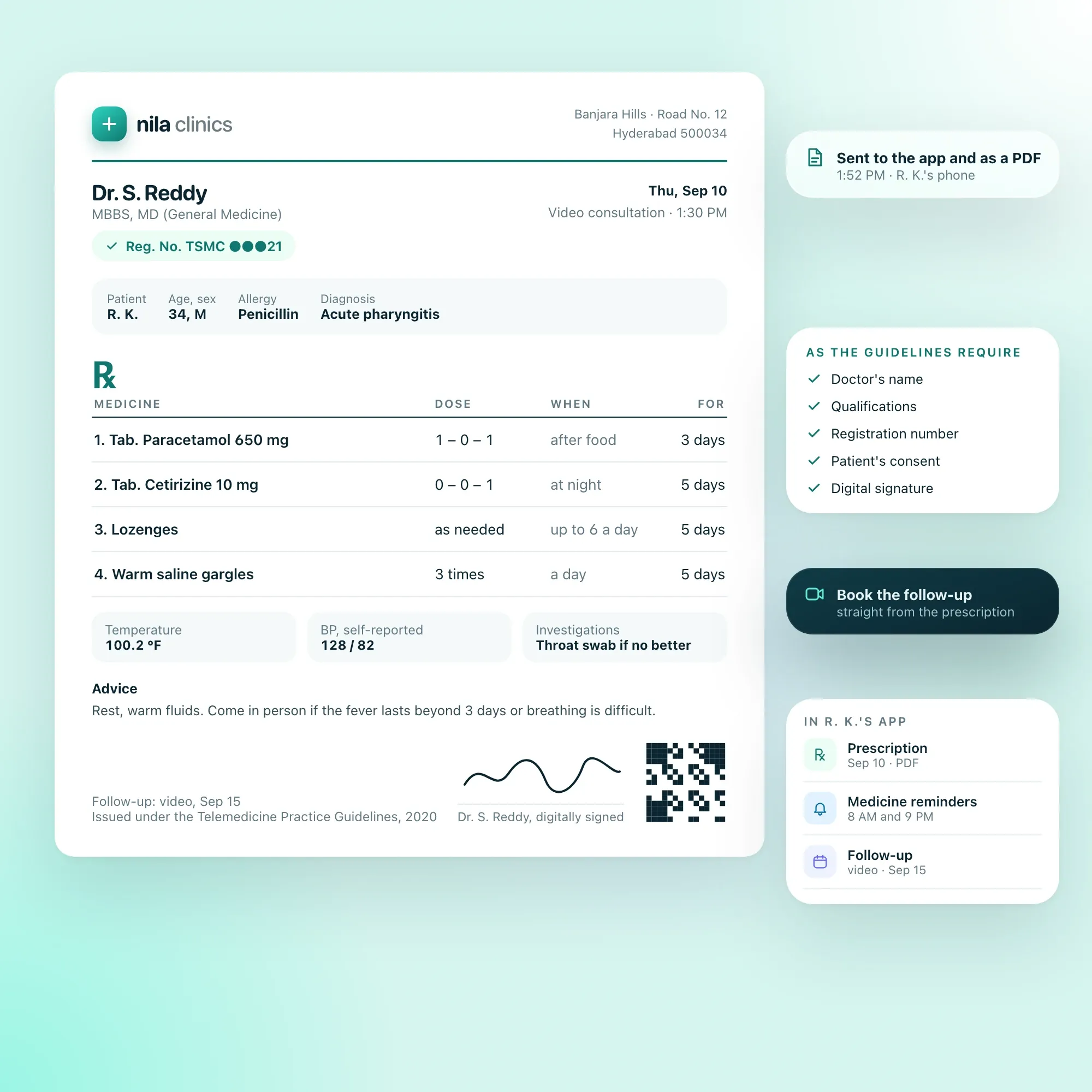
After the call, the doctor issues an e-prescription that carries the doctor’s name, qualifications and registration number, as the guidelines require. It reaches the patient in the app and as a PDF, and video follow-ups can be booked straight from the prescription.
Reminders and fewer missed appointments
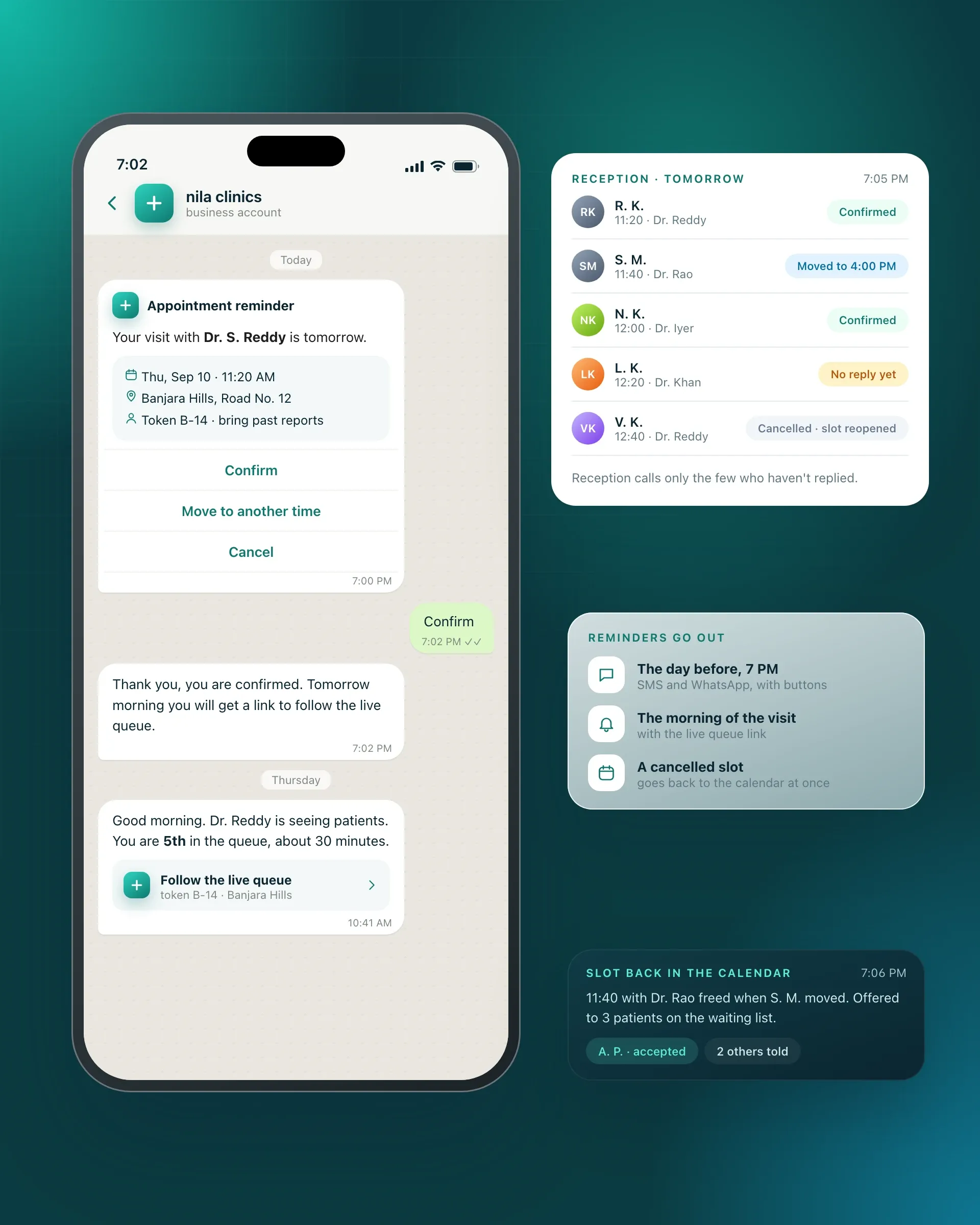
Reminders go out by SMS and WhatsApp the day before each appointment and on the morning of it. Each reminder carries a link to confirm, move or cancel.
When a patient cancels or moves, the slot returns to the calendar straight away and can be offered to patients waiting for an earlier appointment. Reception sees who has confirmed and who hasn’t, and calls only the few who haven’t replied.
Payments and patient records
Video consultations are paid online when booking. In-clinic visits can be prepaid or paid at the desk, and every payment produces a receipt in the app.
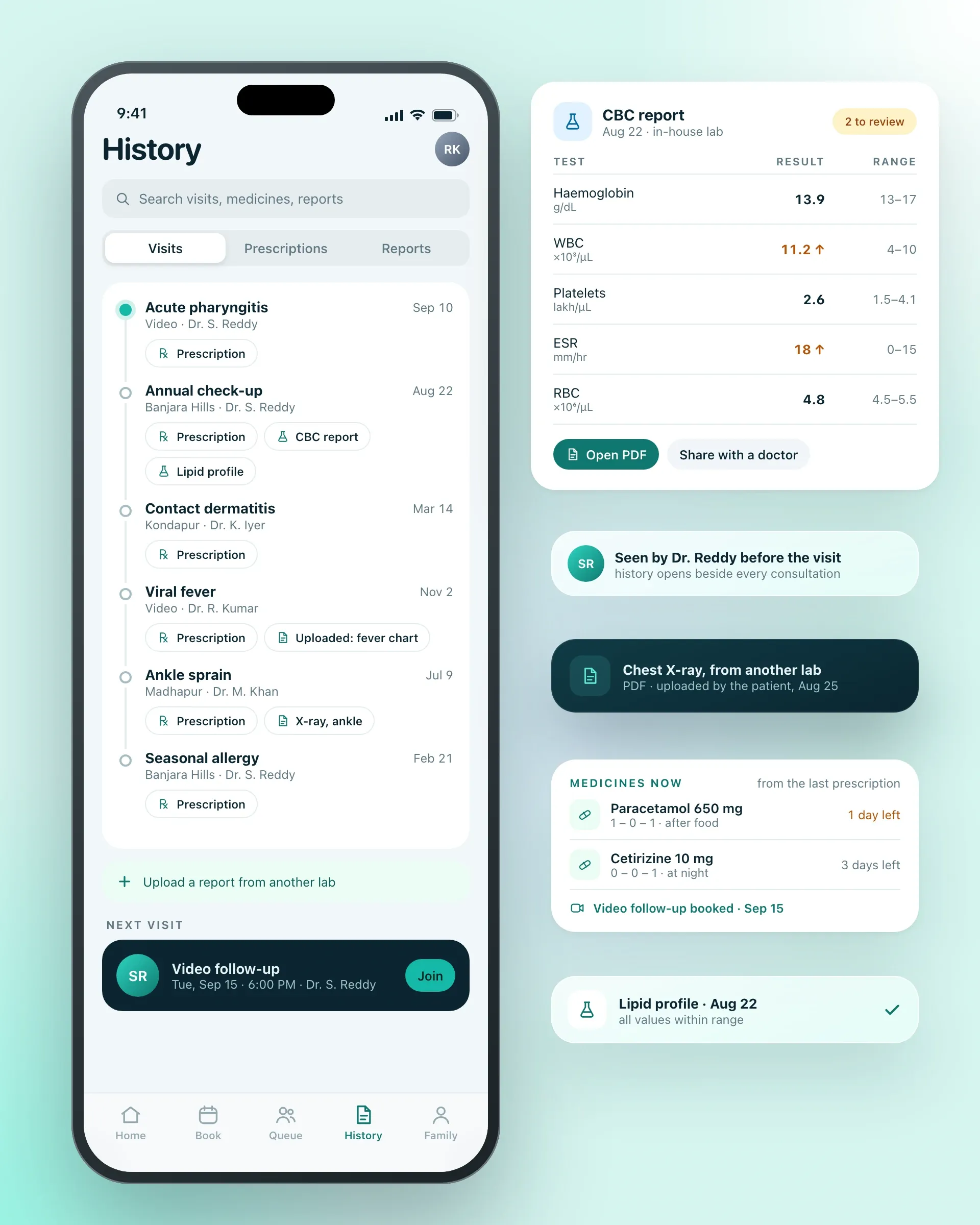
Each patient’s visit history, prescriptions and uploaded reports stay together, so the doctor sees the full picture at the next visit, whether in the clinic or on video.
How it’s built
The patient app is built in React Native for Android and iPhone, and the booking website and staff consoles in React. A NestJS API on Node.js sits on PostgreSQL, with Redis and Socket.IO keeping the live queue current on every screen.
Video calls run on Agora, and SMS and WhatsApp messages go out through Twilio and the WhatsApp Business API. Everything is hosted on AWS in India. Patient data is encrypted in transit and at rest, every staff role sees only what it needs, and every access to a patient record is logged.
Pilot and roll-out
One branch went first. For two weeks, reception ran the new system alongside the phones while we fixed what they found. Each branch then switched in turn, with its reception team trained on the console beforehand and posters at the desk inviting patients to book online next time.
The outcome
Patients now book, move and cancel at any hour without calling, and arrive when their doctor is ready. Waiting rooms stay calm, doctors see their regular patients by video when travel isn’t needed, and every branch shares one calendar that can’t double-book. Reception spends its mornings with the patients in front of it instead of on the phone.
How the project ran
4 months in 6 phases
- Weeks 1–2
Discovery at the front desk
Mornings at the front desks of two branches, interviews with doctors, reception and patients, and a map of how appointments were booked, moved and missed.
- Weeks 3–5
Design
The patient booking flow, the doctor's calendar, the reception console and the queue screen, tested with patients on paper and on screen.
- Weeks 6–10
Booking, queue and reminders
Schedules and slot rules for every doctor, online booking, the live queue and reminders on SMS and WhatsApp, on one backend.
- Weeks 9–13
Video consultations and payments
Video consultations under India's telemedicine guidelines, e-prescriptions, online payment and the patient's visit history.
- Weeks 14–16
Pilot and roll-out
One branch first, then the rest of the group, with reception staff trained at each branch before it switched.
- Week 17 onwards
Support
Monthly improvements based on what patients, doctors and reception asked for.
What we delivered
- Discovery and service design
- Product design
- Web app
- Mobile app
- Cloud
- Maintenance and support
Inside the project
7 pictures
Questions and answers
10 answered
What did FIRELIFE Ventures build for a clinic group in Hyderabad?
FIRELIFE Ventures built a clinic appointment booking system for a multi-speciality clinic group in Hyderabad. Patients book in-clinic or video appointments online, follow a live queue on their phone and receive reminders on SMS and WhatsApp, while every branch shares one calendar.
What is a clinic appointment booking system?
A clinic appointment booking system lets patients book, move and cancel appointments online, and gives doctors and reception one shared calendar. Good systems add reminders, a live queue, and video consultations where they help.
Are online video consultations allowed in India?
Yes. India's Telemedicine Practice Guidelines, issued in March 2020, allow registered medical practitioners to consult patients by video, voice and text, and to issue e-prescriptions within set rules, including recording the patient's consent and the doctor's registration number.
How does a live queue work in a clinic?
Each patient gets a token when they book or arrive. The system tracks how fast each doctor is actually seeing patients and sends each patient their place in the queue and expected waiting time, so they arrive when the doctor is ready instead of waiting in a crowded room.
How do automatic appointment reminders reduce no-shows?
Reminders go out by SMS and WhatsApp the day before and on the morning of each appointment, with a link to confirm, move or cancel. Patients who can't come free up their slot, which goes back on the calendar for someone else.
Can one account book for the whole family?
Yes. A patient can add family members to their account and book for each of them, and every family member keeps their own visit history and prescriptions.
How is patient data protected?
Patient data is stored in India, encrypted in transit and at rest, and each staff member sees only what their role needs. Every access to a patient record is logged.
Can doctors work across several branches?
Yes. Each doctor has one calendar with their hours at each branch and their video consultation times, so double bookings across branches can't happen.
How long does it take to build a clinic booking system?
The booking system took four months from discovery to launch across the group, including the patient app, live queue, video consultations, payments and reminders. A booking system for a single clinic can launch faster.
Can FIRELIFE Ventures build a booking system for my clinic?
Yes. FIRELIFE Ventures builds appointment booking systems, patient apps and telemedicine for clinics and hospital groups, and supports them after launch. Start a project through the contact page.
More from the portfolio
All portfolio-
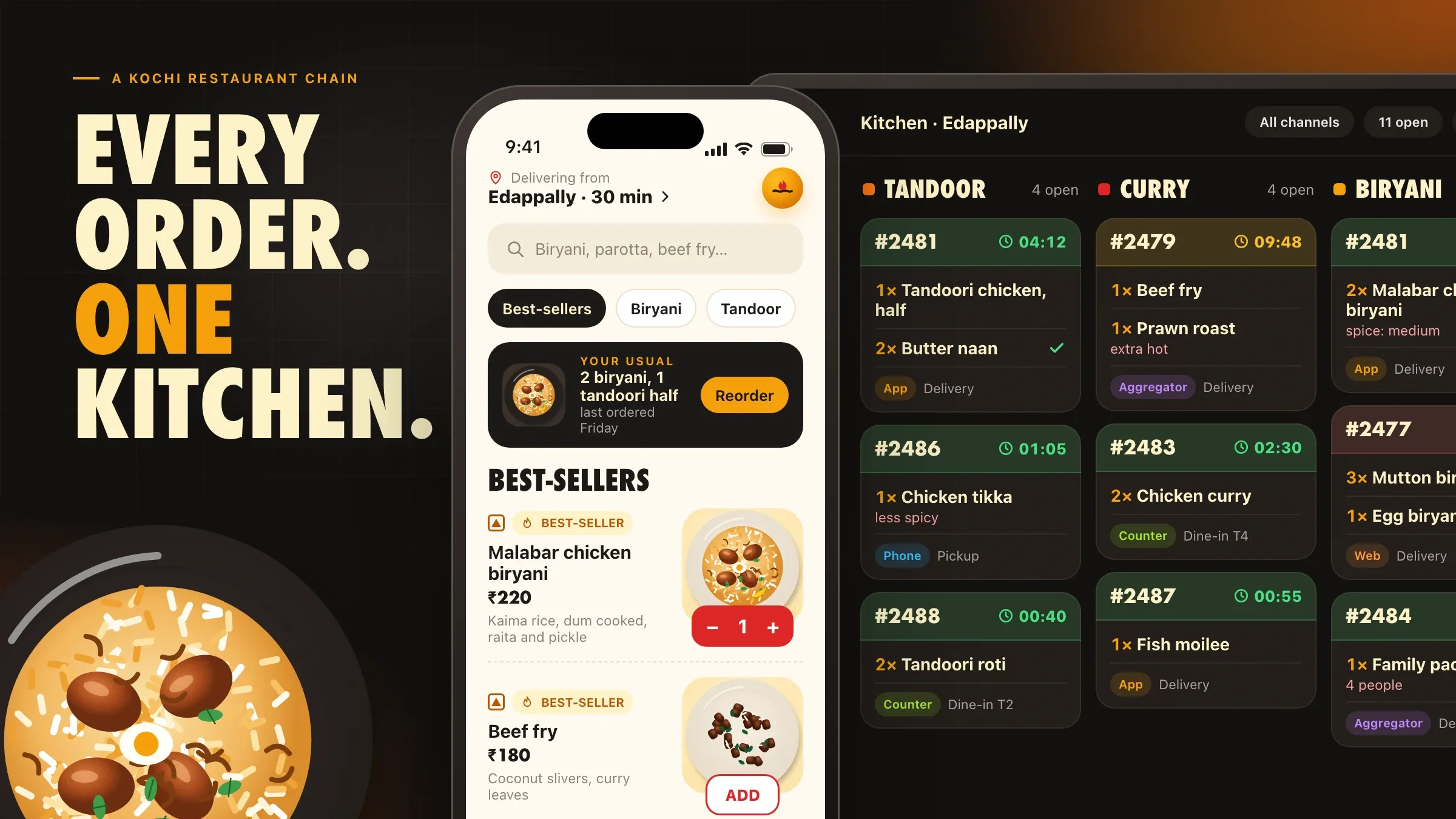 Restaurant Ordering App A branded food ordering app for a restaurant chain in Kochi: ordering on web and mobile, one kitchen display for every channel, a rider app with live tracking, and loyalty points that bring regulars back.
-
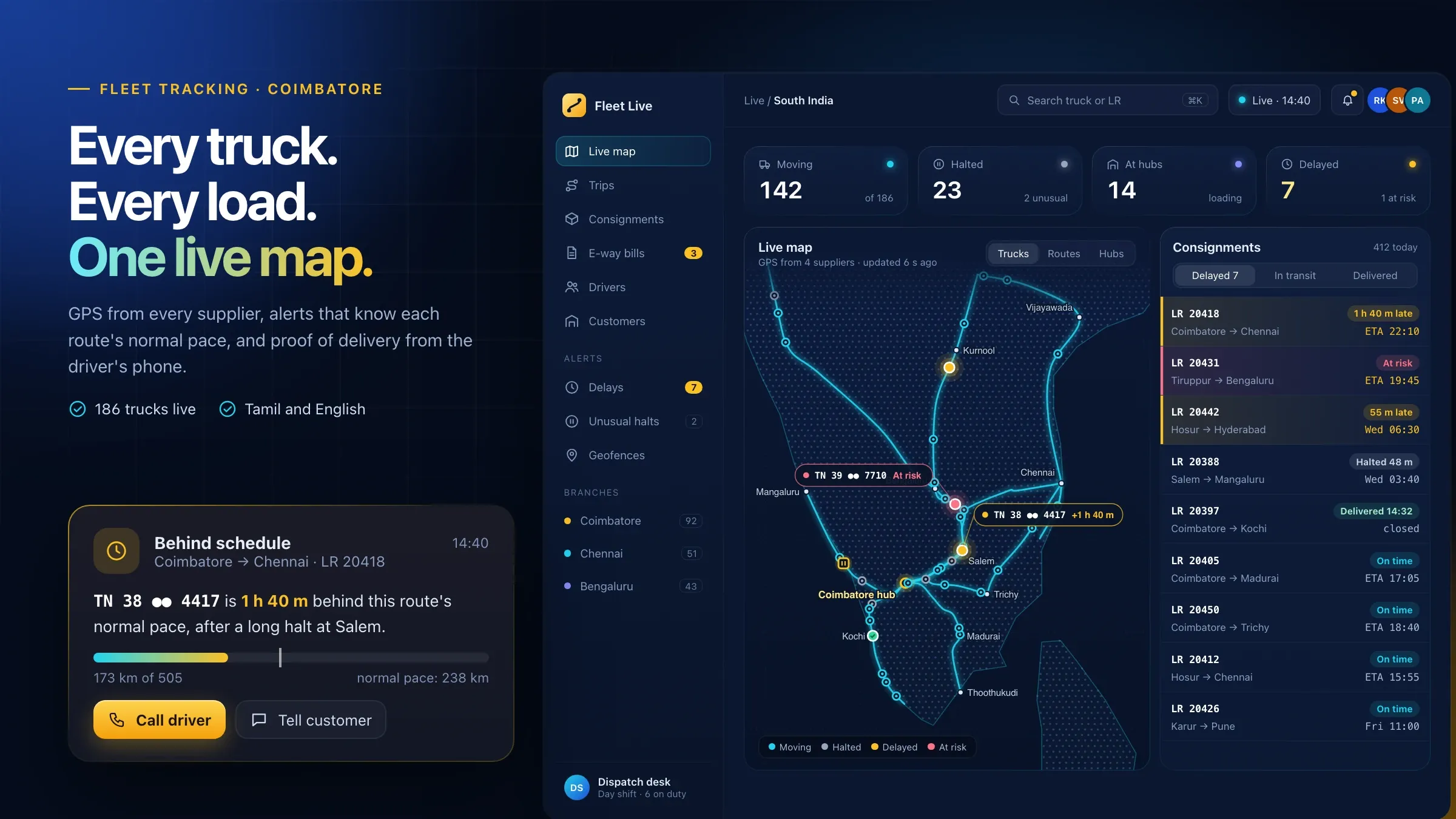 Fleet Tracking Dashboard A logistics tracking dashboard for a transport company in Coimbatore: every truck and consignment on one live map, delay alerts that learn each route, a driver app with proof of delivery, and e-way bills watched before they expire.
-
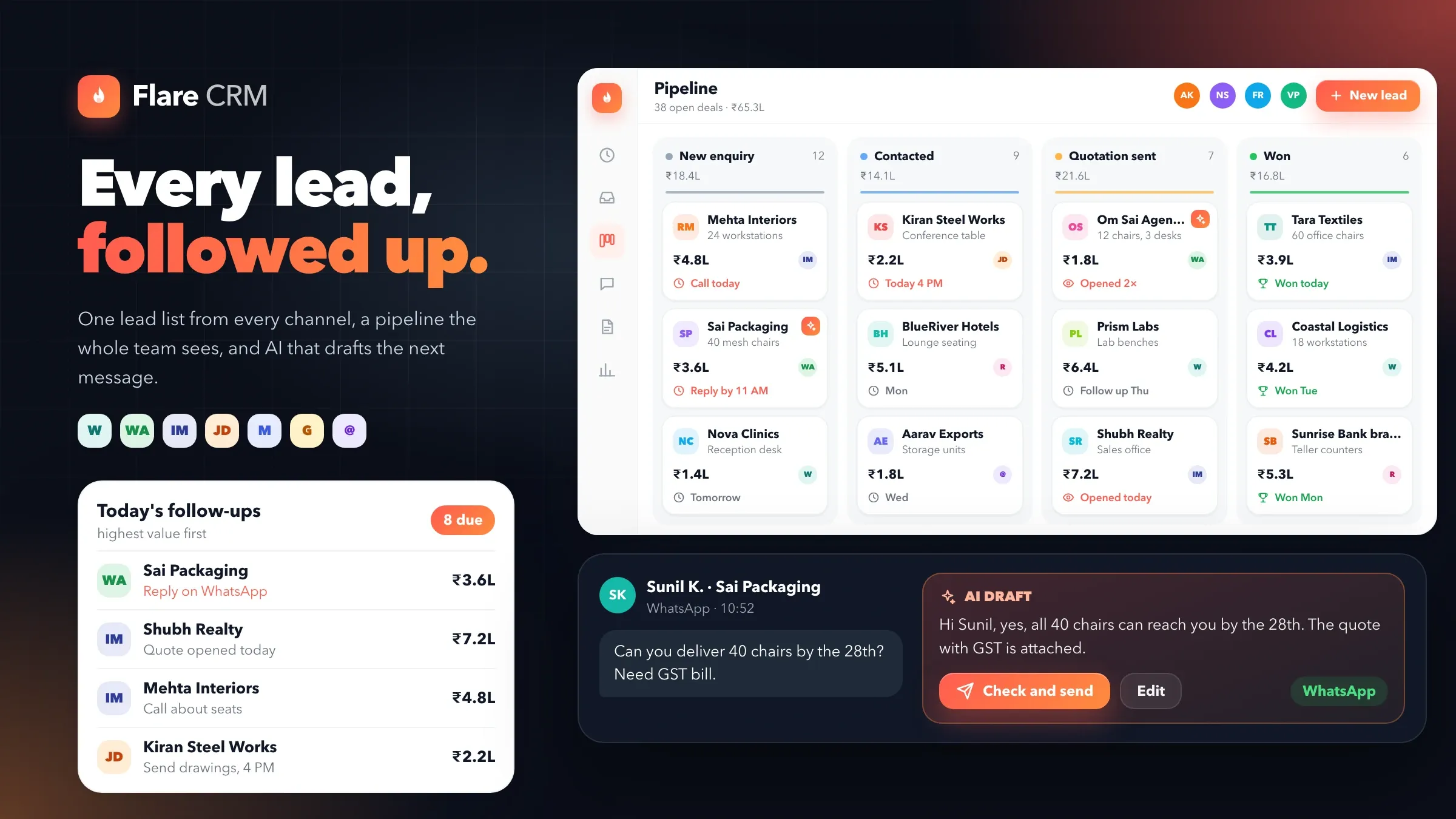 Flare CRM CRM software for small business: every lead from every channel in one list, a pipeline the whole team can see, WhatsApp inside every deal, and AI that drafts the next message.
Need something like this built?
Tell us what you want to build and where you are with it, and we'll get back to you.
Start a project