Overview
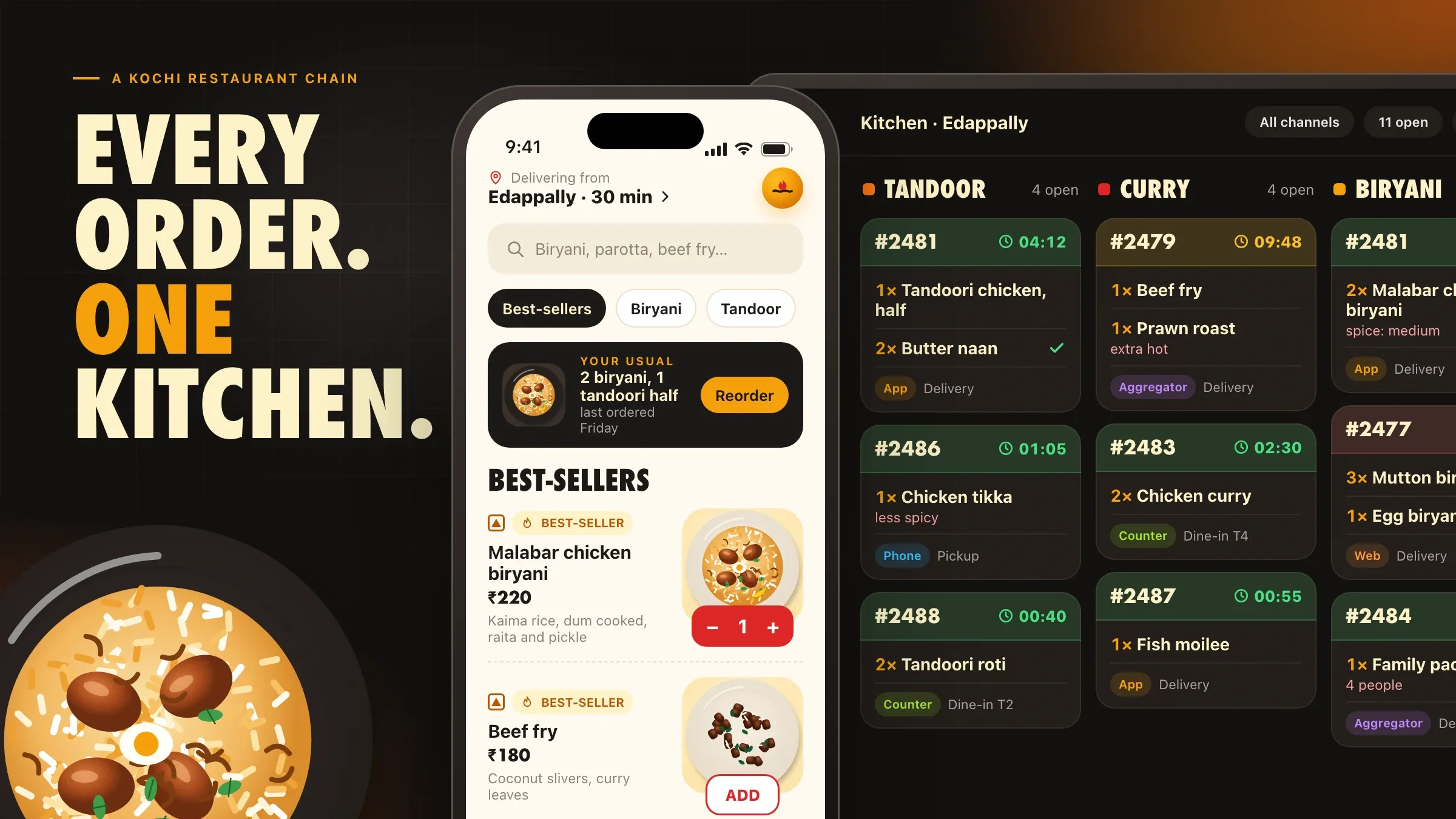
Restaurant online ordering app for a multi-outlet chain: branded ordering on web and mobile, a kitchen display, delivery tracking and loyalty points.
- Client
- A family restaurant chain with several outlets in Kochi
- Industry
- Food and beverage
- Location
- Kochi, Kerala, India
- Year
- 2019
- Duration
- 4 months
At a glance
- The challenge
Most of the chain's online orders came through food delivery aggregators, which took a commission on every order and kept the customers to themselves.
- What we saw on busy nights
We spent weekend evenings in the kitchens and at the counters before designing anything.
- Ordering built for one hand
We built a branded food ordering app for Android and iPhone, with an ordering website, both connected to one menu that each outlet manages itself.
- One kitchen screen for every channel
The kitchen display replaced printed slips.
- Delivery and live tracking
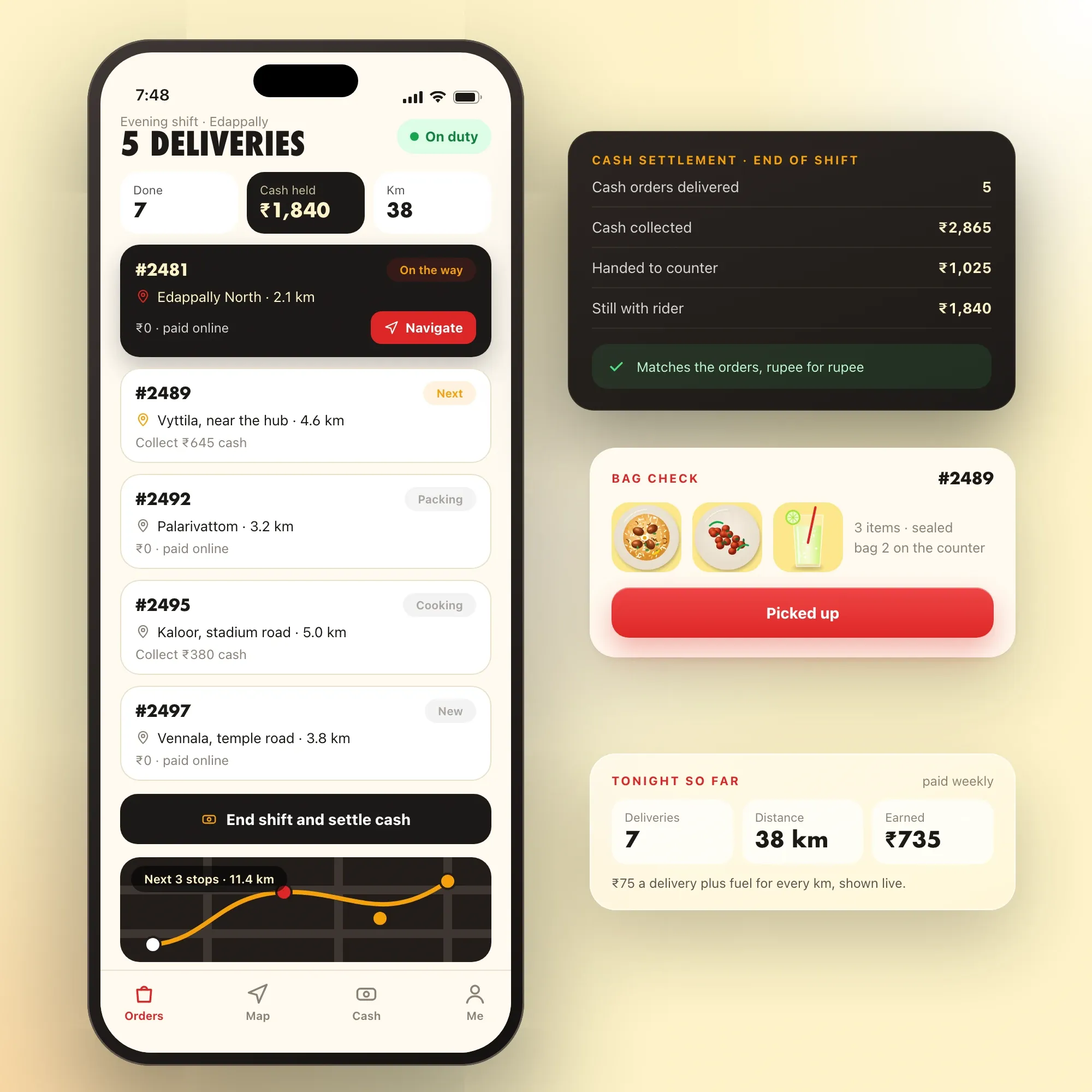
The chain's own riders use a rider app that lists their deliveries, guides them to each address and shares their location while delivering.
- Loyalty, offers and the customer relationship
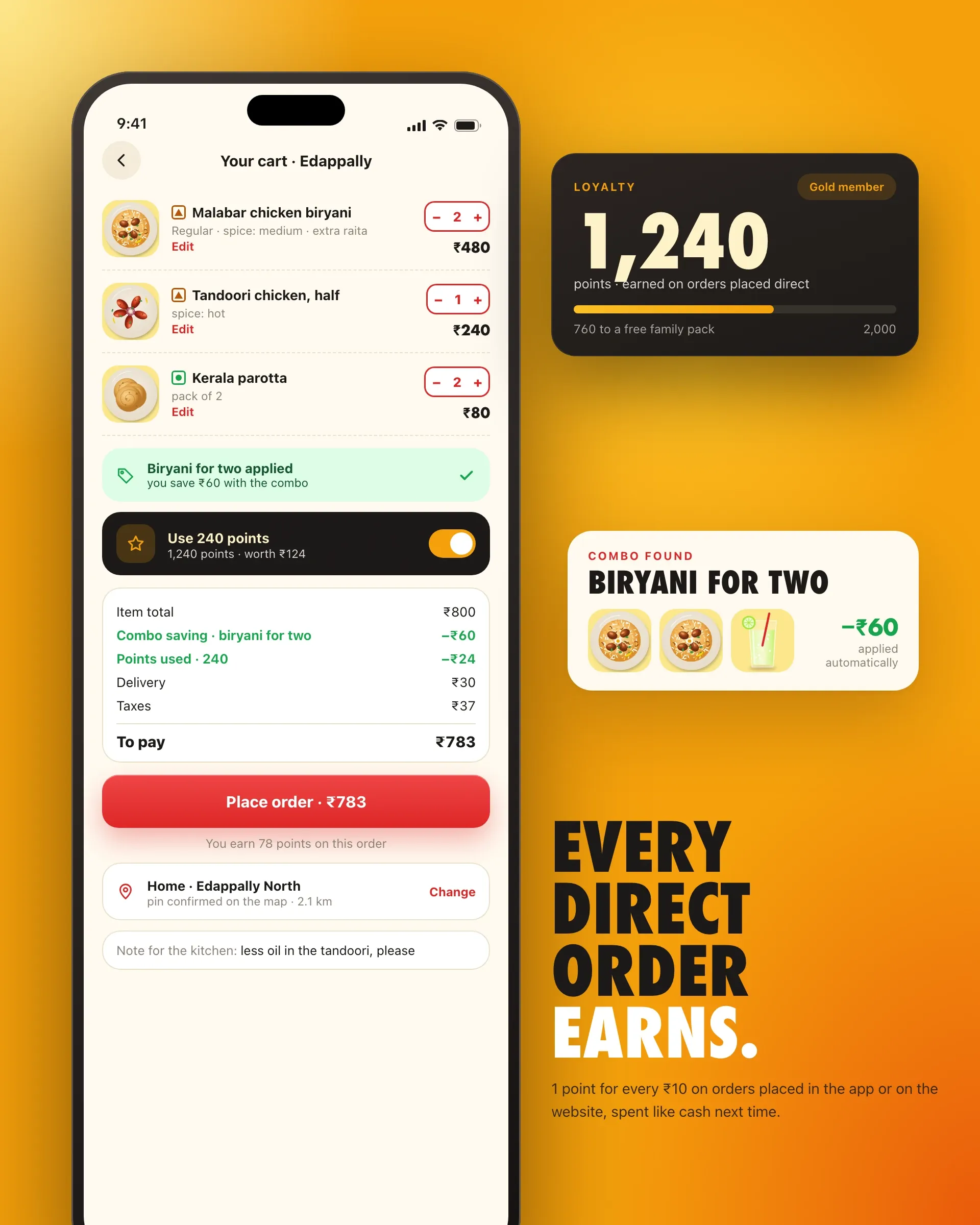
Customers earn loyalty points on every order they place directly and spend them on future orders.
- Outlet managers in control
Each outlet manager has a panel to run their own outlet:
- How it's built
The customer app is React Native, and the ordering website and panels are React.
- Pilot and launch
One outlet ran the whole system for two weeks while we tuned the kitchen display with its chefs and the rider app with its riders.
- The outcome
Regular customers now order directly from the chain, with offers and loyalty rewards that bring them back.
The challenge
Most of the chain’s online orders came through food delivery aggregators, which took a commission on every order and kept the customers to themselves. Regular customers who loved the food had no reason to order directly, and the chain had no way to reach them.
Inside each outlet, orders arrived in too many ways: several aggregator tablets on the counter, phone orders written on a pad, and counter orders in the billing system. Kitchens worked from printed slips, and on busy nights slips went missing, dishes went out in the wrong order and riders stood waiting without knowing which bag was theirs.
What we saw on busy nights
We spent weekend evenings in the kitchens and at the counters before designing anything.
- The counter was a wall of beeping tablets. Each aggregator had its own device, and every order was keyed again into the billing system by hand.
- The kitchen had no single order of work. Slips from different channels piled up by printer, not by time, and the biryani station couldn’t see what the tandoor was waiting on.
- Phone orders were the most loyal and the least organised. Regulars called the same outlet every week, and their orders lived on a notepad.
- Customers called to ask “where is my food?” because nobody could tell them.
Ordering built for one hand
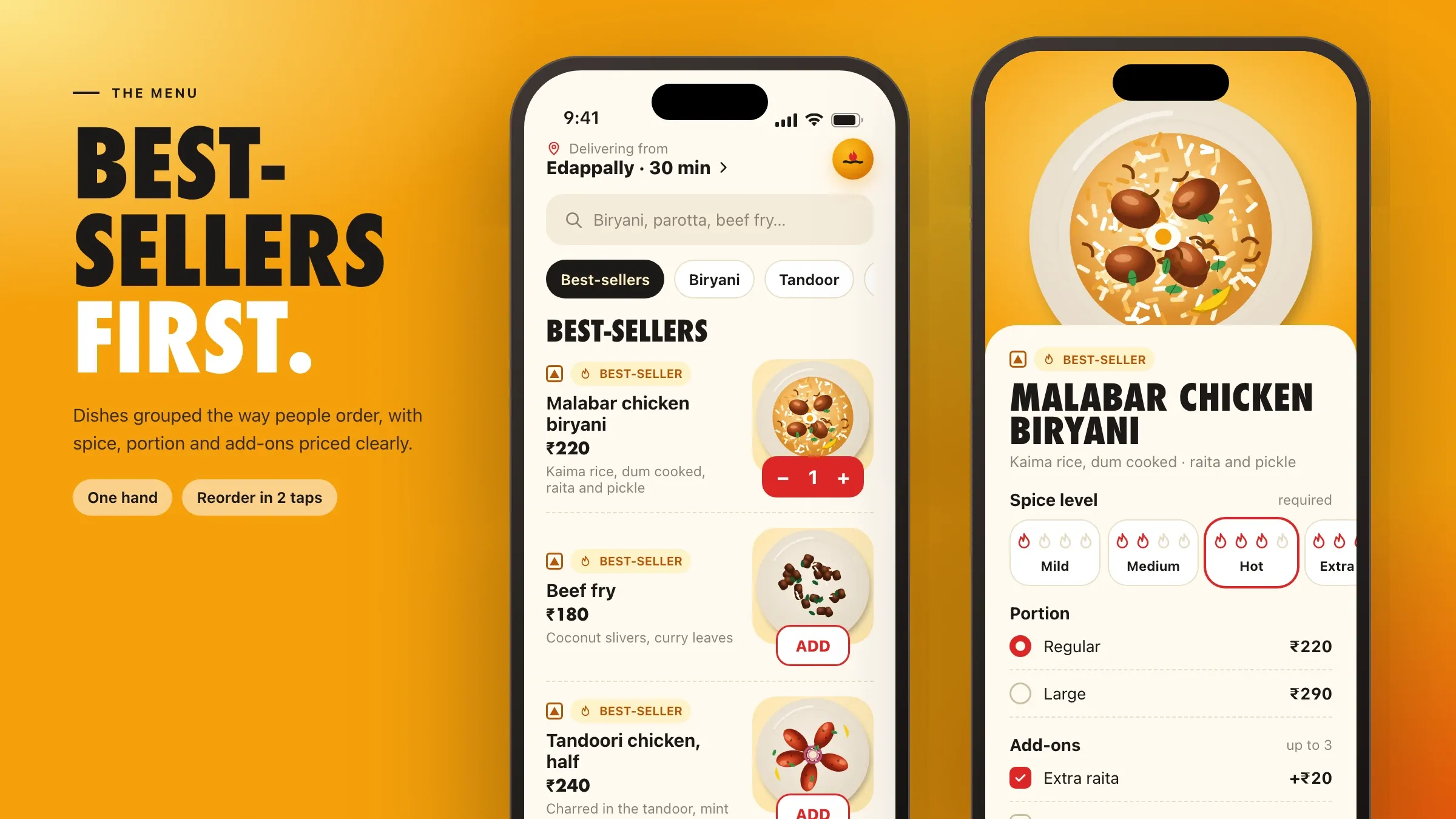
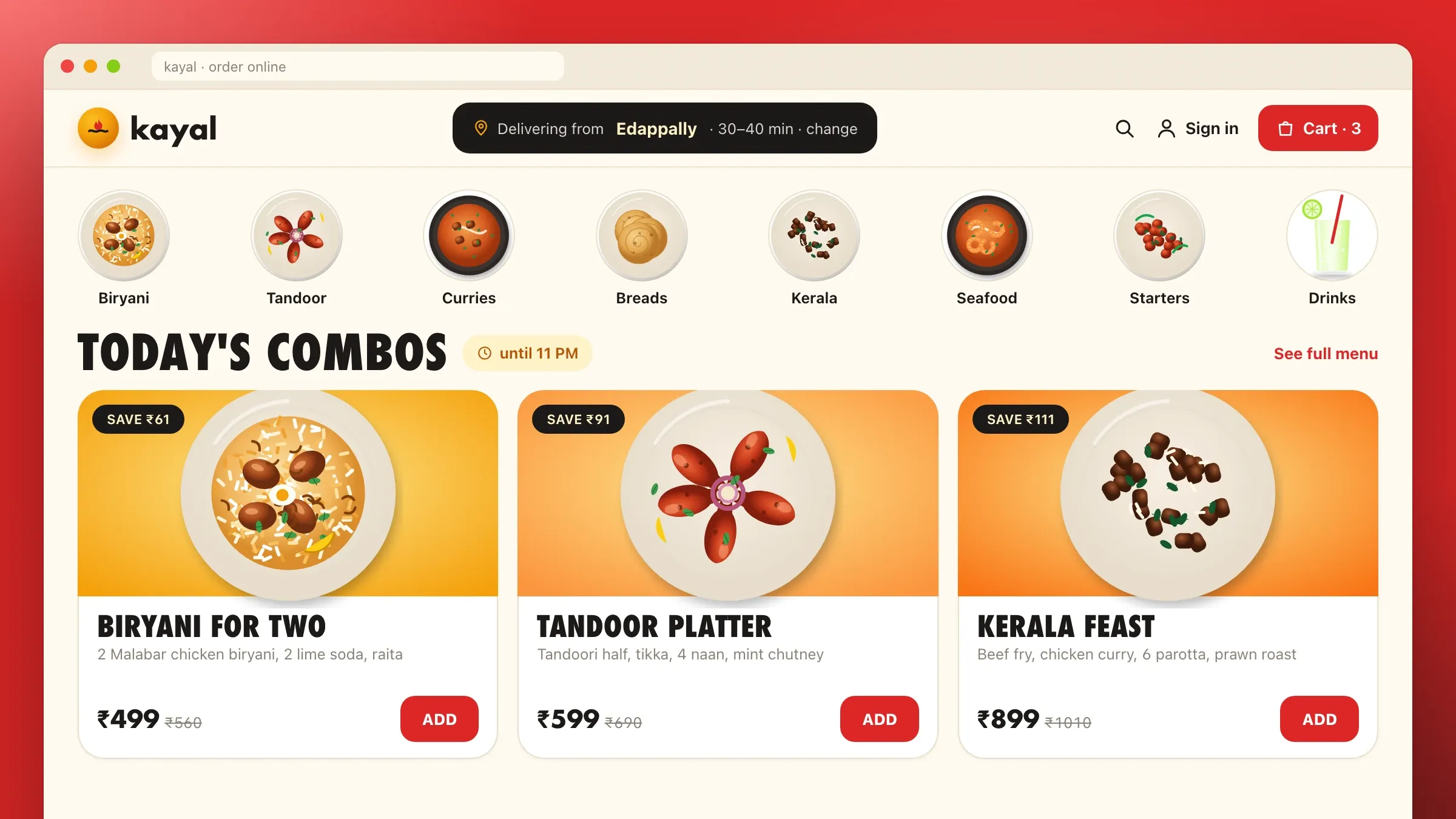
We built a branded food ordering app for Android and iPhone, with an ordering website, both connected to one menu that each outlet manages itself.
The menu is built for ordering on a phone with one hand:
- dishes grouped the way people order, with the best-sellers first;
- customisations such as spice level, portion size and add-ons, priced clearly;
- combos and family packs, with the saving shown;
- reorder a past order in two taps.
Customers choose delivery or pickup and can schedule an order for later. Addresses are confirmed with a pin on the map, and each outlet delivers within its own area, so every order goes to the nearest kitchen. Payment is by UPI, card, wallet or cash on delivery.
One kitchen screen for every channel
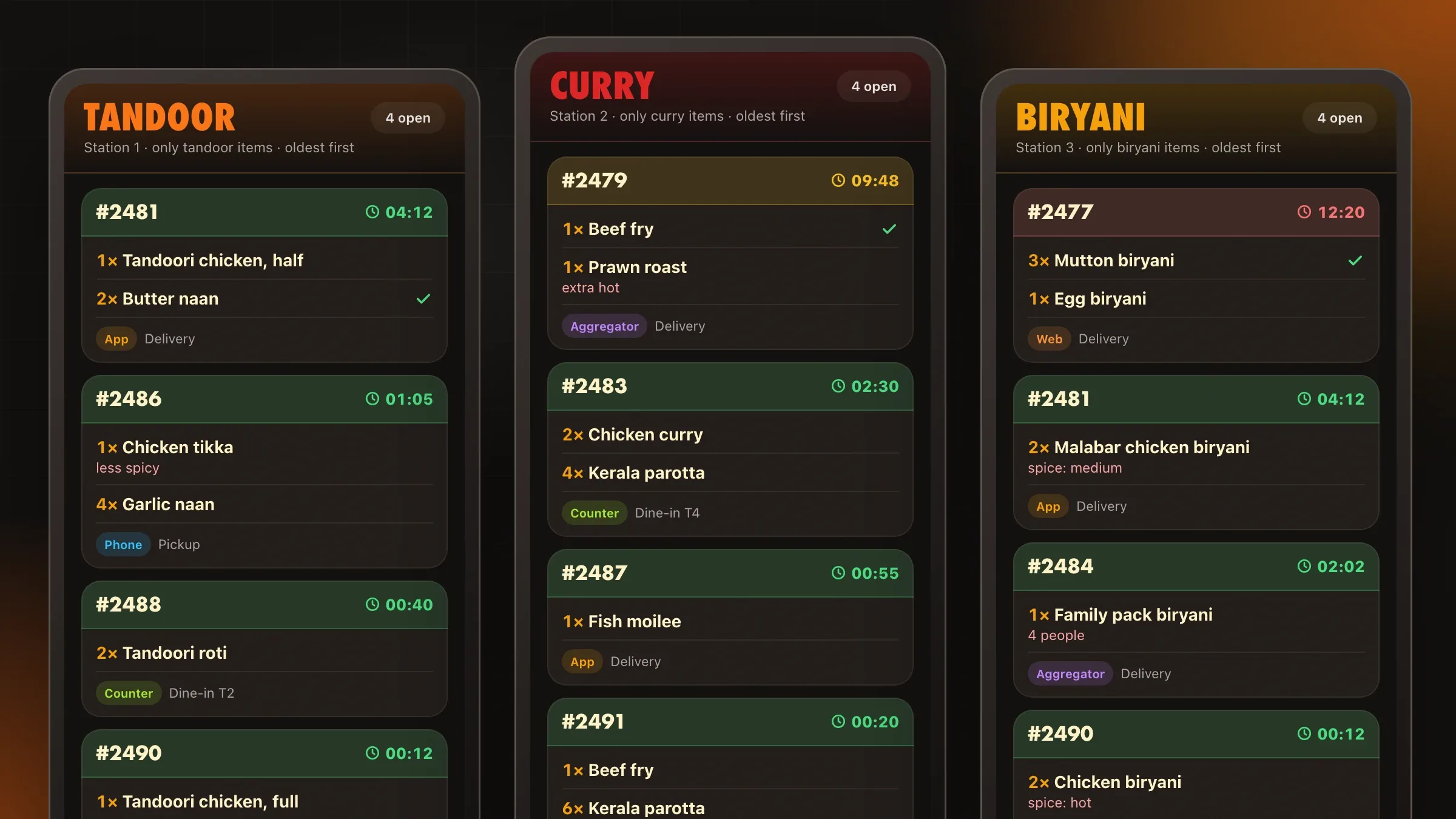
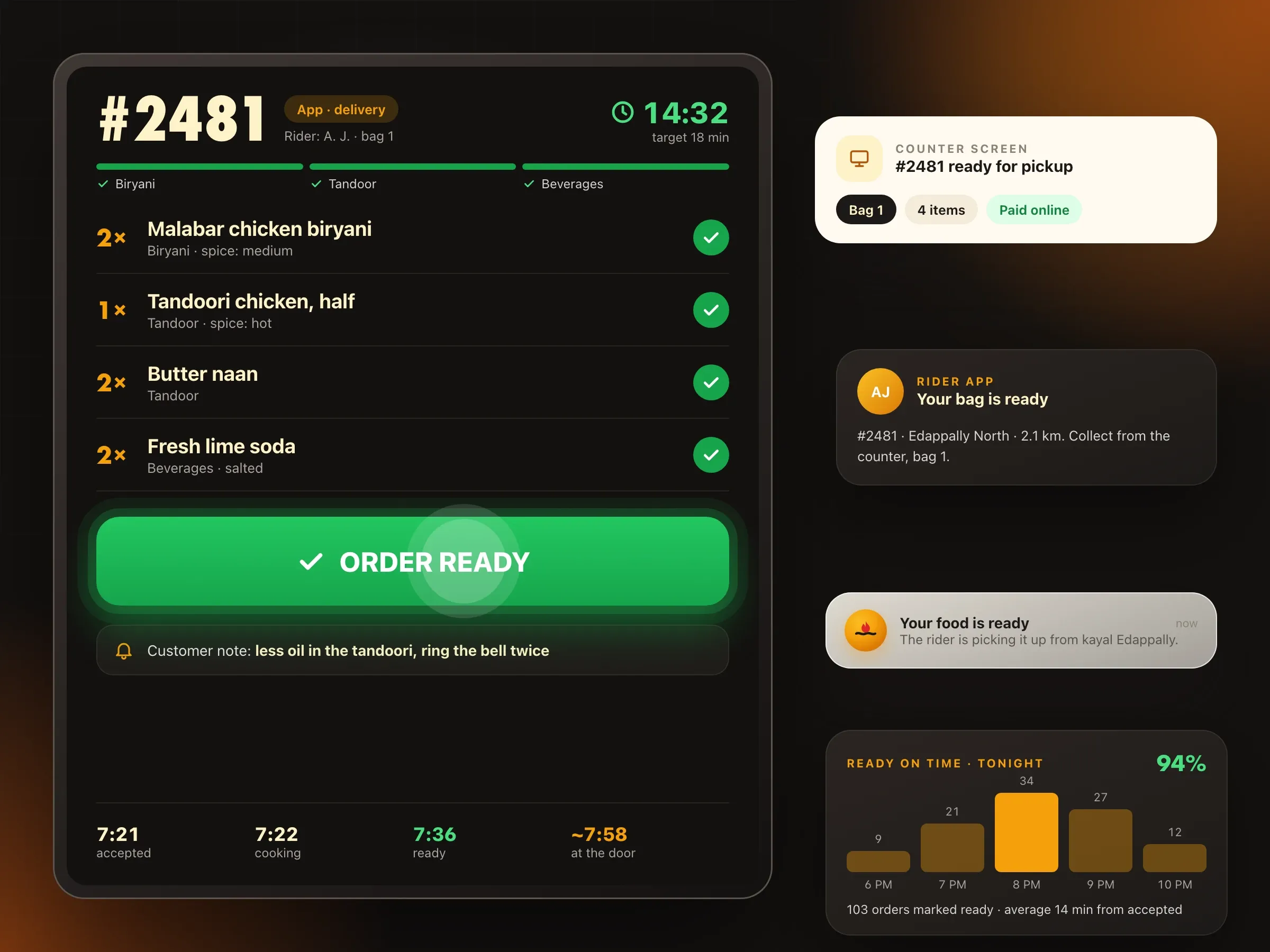
The kitchen display replaced printed slips. Android tablets in each kitchen show every order from every channel in one queue: the app, the website, phone orders entered at the counter, and aggregator orders entered once at the counter instead of being written out again.
Orders are split by station, so the tandoor, curry, biryani and beverage stations each see only their own items, with a timer on each. When a station finishes, it taps the item ready. When the whole order is ready, the counter and the rider know at once.
Delivery and live tracking
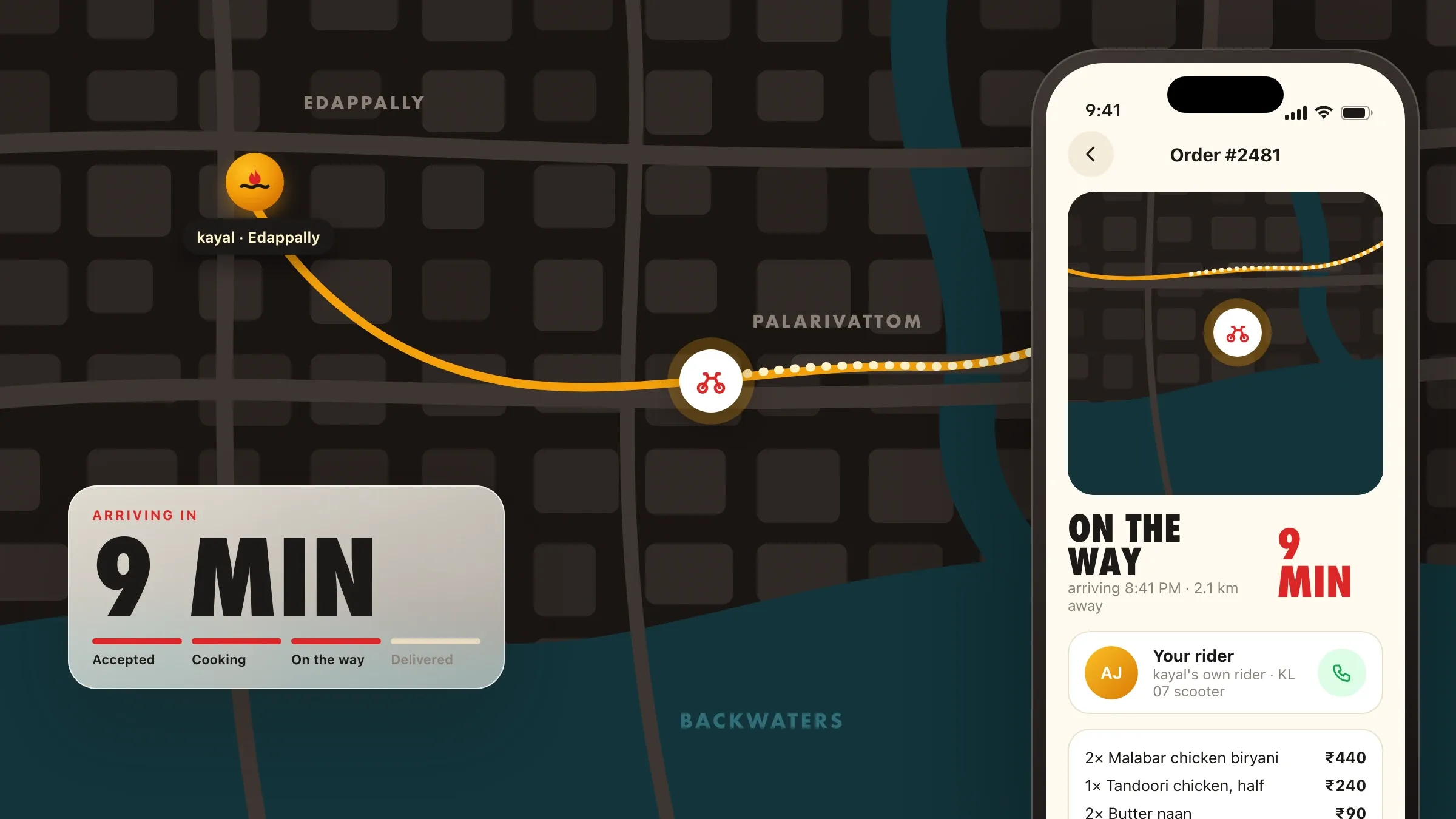
The chain’s own riders use a rider app that lists their deliveries, guides them to each address and shares their location while delivering. Customers follow their order on a map from the kitchen to their door, with a notification at each step: accepted, cooking, out for delivery, delivered.
Cash collected on delivery is recorded in the rider app and settled against each rider at the end of the shift, so the outlet’s cash always matches its orders.
Loyalty, offers and the customer relationship
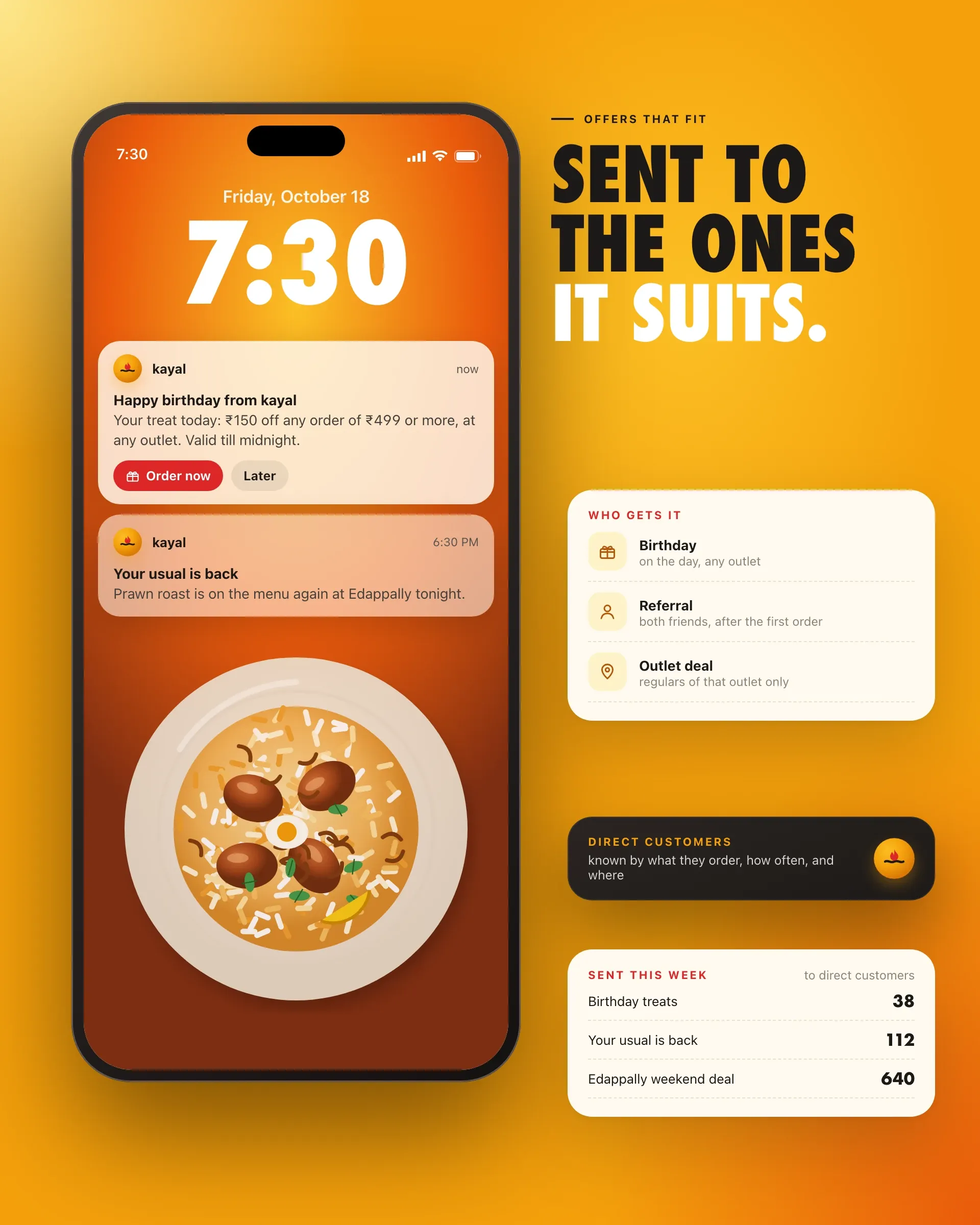
Customers earn loyalty points on every order they place directly and spend them on future orders. Birthday offers, referral rewards and outlet-specific deals go out as push notifications to the customers they suit, instead of as discounts for everyone.
For the first time, the chain knows its regular customers: what they order, how often and from which outlet. That knowledge stays with the chain, not with an aggregator.
Outlet managers in control
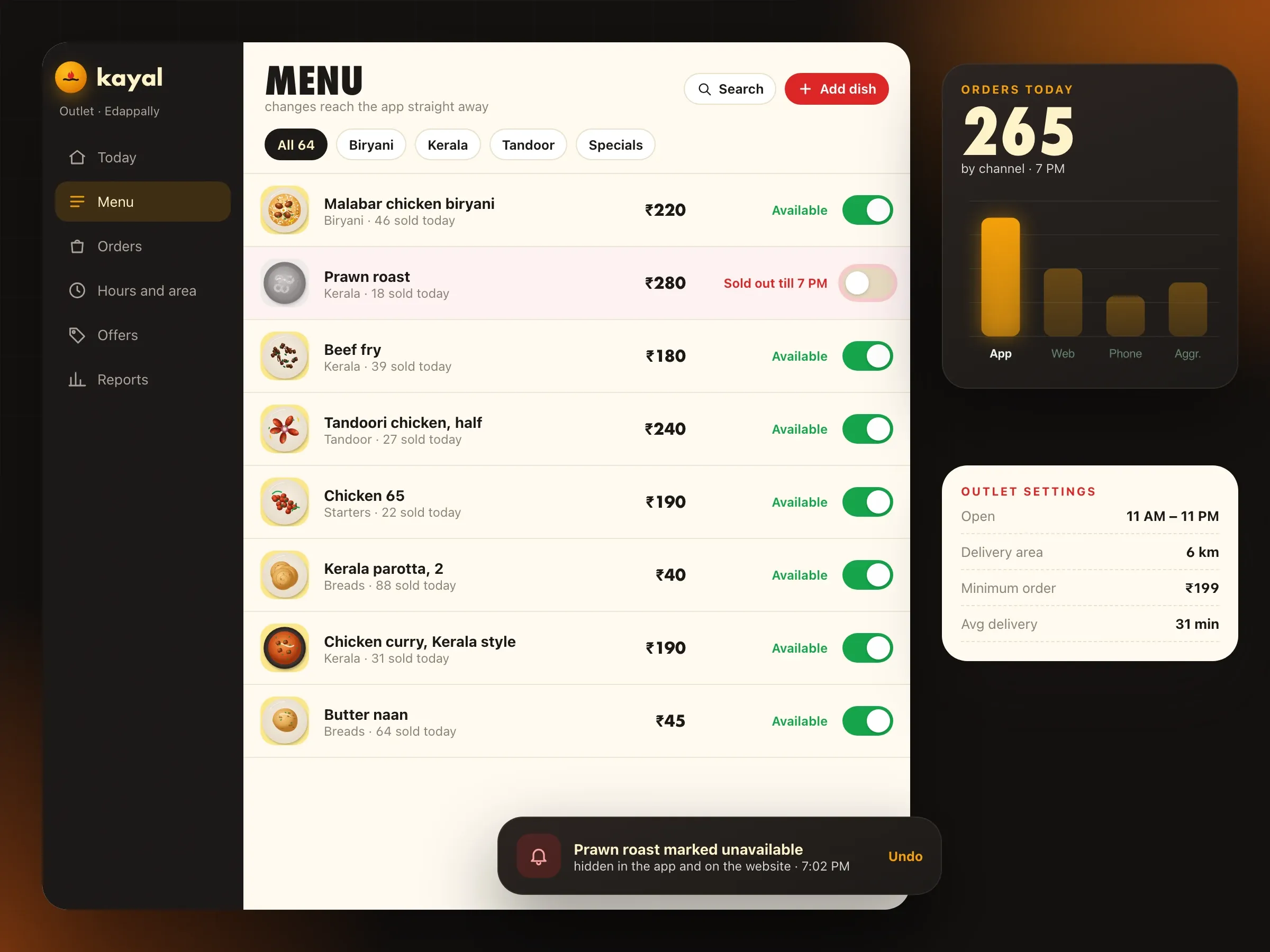
Each outlet manager has a panel to run their own outlet:
- change prices and add dishes or festival specials;
- mark a dish unavailable the moment it runs out;
- set opening hours, delivery area and minimum order;
- see the day’s orders, sales by channel and delivery times.
Changes reach the app straight away, so customers never order a dish the kitchen can’t make.
How it’s built
The customer app is React Native, and the ordering website and panels are React. A Node.js and Express API sits on MongoDB, with Redis and Socket.IO pushing new orders to the kitchen displays in real time. Firebase Cloud Messaging carries notifications, Razorpay handles online payments, and Google Maps powers addresses, delivery areas and live tracking. Everything runs on AWS.
Pilot and launch
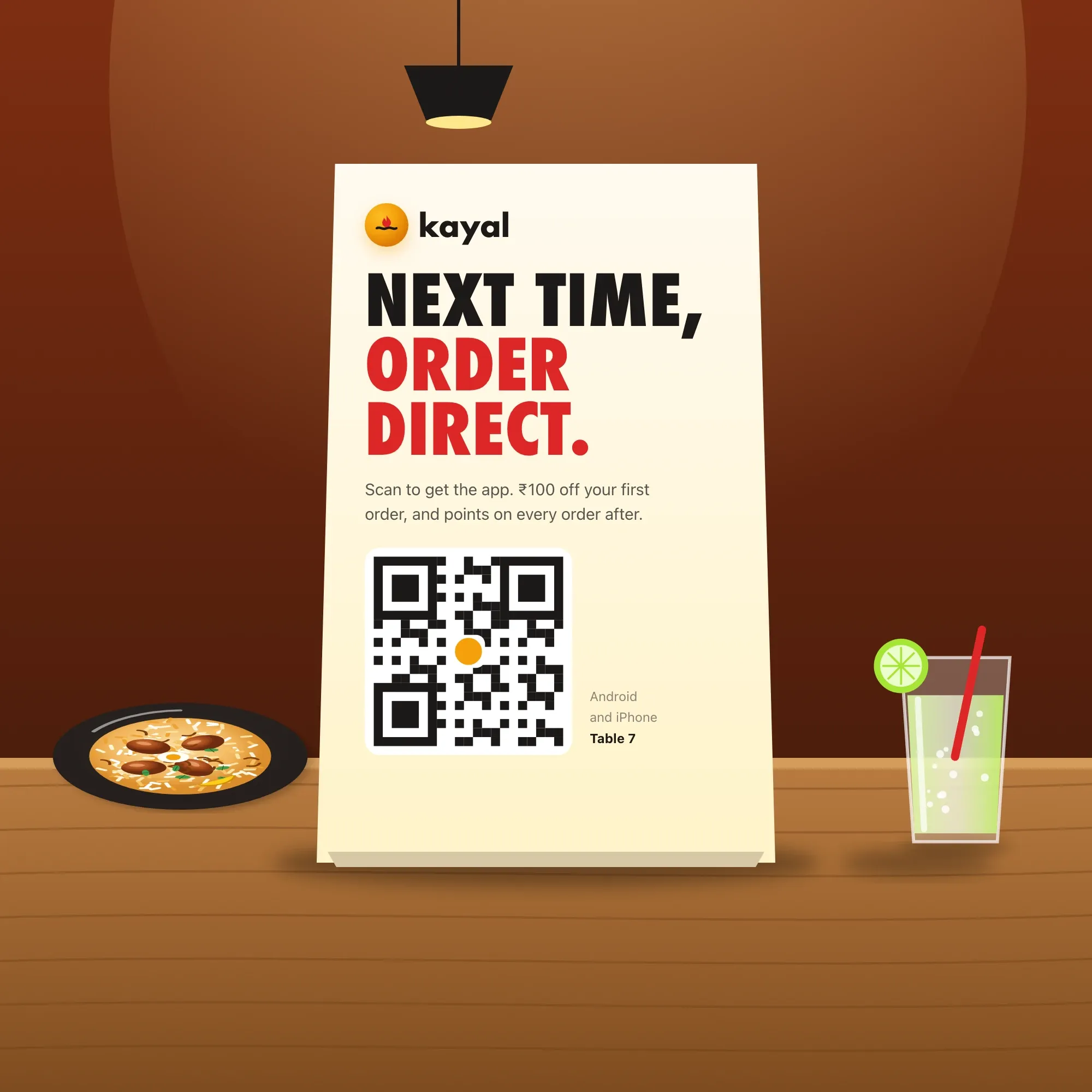
One outlet ran the whole system for two weeks while we tuned the kitchen display with its chefs and the rider app with its riders. Every other outlet then switched in turn. The launch was promoted inside the restaurants themselves, with QR codes on tables, takeaway bags and bills, and a first-order offer for customers who downloaded the app.
The outcome
Regular customers now order directly from the chain, with offers and loyalty rewards that bring them back. Every order, from every channel, appears on one kitchen screen in one order of work, riders know which bag is theirs, and customers follow their food instead of calling. Outlet managers update menus, prices and availability themselves in minutes.
How the project ran
4 months in 6 phases
- Weeks 1–2
Discovery on busy nights
Weekend evenings in the kitchens and at the counters, a review of how orders arrived from every channel, and a list of the dishes that sold best online.
- Weeks 3–5
Design
Menu, cart and checkout designed for one-handed ordering on a phone, plus the kitchen display, the rider app and the outlet manager's panel.
- Weeks 6–10
Ordering and the kitchen display
The customer app and website, one menu per outlet, and the kitchen display that gathers every channel onto one screen.
- Weeks 9–13
Delivery and loyalty
The rider app, live tracking, cash-on-delivery reconciliation, loyalty points and offers.
- Weeks 14–16
Pilot and launch
One outlet first, then every outlet, launched with QR codes on tables, bags and bills.
- Week 17 onwards
Support
Monthly releases for combos, festival menus, offers and new outlets.
What we delivered
- Discovery and service design
- Product design
- Mobile app
- Web app
- Cloud
- Maintenance and support
Inside the project
7 pictures
Questions and answers
10 answered
What did FIRELIFE Ventures build for a restaurant chain in Kochi?
FIRELIFE Ventures built a restaurant online ordering app for a multi-outlet restaurant chain in Kochi. It includes a branded ordering app and website, a kitchen display that gathers every order channel onto one screen, a rider app with live tracking and loyalty points.
What is a restaurant online ordering app?
A restaurant online ordering app lets customers order directly from the restaurant on their phone or the web, for delivery or pickup. Orders go straight to the kitchen, and the restaurant keeps the customer relationship and the full order value.
Why should a restaurant have its own ordering app?
Food delivery aggregators charge a commission on every order and keep the customer data. A restaurant's own ordering app brings regulars back directly, with the restaurant's own offers and loyalty rewards, while aggregators can still bring in new customers.
What is a kitchen display system?
A kitchen display system replaces printed order slips with screens in the kitchen. New orders appear instantly, grouped by station, with timers, and the kitchen marks each item ready so the counter and riders know exactly when to pick it up.
Can orders from aggregators appear on the same kitchen screen?
Yes. Orders from the app, the website, the phone and the counter arrive automatically, and aggregator orders are entered once at the counter, so the kitchen works from one screen in one order of priority.
How does delivery tracking work?
The restaurant's riders use a simple rider app that shares their location during a delivery. Customers follow their order on a map from the kitchen to their door, with notifications when it is accepted, cooking, out for delivery and delivered.
How do loyalty points work in a restaurant app?
Customers earn points on every order they place directly and spend them on future orders. The chain adds birthday offers, referral rewards and outlet-specific deals, and sends them as notifications to the customers they suit.
Can each outlet manage its own menu?
Yes. Each outlet manager sets prices, marks dishes unavailable when they run out, changes opening hours and sets the delivery area, and the app updates straight away.
How long does it take to build a restaurant ordering app?
The app took four months from discovery to launch across every outlet, including the customer app and website, kitchen display, rider app, loyalty points and the outlet manager's panel.
Can FIRELIFE Ventures build an ordering app for my restaurant?
Yes. FIRELIFE Ventures builds food ordering apps, kitchen displays and delivery tracking for restaurants and chains, and supports them after launch. Start a project through the contact page.
More from the portfolio
All portfolio-
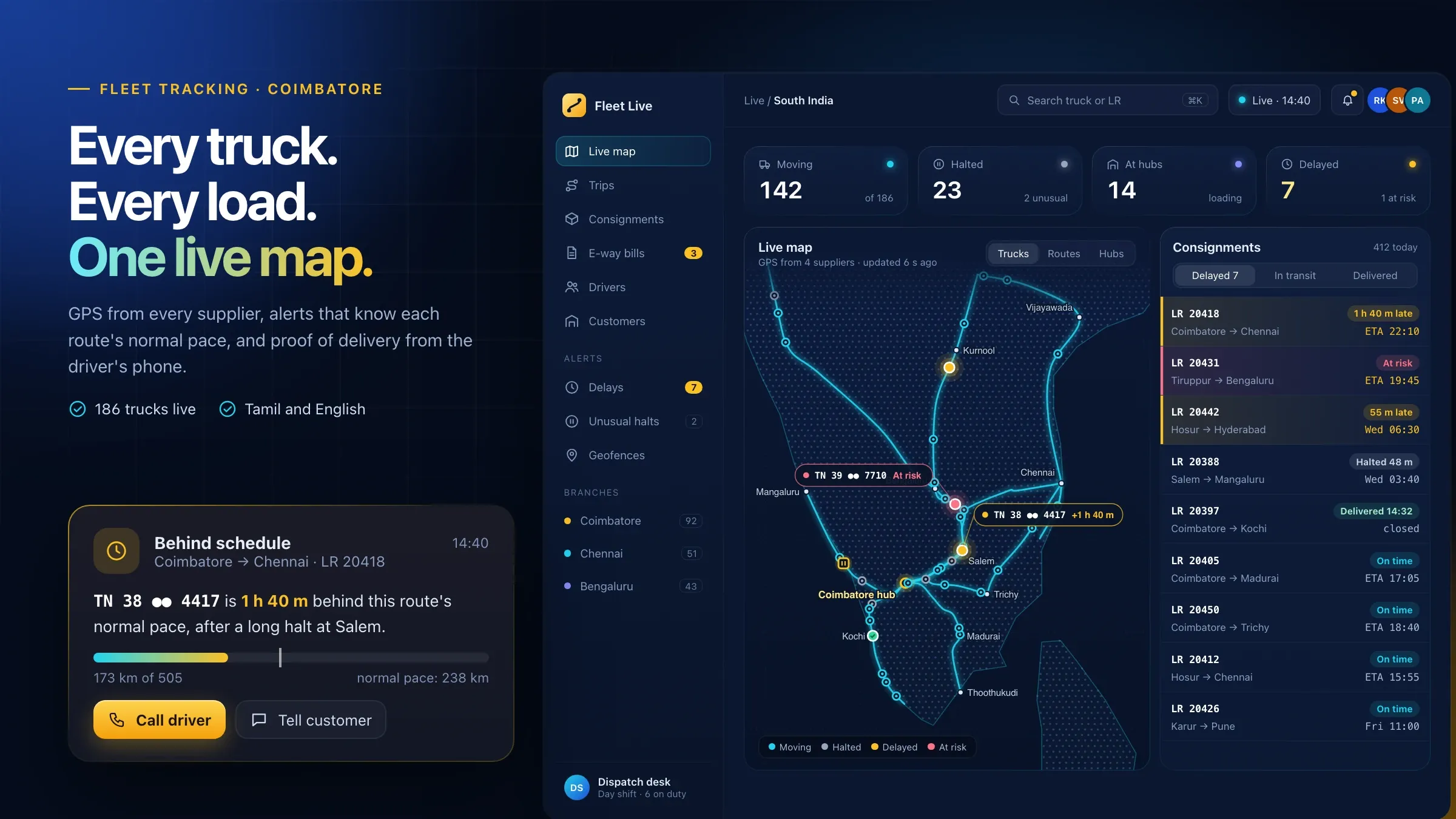 Fleet Tracking Dashboard A logistics tracking dashboard for a transport company in Coimbatore: every truck and consignment on one live map, delay alerts that learn each route, a driver app with proof of delivery, and e-way bills watched before they expire.
-
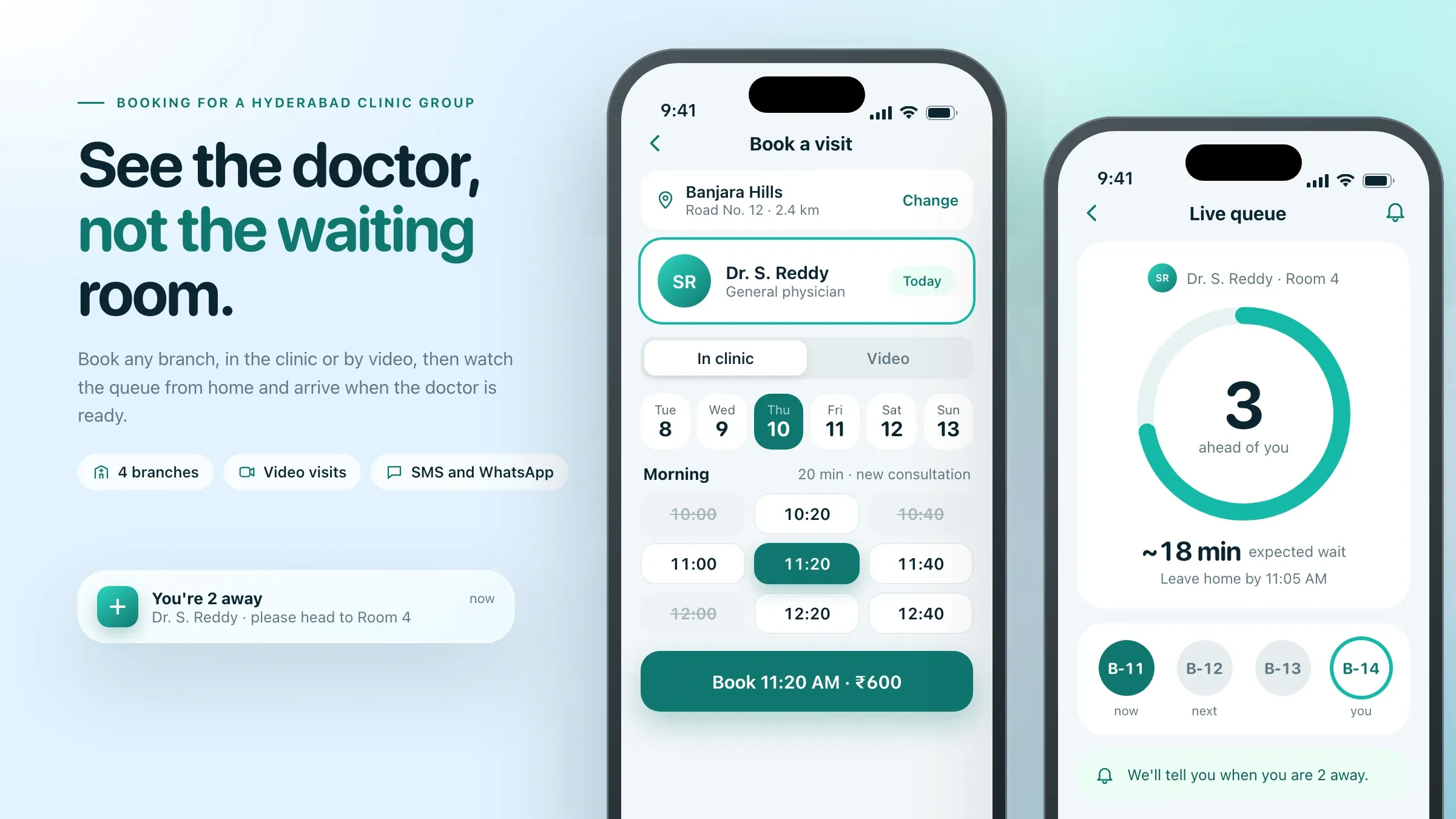 Clinic Booking and Live Queue A clinic appointment booking system for a multi-speciality clinic group in Hyderabad: online booking for every branch, a live patient queue, video consultations and reminders on SMS and WhatsApp.
-
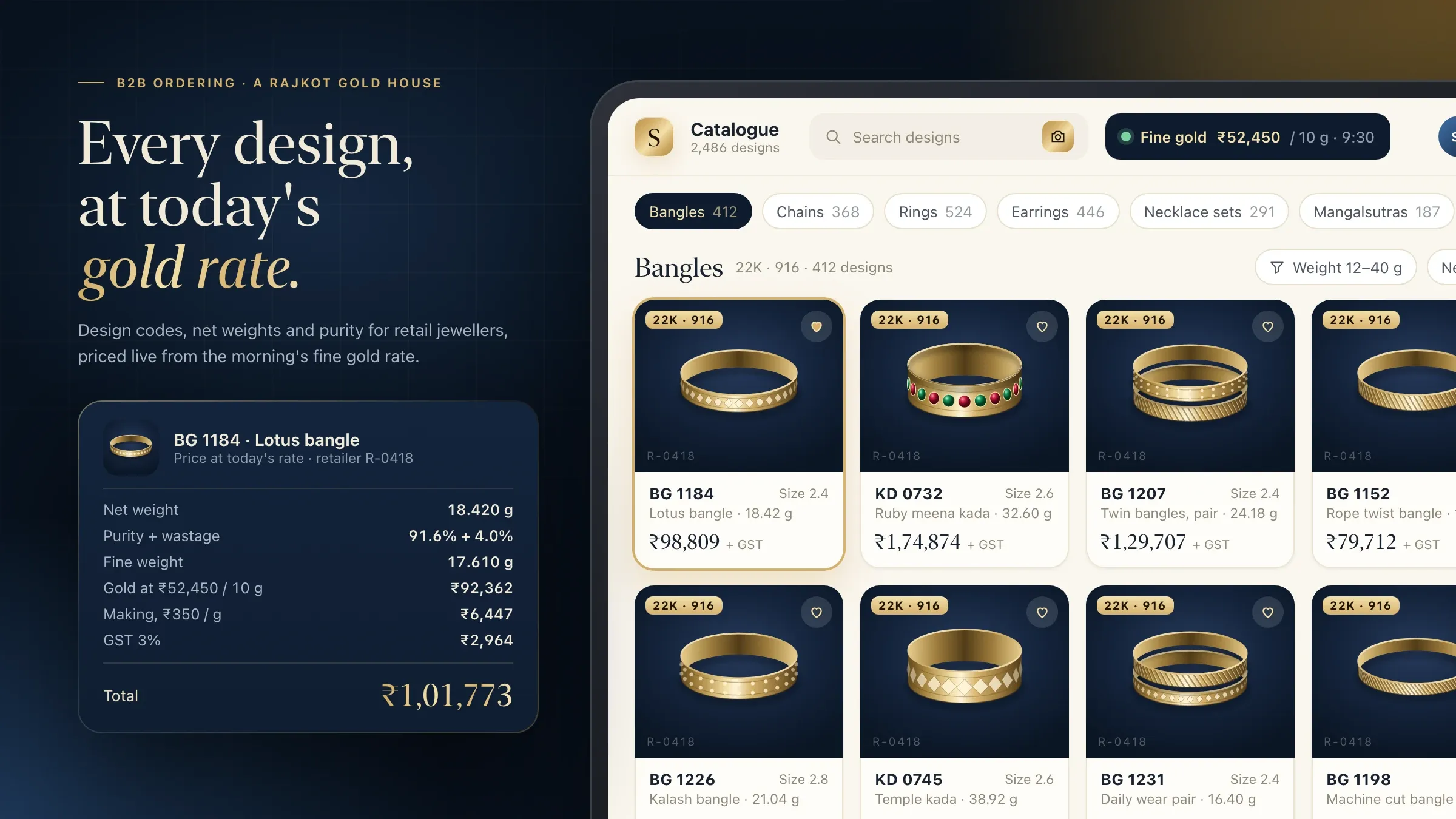 Jewellery Catalogue and Ordering App A B2B jewellery ordering app for a gold jewellery wholesaler in Rajkot: a live catalogue, gold-rate pricing, search by photo, and every order tracked from karigar to hallmark to dispatch.
Need something like this built?
Tell us what you want to build and where you are with it, and we'll get back to you.
Start a project