Overview
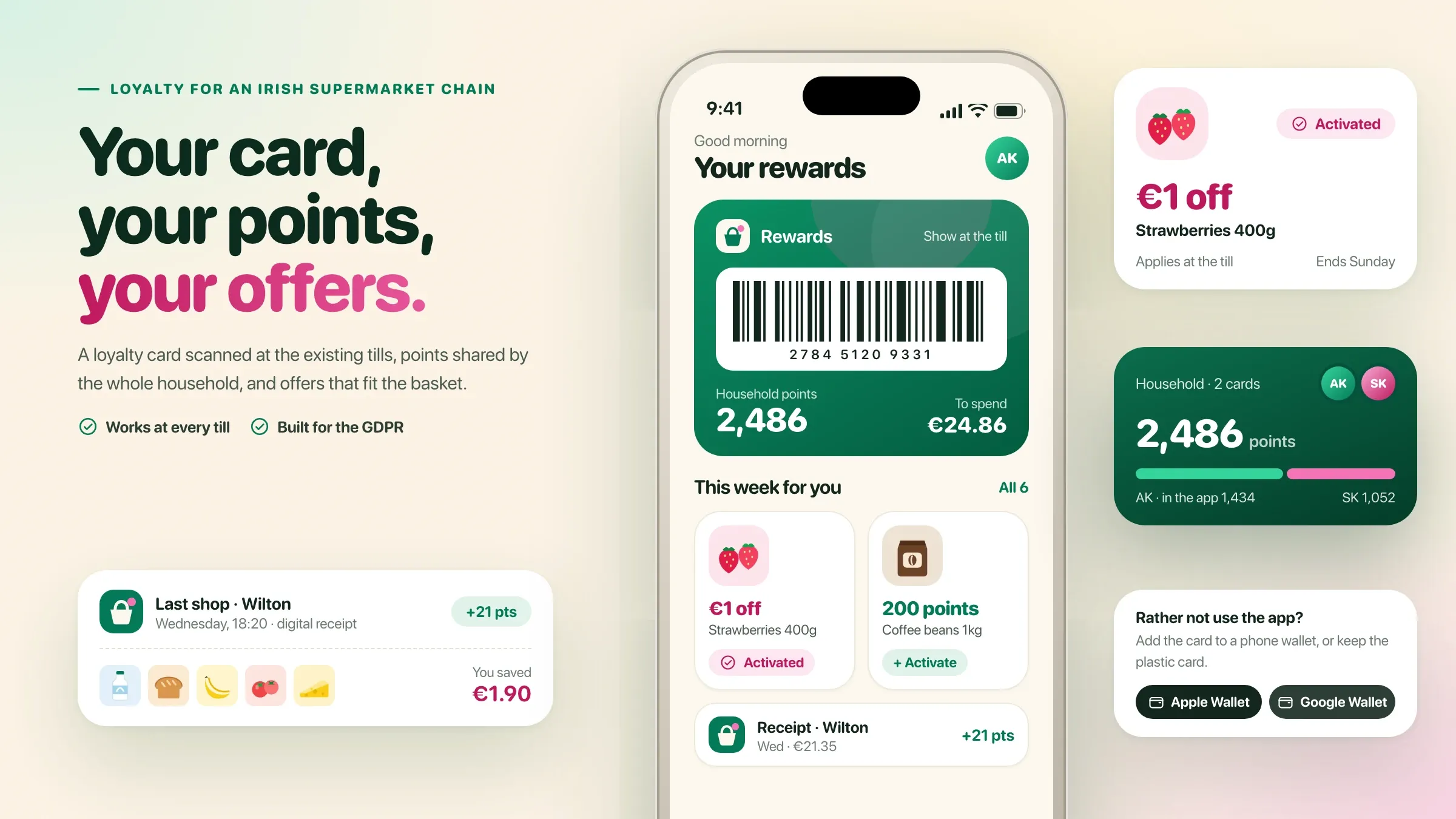
Retail loyalty and rewards app for a supermarket chain: a digital loyalty card scanned at the till, points, personalised offers and digital receipts.
- Client
- A regional supermarket chain in Ireland
- Industry
- Grocery retail
- Location
- Cork, Ireland
- Year
- 2021
- Duration
- 6 months
At a glance
- The challenge
The chain's loyalty scheme ran on plastic cards and paper statements, and it knew almost nothing about its shoppers.
- What shoppers and staff told us
We spent time at the tills and the customer service desks, and spoke with regular shoppers of all ages.
- A digital loyalty card at the till
The app's digital loyalty card is a barcode that cashiers scan at the existing tills, exactly like the plastic card.
- Personalised offers
Offers now follow what each household actually buys.
- Supplier-funded deals and the marketing console
Many grocery offers are paid for by brands rather than the retailer.
- Digital receipts and the shopper's account
After every shop, a digital receipt appears in the app with the points earned and the savings made.
- Privacy and the GDPR
Privacy choices sit in plain view.
- How it's built
The app is built in Flutter for Android and iPhone.
- Pilot and launch
Two stores piloted the app for a month, with cashiers trained beforehand and staff at the customer service desks helping shoppers move their cards across.
- The outcome
Shoppers carry their loyalty card on their phone or in their wallet, collect points as a household, and get offers that fit what they actually buy.
The challenge
The chain’s loyalty scheme ran on plastic cards and paper statements, and it knew almost nothing about its shoppers. Shoppers forgot or lost their cards, every offer went out in the same weekly leaflet, and the marketing team had little idea which offers worked or who its most loyal customers were.
Any replacement had to work with the tills already in every store, keep the checkout moving on a busy Saturday, and treat customer data with the care the GDPR demands.
What shoppers and staff told us
We spent time at the tills and the customer service desks, and spoke with regular shoppers of all ages.
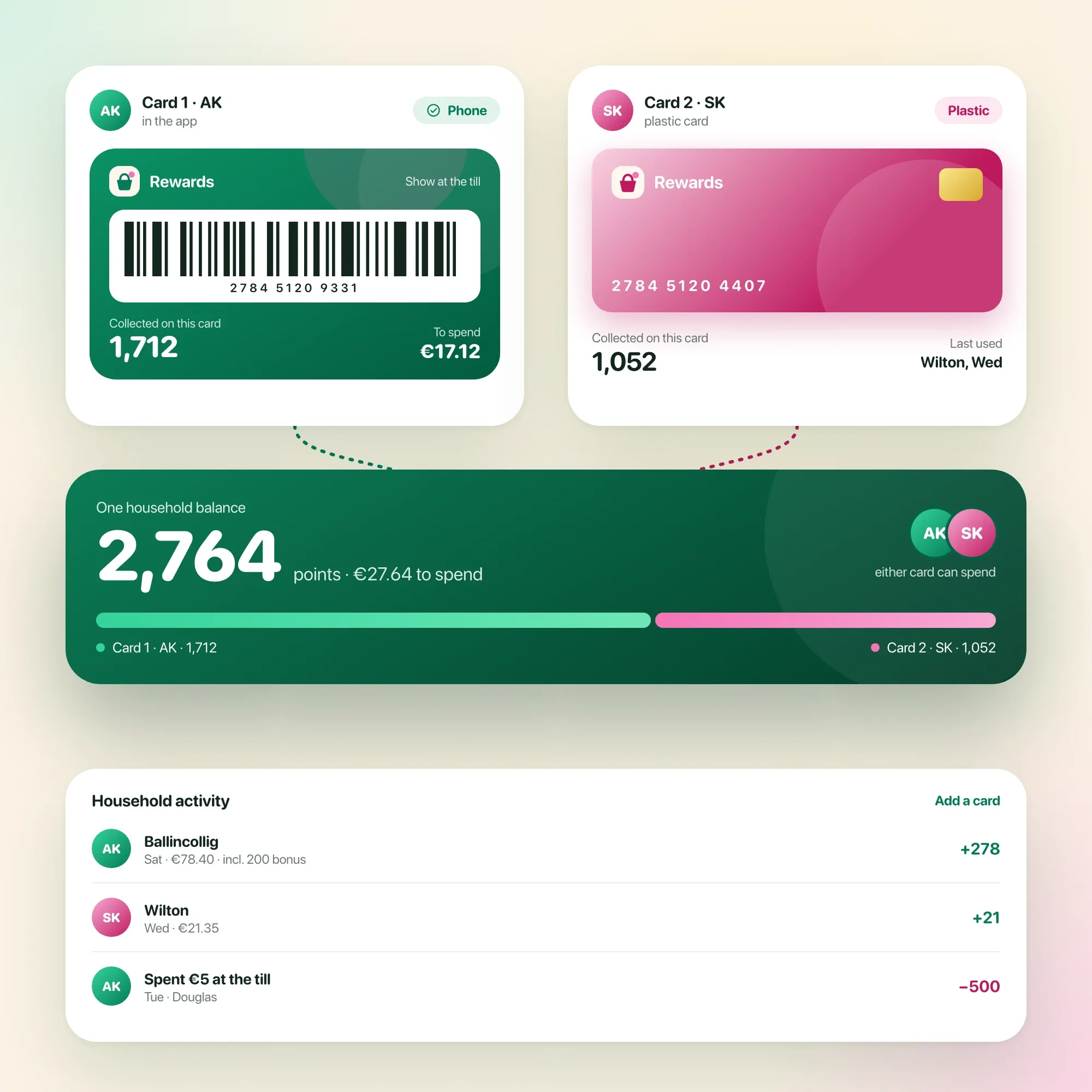
- Families shop as a household. Two adults with two cards were each collecting half the points they deserved.
- Leaflet offers felt random. Shoppers who never bought meat were offered meat every week.
- Older shoppers wanted it simple: a card that works, without having to learn a new app.
- Cashiers feared anything that slowed the queue.
A digital loyalty card at the till
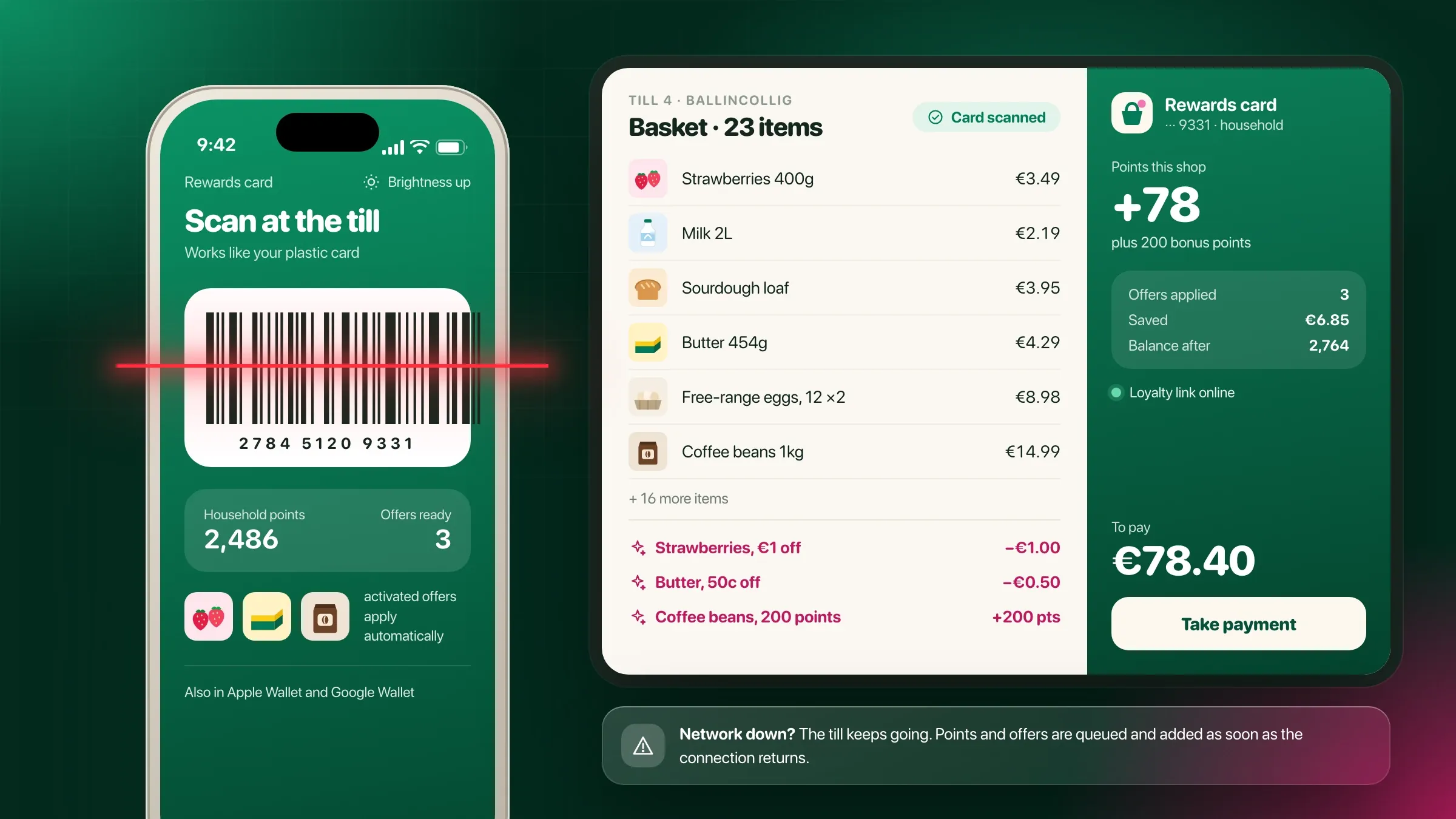
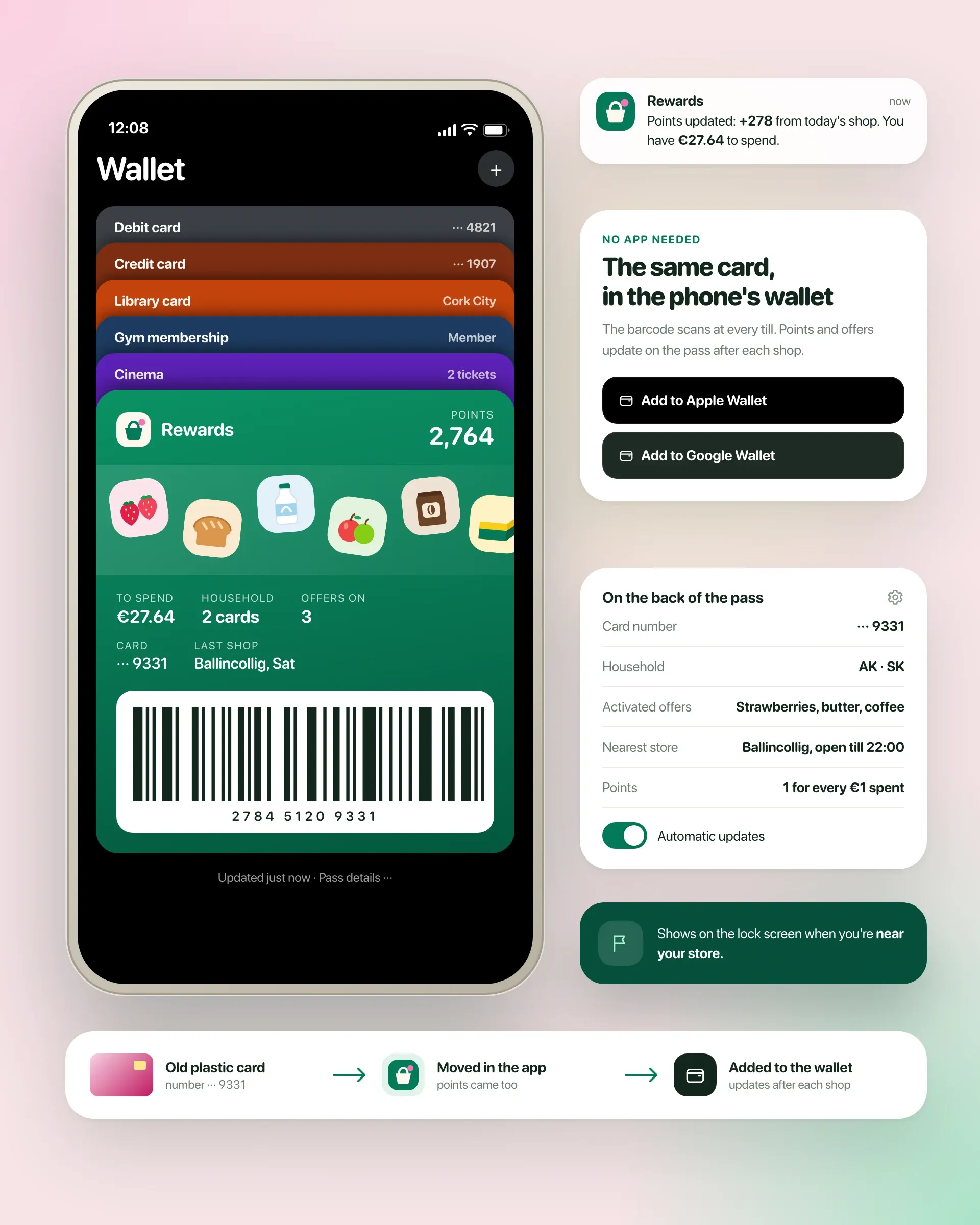
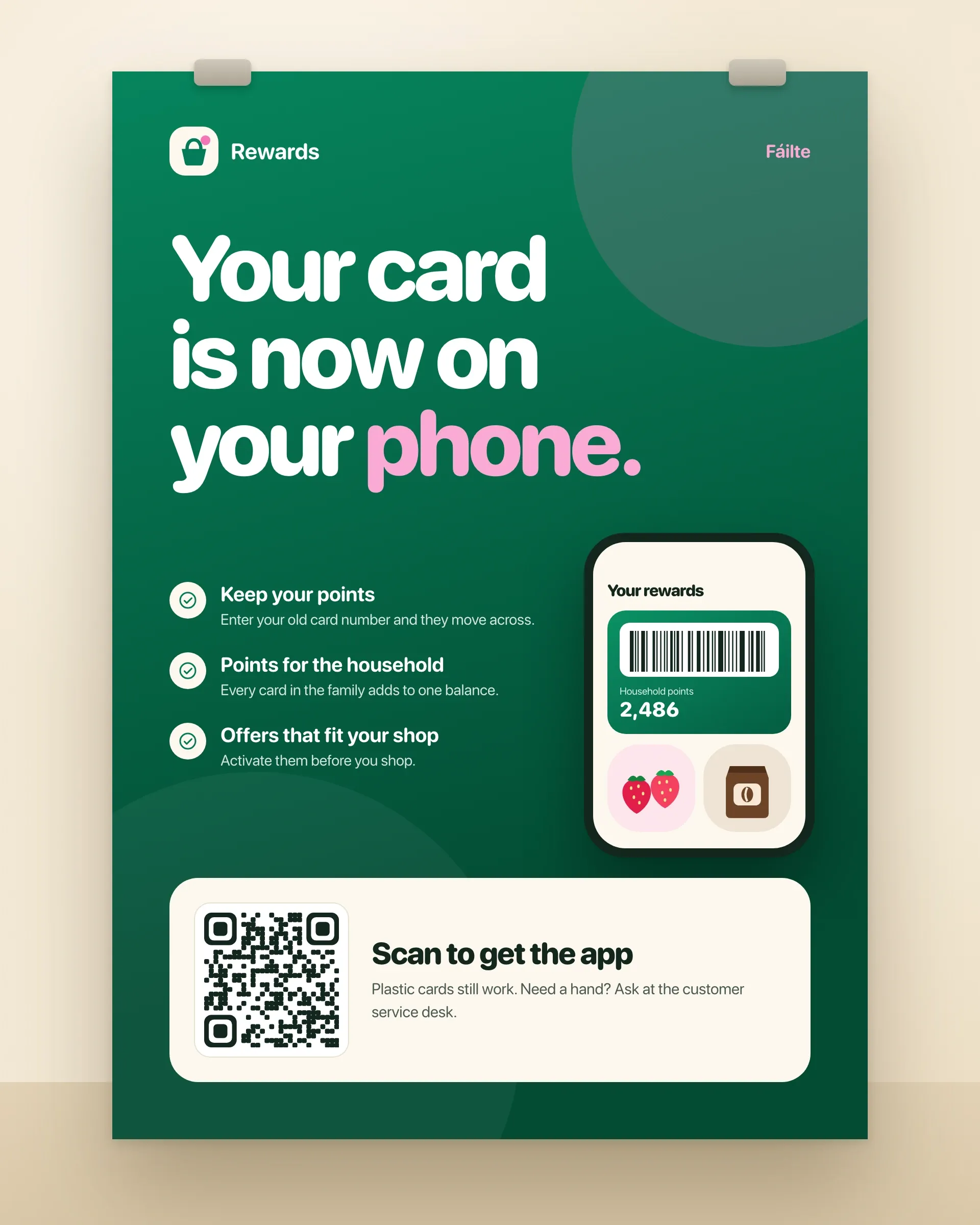
The app’s digital loyalty card is a barcode that cashiers scan at the existing tills, exactly like the plastic card. The till sends the basket to the loyalty system, which adds the points and applies the shopper’s activated offers before the receipt prints.
If the network drops, the till keeps working: points and offers are queued and added as soon as the connection returns. Shoppers who don’t want the app can add the card to Apple Wallet or Google Wallet, or keep their plastic card.
Existing members moved across by entering their old card number, and their points came with them. A household account can hold several cards, with every card adding to one shared balance.
Personalised offers
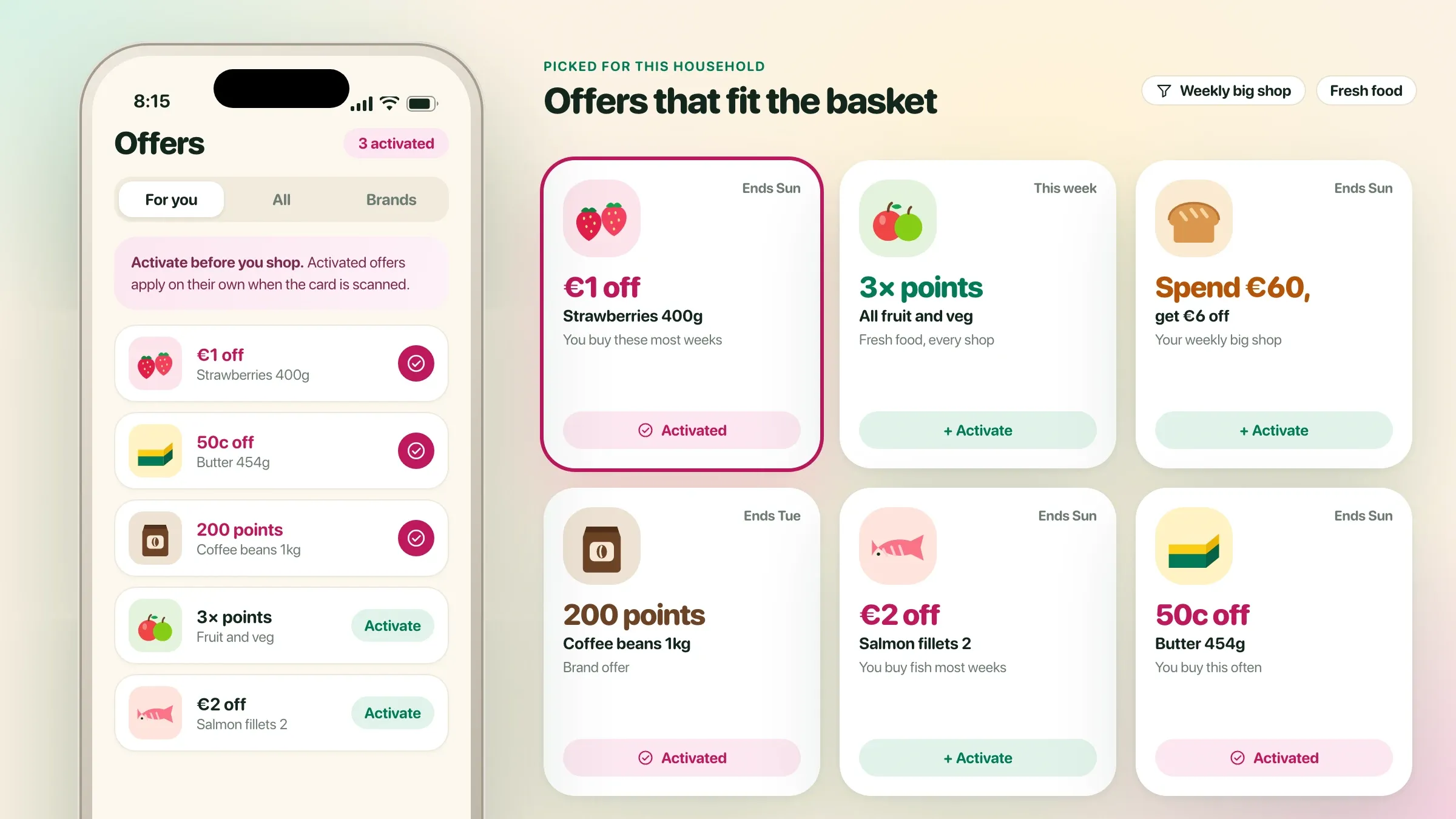
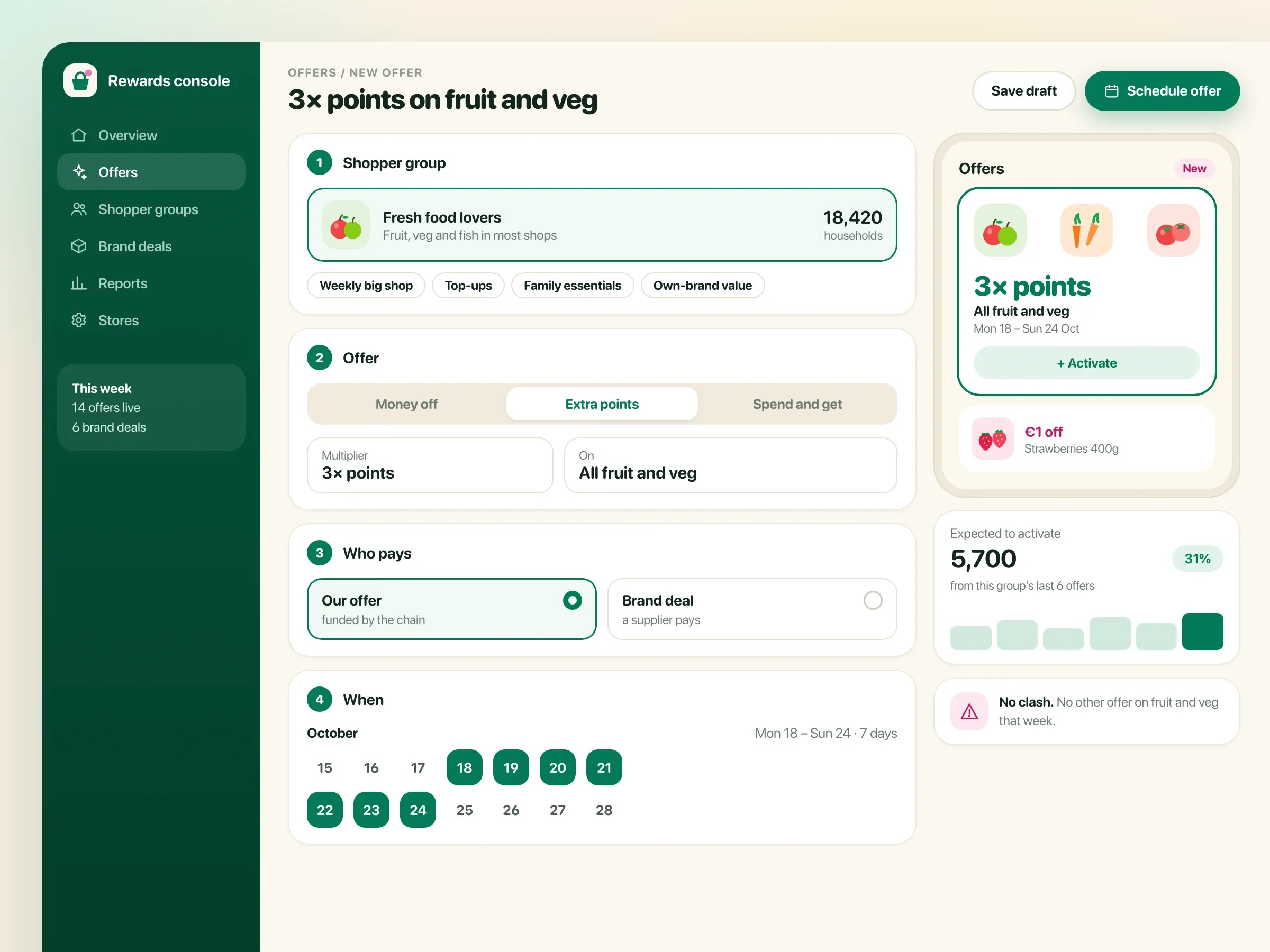
Offers now follow what each household actually buys. Shoppers are grouped by how they shop, such as a weekly big shop, frequent top-ups, fresh food, family essentials or own-brand value, and the marketing team builds offers for each group:
- money off products a shopper buys regularly;
- extra points on categories they are starting to explore;
- spend-and-get offers for the weekly shop.
Shoppers activate the offers they want in the app before they shop, and activated offers apply automatically at the till.
Supplier-funded deals and the marketing console
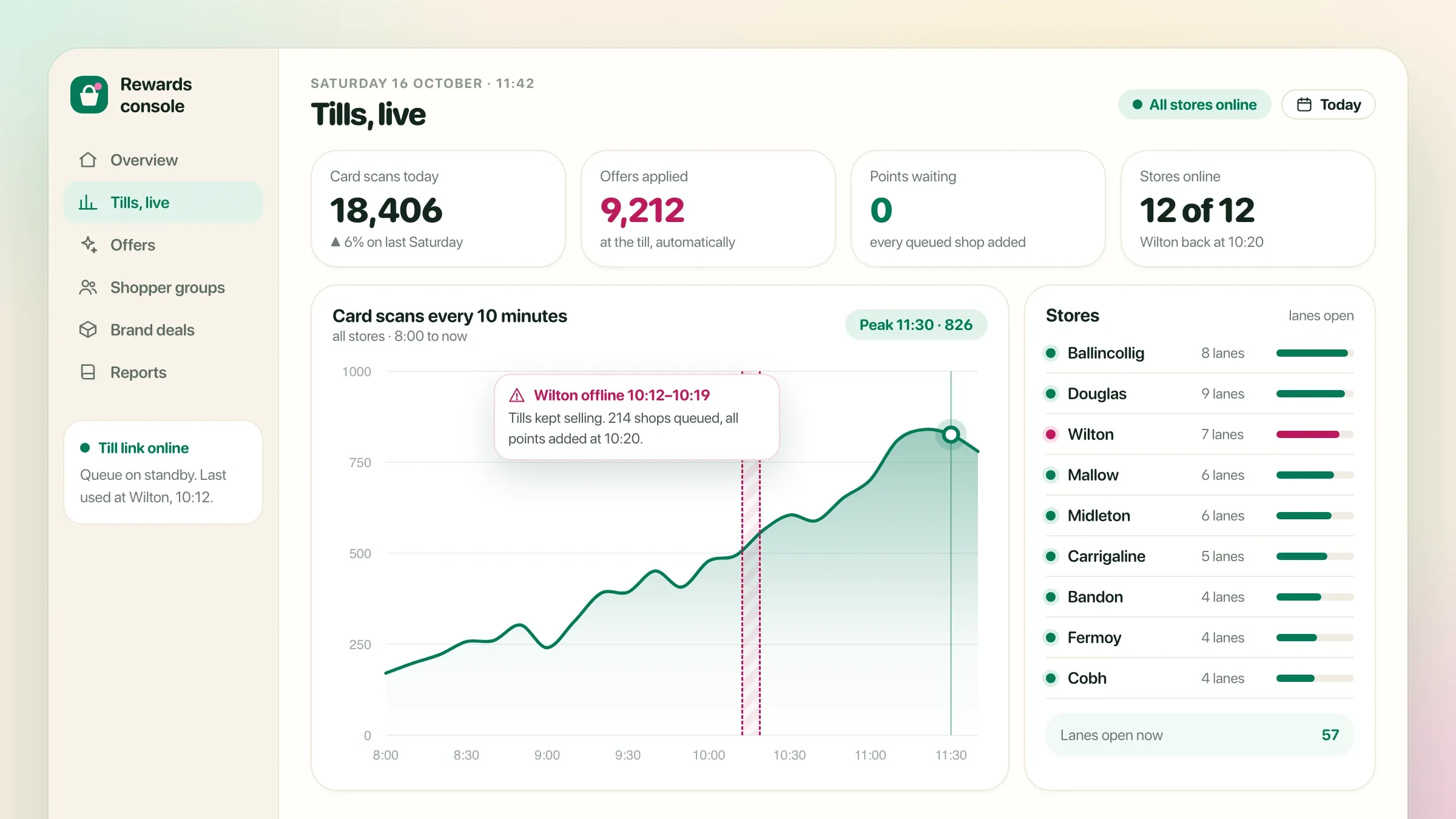
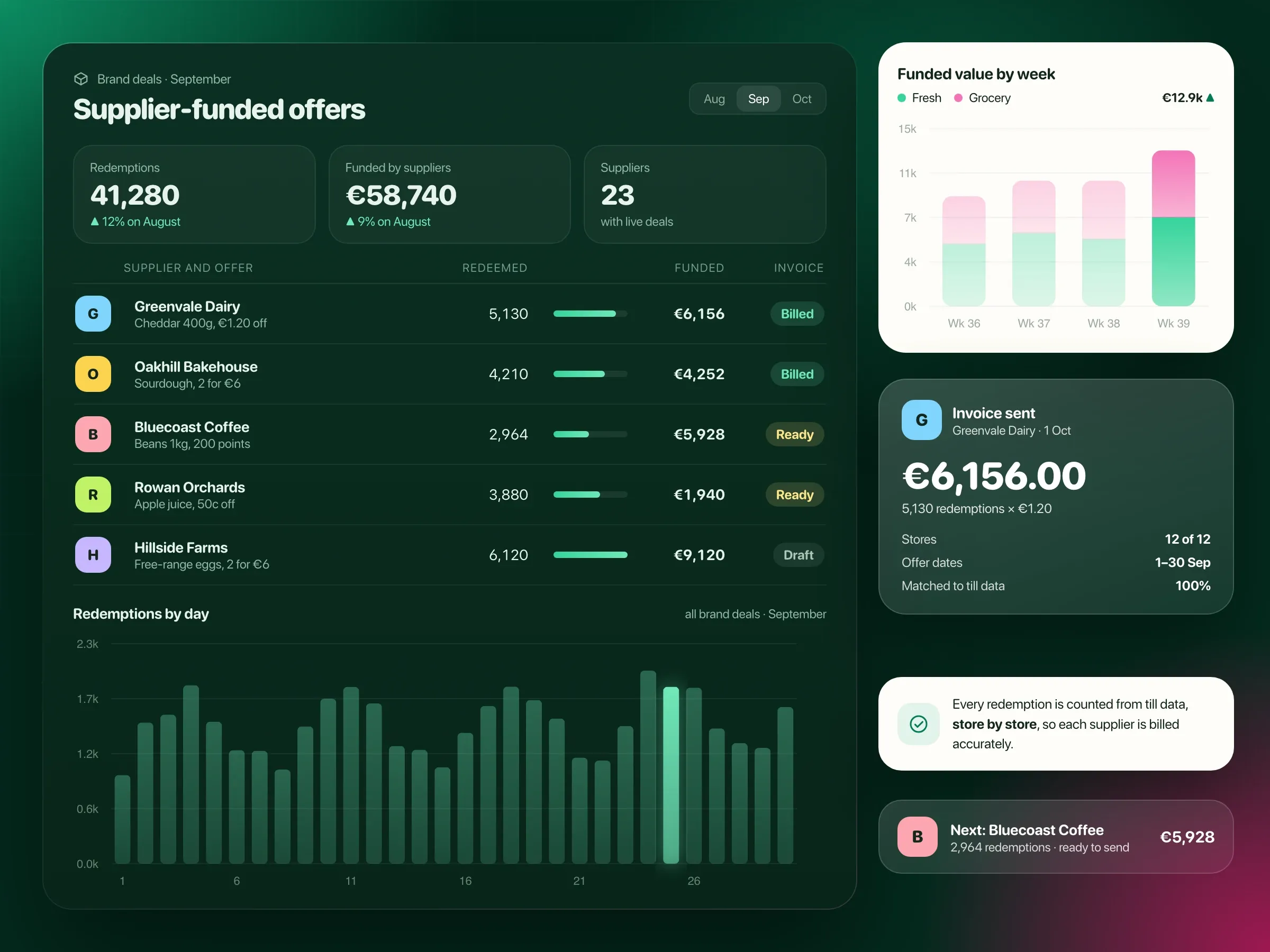
Many grocery offers are paid for by brands rather than the retailer. The marketing console lets the team create supplier-funded offers alongside its own, and records every redemption, so each supplier can be reported to and billed accurately.
In the same console, the team builds shopper groups and offers, schedules them, and sees which offers were activated and used, store by store.
Digital receipts and the shopper’s account
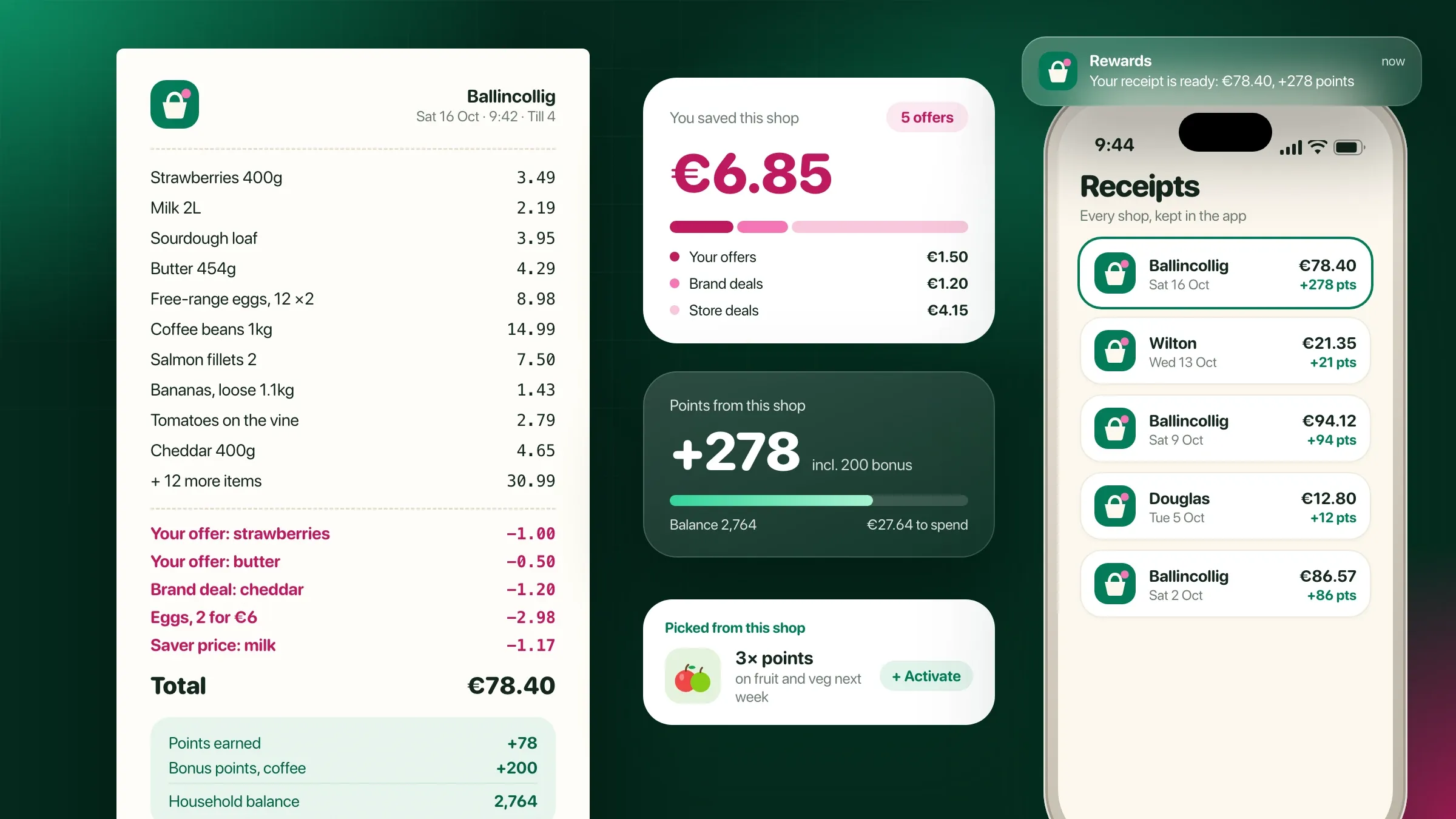
After every shop, a digital receipt appears in the app with the points earned and the savings made. Shoppers see their points balance, their household’s cards and their activated offers in one place, and weekly offers arrive as a notification if they choose to receive one.
Privacy and the GDPR
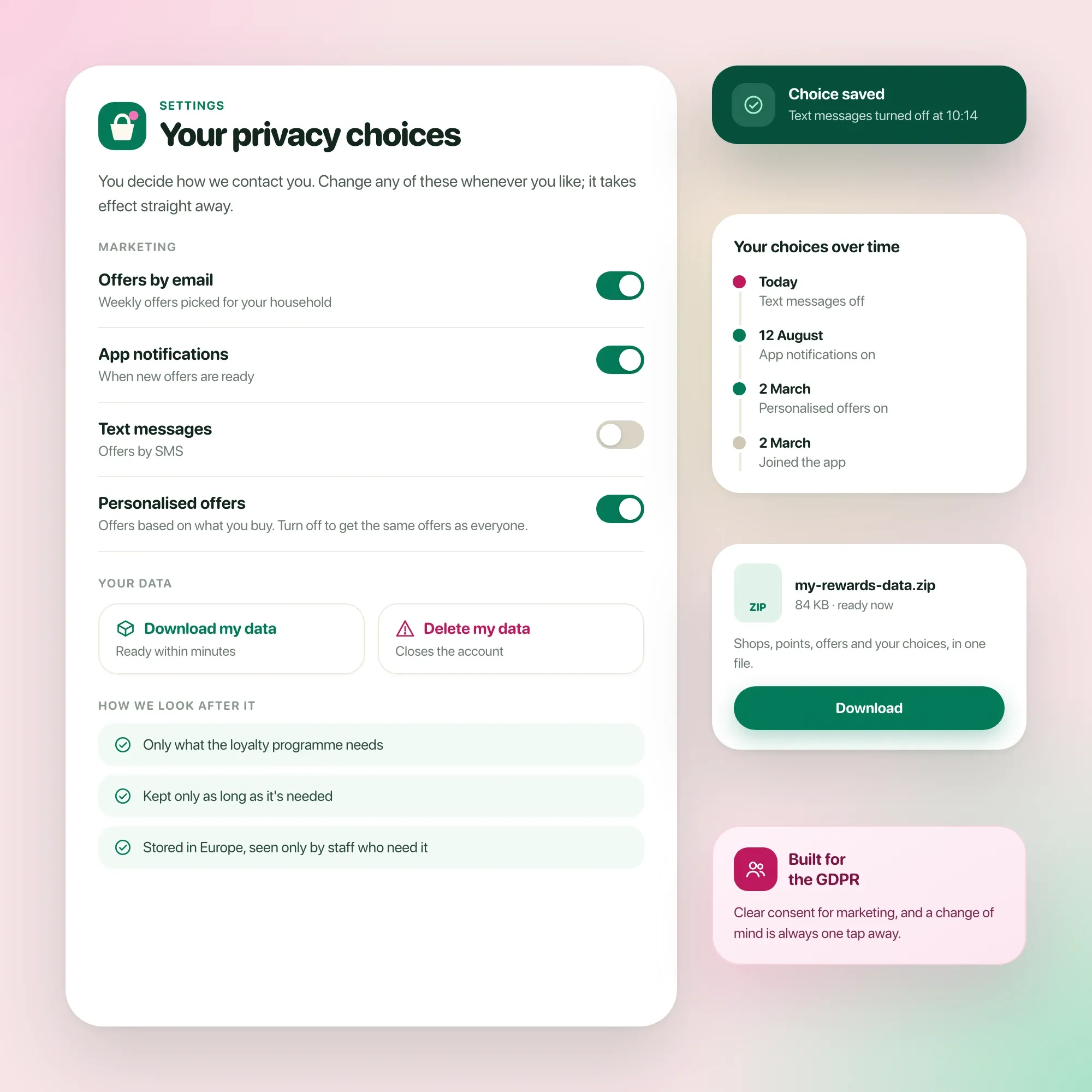
Privacy choices sit in plain view. Shoppers decide whether to receive marketing and can change their mind at any time. They can download or delete their data from the app. Only the data the loyalty programme needs is collected, it is kept only as long as needed, and access is limited to the staff who need it.
How it’s built
The app is built in Flutter for Android and iPhone. A NestJS API on PostgreSQL runs the loyalty system, with Redis keeping till lookups fast. A till integration layer connects to the chain’s existing point-of-sale system. Shopper groups are built in BigQuery, notifications go out through Firebase Cloud Messaging, wallet cards are issued for Apple Wallet and Google Wallet, and everything runs on Google Cloud in Europe.
Pilot and launch
Two stores piloted the app for a month, with cashiers trained beforehand and staff at the customer service desks helping shoppers move their cards across. Every store then switched, with signs at the entrance and at every till. Plastic cards still work, so nobody was left behind.
The outcome
Shoppers carry their loyalty card on their phone or in their wallet, collect points as a household, and get offers that fit what they actually buy. The checkout keeps moving, the marketing team sees which offers work, store by store, and supplier-funded deals are reported accurately.
How the project ran
6 months in 6 phases
- Weeks 1–3
Discovery
Time at the tills and the customer service desks, interviews with regular shoppers, and a close look at how the existing tills recorded loyalty cards.
- Weeks 4–7
Design
The loyalty card, offers, receipts and privacy choices in the app, plus the console the marketing team uses to build offers.
- Weeks 8–14
Till integration
The link between the loyalty system and the existing tills, with points, offers and a fallback for when the network drops.
- Weeks 12–20
App, offers and receipts
The app, household accounts, personalised and supplier-funded offers, digital receipts and wallet cards.
- Weeks 21–24
Pilot and launch
Two stores first, then every store, with in-store signage and help at the customer service desks.
- Week 25 onwards
Support
Weekly offers, new features and continued tuning of the shopper groups.
What we delivered
- Discovery
- Product design
- Mobile app
- Web app
- Data and analytics
- Cloud
- Maintenance and support
Inside the project
7 pictures
Questions and answers
10 answered
What did FIRELIFE Ventures build for a supermarket chain in Ireland?
FIRELIFE Ventures built a retail loyalty and rewards app for a regional supermarket chain in Ireland. Shoppers scan a digital loyalty card at the existing tills, collect points as a household, activate personalised offers and see digital receipts, with privacy choices built for the GDPR.
What is a retail loyalty app?
A retail loyalty app replaces the plastic loyalty card with one on the shopper's phone. Shoppers collect points, receive offers and see their receipts in the app, and the retailer learns what its customers buy so it can reward them better.
How does a digital loyalty card work at the till?
The app shows a barcode that the cashier scans like any loyalty card. The till sends the basket to the loyalty system, which adds points and applies any offers the shopper has activated, and the receipt shows both.
What happens if the network drops at the till?
The till keeps working. Points and offers for that shop are queued and added as soon as the connection returns, so shoppers never wait at the checkout because of the loyalty system.
Can a household share one points balance?
Yes. A household account can hold several cards, such as for a couple or a family, and every card adds to one points balance that any member can spend.
How are personalised offers chosen?
Shoppers are grouped by how and what they buy, such as a weekly big shop, top-ups or a love of fresh food. The marketing team builds offers for each group, and shoppers activate the offers they want in the app before they shop.
What are supplier-funded offers?
Supplier-funded offers are discounts paid for by a brand rather than the retailer. The app records every redemption of each supplier's offers, so the chain can report and bill each supplier accurately.
How does the app handle customer data under the GDPR?
Shoppers choose clearly whether to receive marketing, can change that choice at any time, and can download or delete their data from the app. Only the data the loyalty programme needs is collected, and it is kept only as long as needed.
How long does it take to build a retail loyalty app?
The app took six months, including integration with the existing tills, household accounts, personalised and supplier-funded offers, and a two-store pilot before the full launch.
Can FIRELIFE Ventures build a loyalty app for my stores?
Yes. FIRELIFE Ventures builds loyalty and rewards apps for retailers, including till integration, personalised offers and privacy by design, and supports them after launch. Start a project through the contact page.
More from the portfolio
All portfolio-
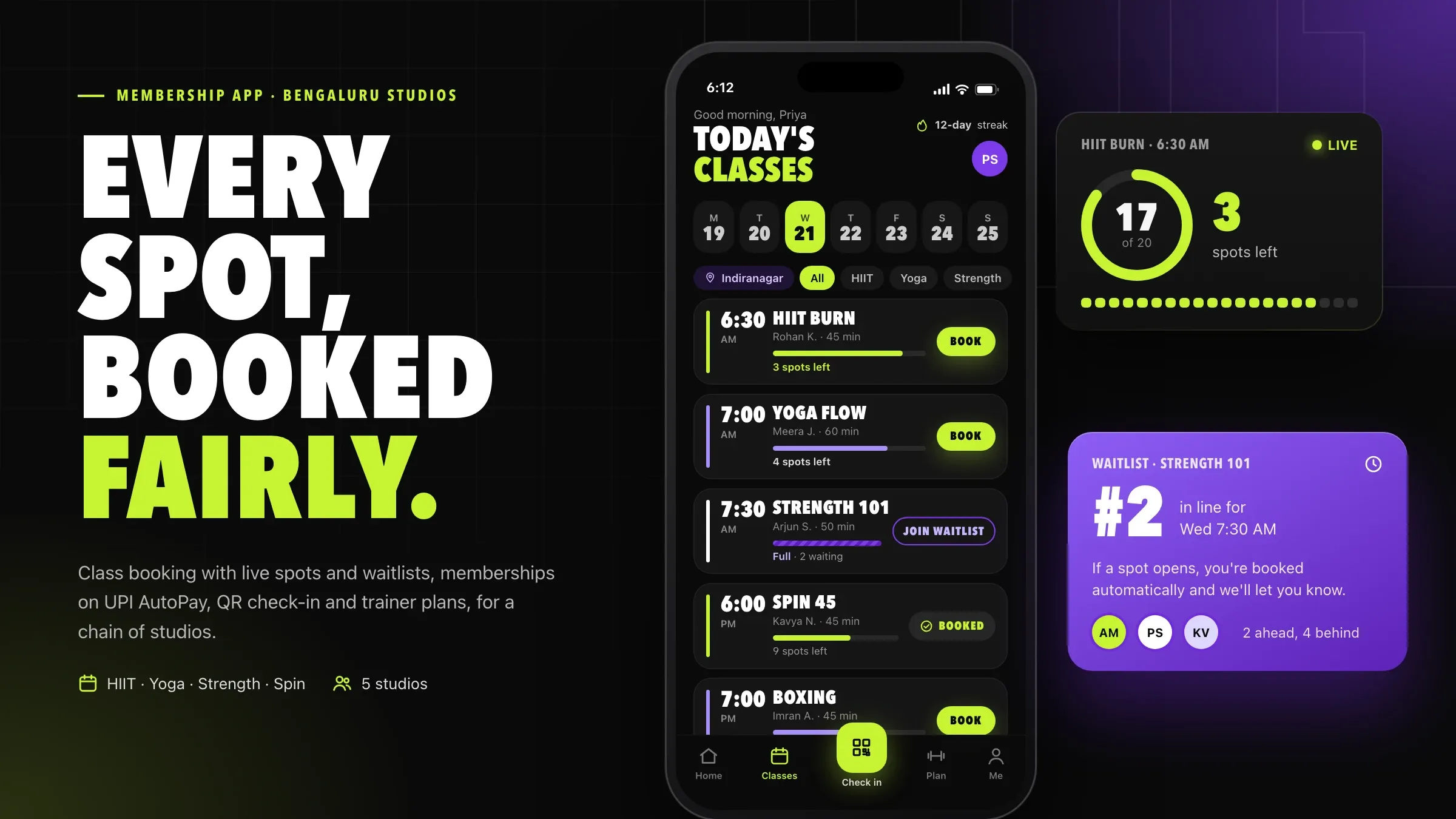 Fitness Studio Membership App A gym membership app and management software for a chain of fitness studios in Bengaluru: memberships on UPI AutoPay, class booking with waitlists, QR check-in, trainer workout plans, a front-desk console and one view across every studio.
-
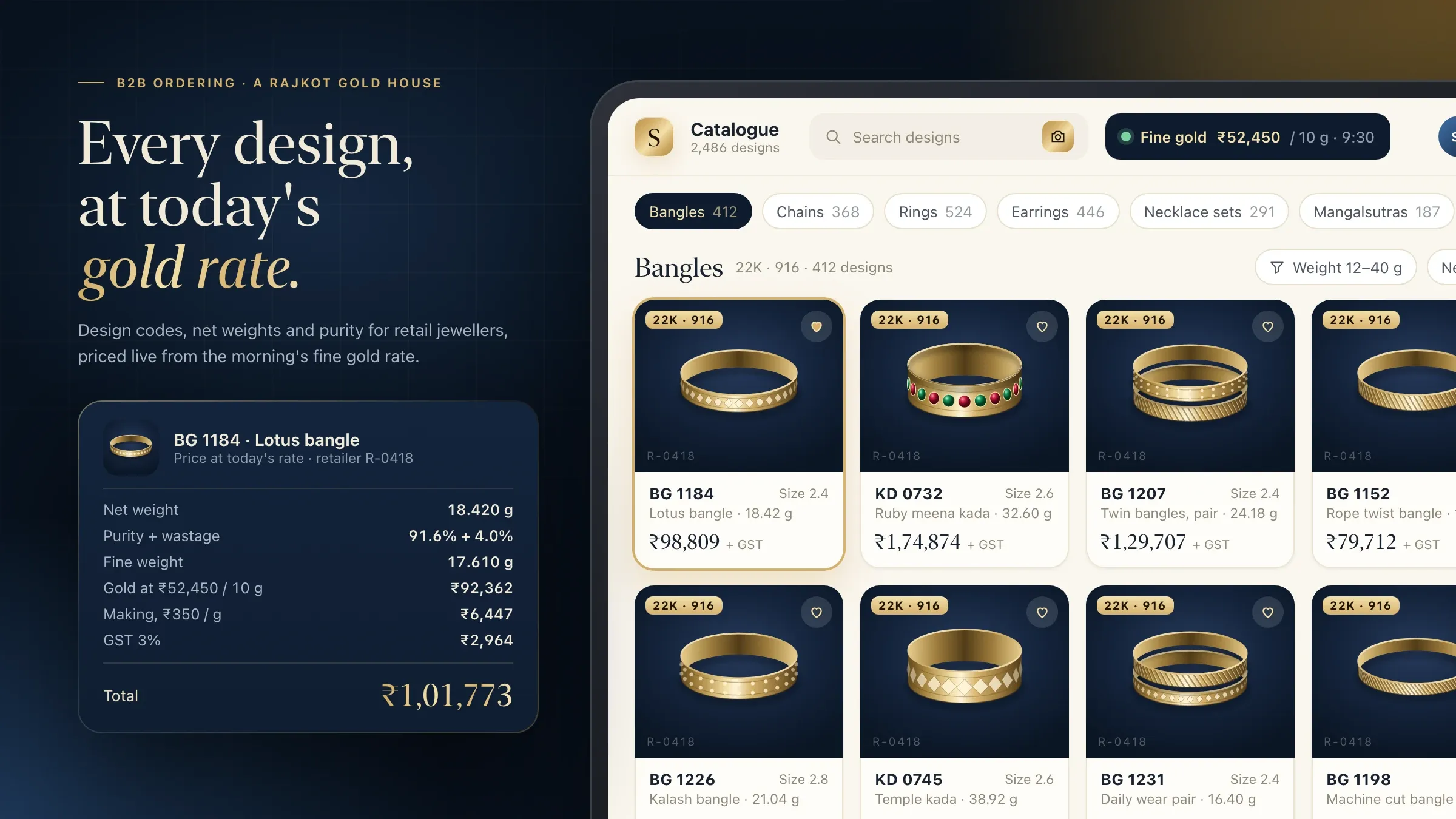 Jewellery Catalogue and Ordering App A B2B jewellery ordering app for a gold jewellery wholesaler in Rajkot: a live catalogue, gold-rate pricing, search by photo, and every order tracked from karigar to hallmark to dispatch.
-
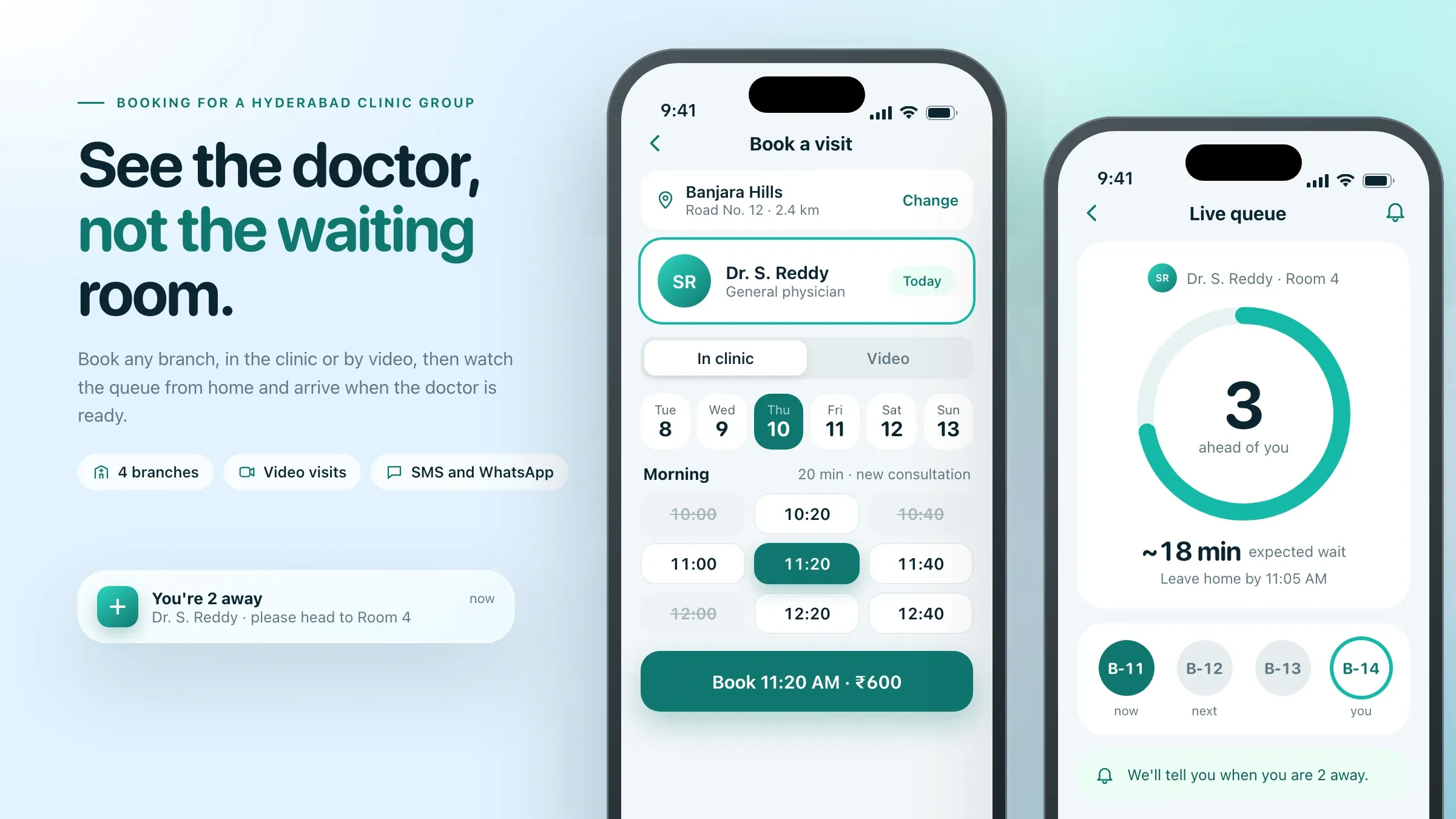 Clinic Booking and Live Queue A clinic appointment booking system for a multi-speciality clinic group in Hyderabad: online booking for every branch, a live patient queue, video consultations and reminders on SMS and WhatsApp.
Need something like this built?
Tell us what you want to build and where you are with it, and we'll get back to you.
Start a project