Overview
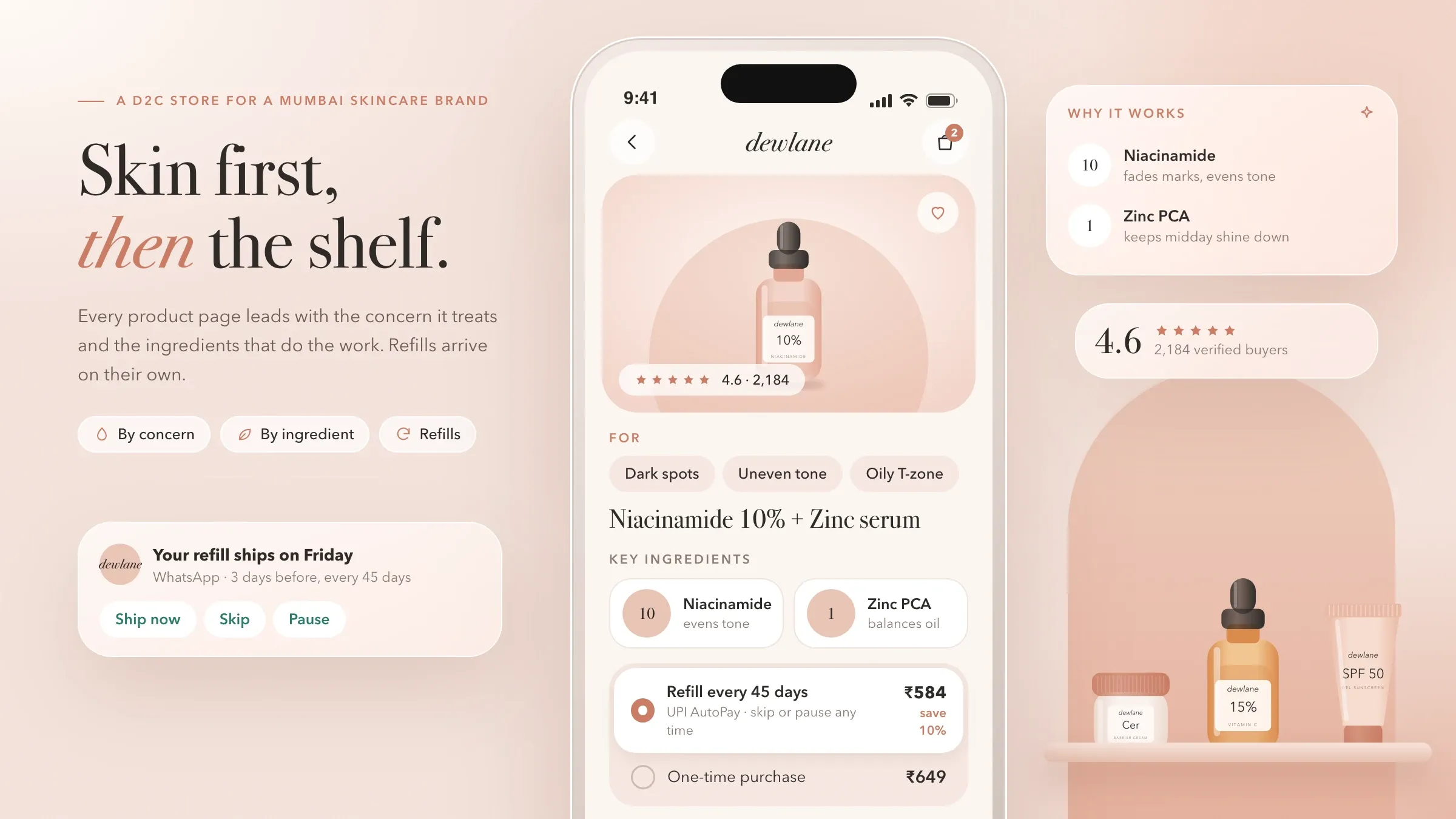
Headless D2C e-commerce platform for a skincare brand: a fast mobile storefront, AI product recommendations, subscriptions and live order tracking.
- Client
- A direct-to-consumer skincare brand in Mumbai
- Industry
- Beauty and personal care
- Location
- Mumbai, Maharashtra, India
- Year
- 2023
- Duration
- 5 months
At a glance
- The challenge
The brand was selling well, but mostly on other companies' platforms.
- What we learned from customers
We started by listening, not designing.
- A storefront built around skin, not shelves
The new store is a headless D2C storefront: a fast Next.js front end, with Shopify running products, carts and orders behind it.
- The skin quiz and AI recommendations
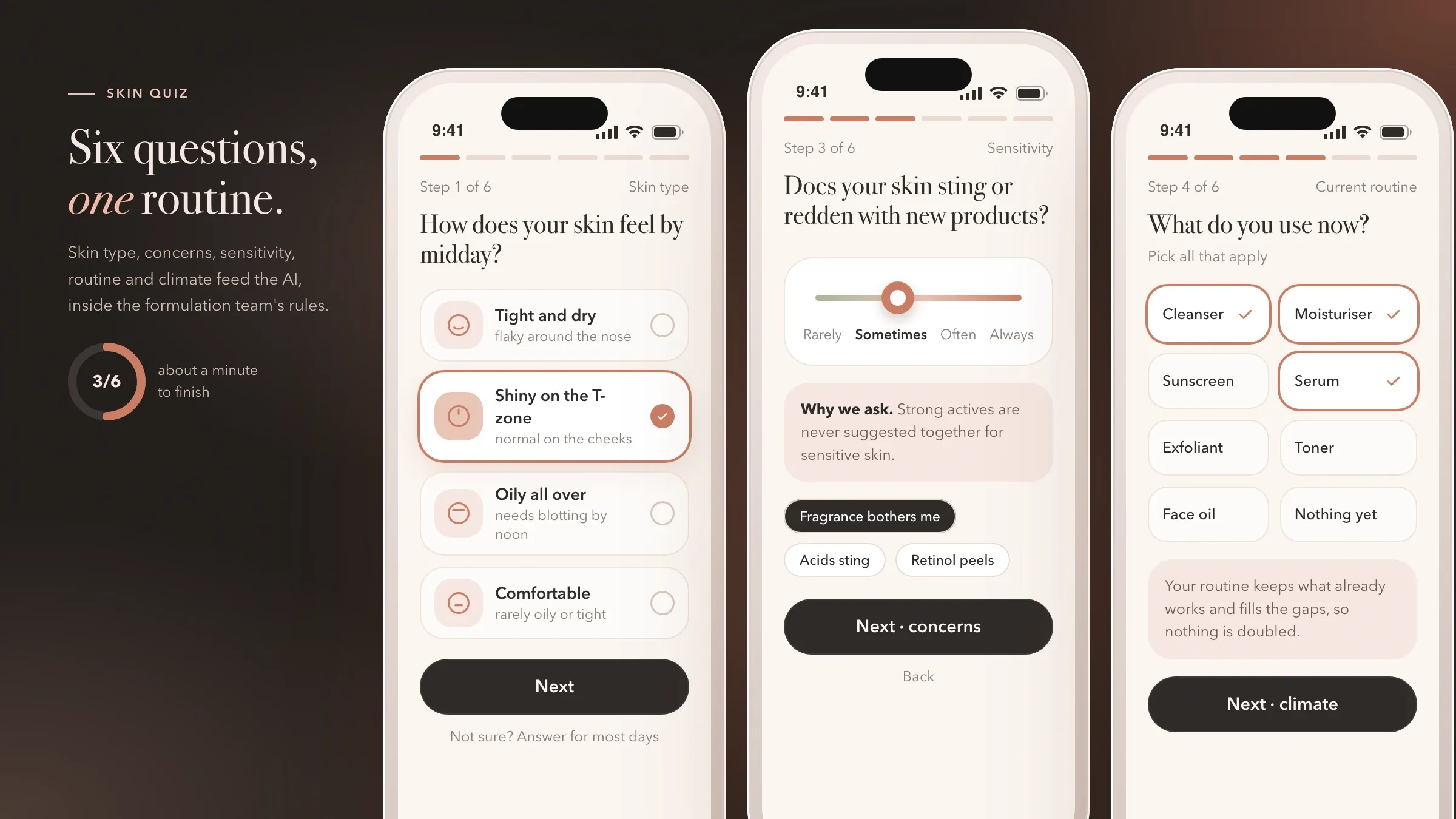
A short skin quiz asks about skin type, main concerns, sensitivity, current routine and climate.
- Refill subscriptions on UPI AutoPay
Customers can turn any everyday product into a refill subscription, every 30, 45 or 60 days.
- Checkout, cash on delivery and delivery
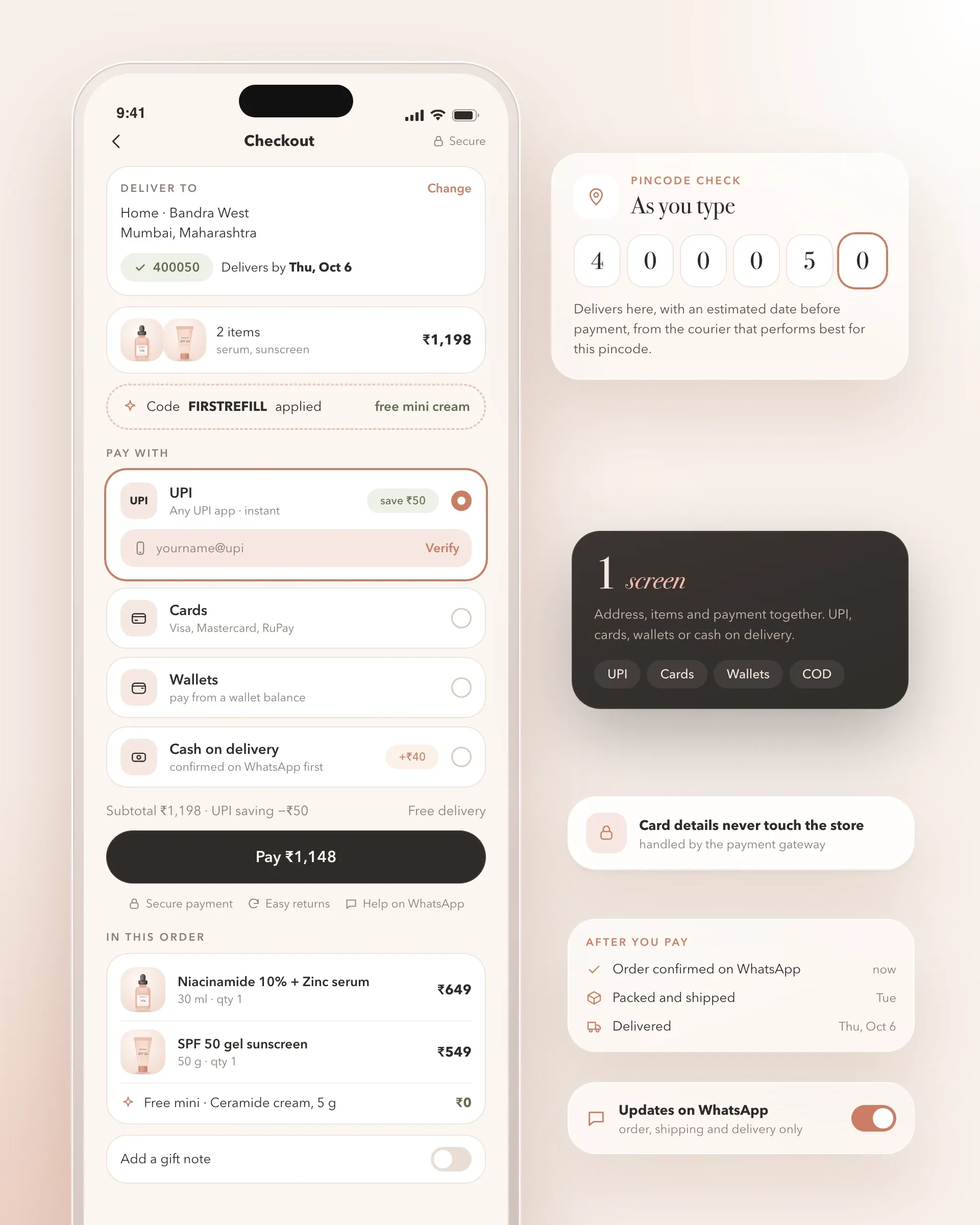
Checkout fits on one screen, with UPI, cards, wallets and cash on delivery.
- Content the marketing team runs
The marketing team edits the store themselves in Sanity, a headless CMS: landing pages, ingredient guides, bundles, launch pages and campaign banners.
- How it's built
The storefront is Next.js in TypeScript, deployed on Vercel.
- Launch
Before launch, every old product, collection and page address was mapped to its new page with a permanent redirect, and titles, descriptions and structured data were carried across.
- The outcome
The brand now sells directly to its customers on a fast, mobile-first store it owns, with its customer data in its own hands.
The challenge
The brand was selling well, but mostly on other companies’ platforms. It had grown on marketplaces, where every order paid a commission and the brand never learned who its customers were. Its own store ran on a heavy theme that loaded slowly on mid-range phones and mobile data, which is how most of its customers shopped.
The store couldn’t explain which product suited which skin, so new visitors either left or bought the wrong thing and didn’t return. Nothing brought customers back when a bottle ran out. Cash-on-delivery orders that were refused at the door travelled out and back at the brand’s cost. And every new launch or campaign page waited in a developer’s queue.
What we learned from customers
We started by listening, not designing. Three weeks of interviews with repeat customers, first-time buyers and the support team, along with a close read of marketplace reviews, gave us five clear findings.
- Customers shop by concern, not by product name. They arrive with acne, pigmentation, dryness or sensitivity, and want to know what will help.
- They read ingredients. Niacinamide, salicylic acid, ceramides and vitamin C are part of how they choose, and they want to know why each one is there.
- Uncertainty kills the first order. The most common support question was “which one is right for my skin?”
- Reorders happen when the bottle is nearly empty, and that is exactly when customers drift back to marketplaces out of habit.
- WhatsApp is where they want updates, not email.
A storefront built around skin, not shelves
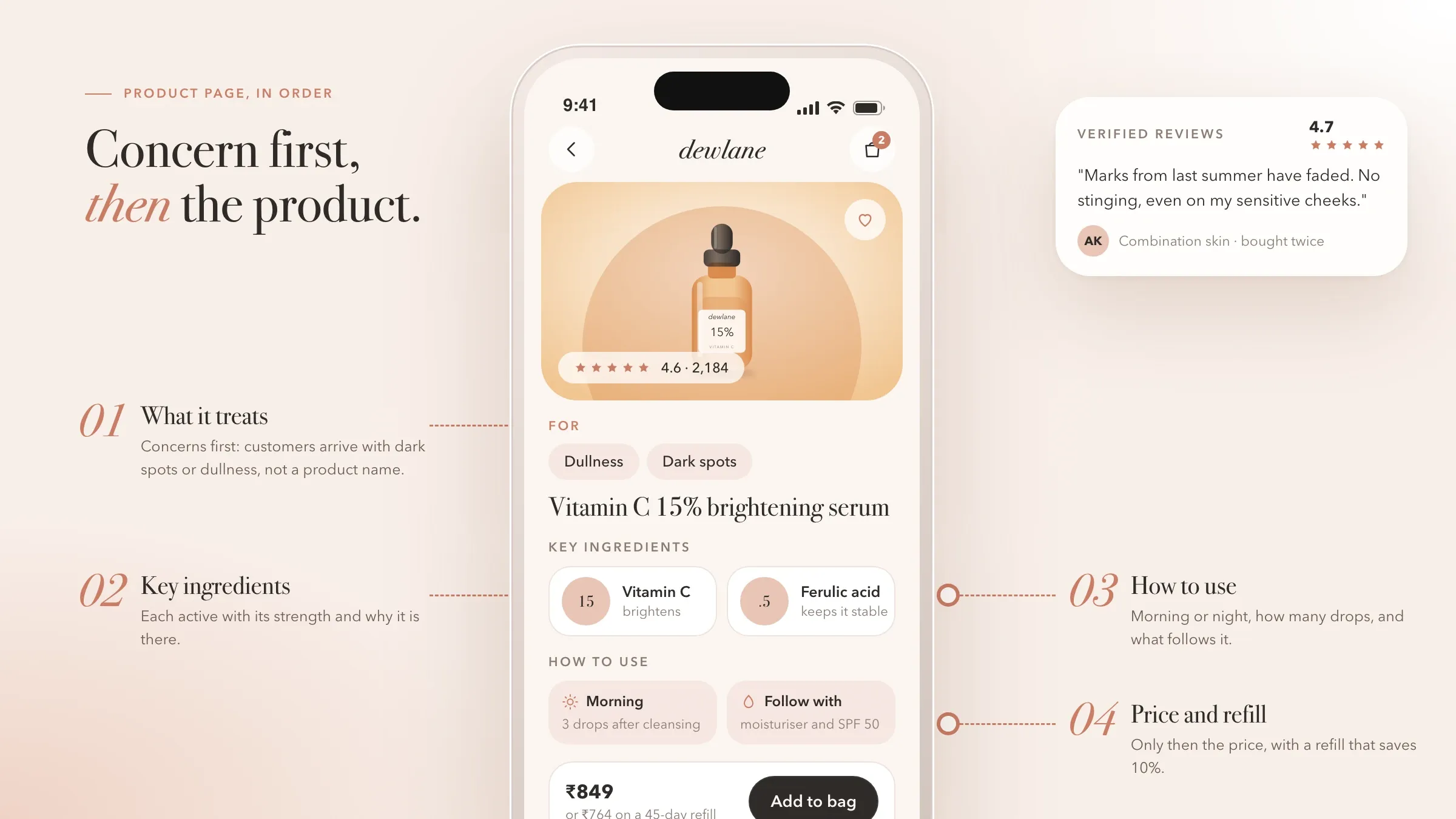
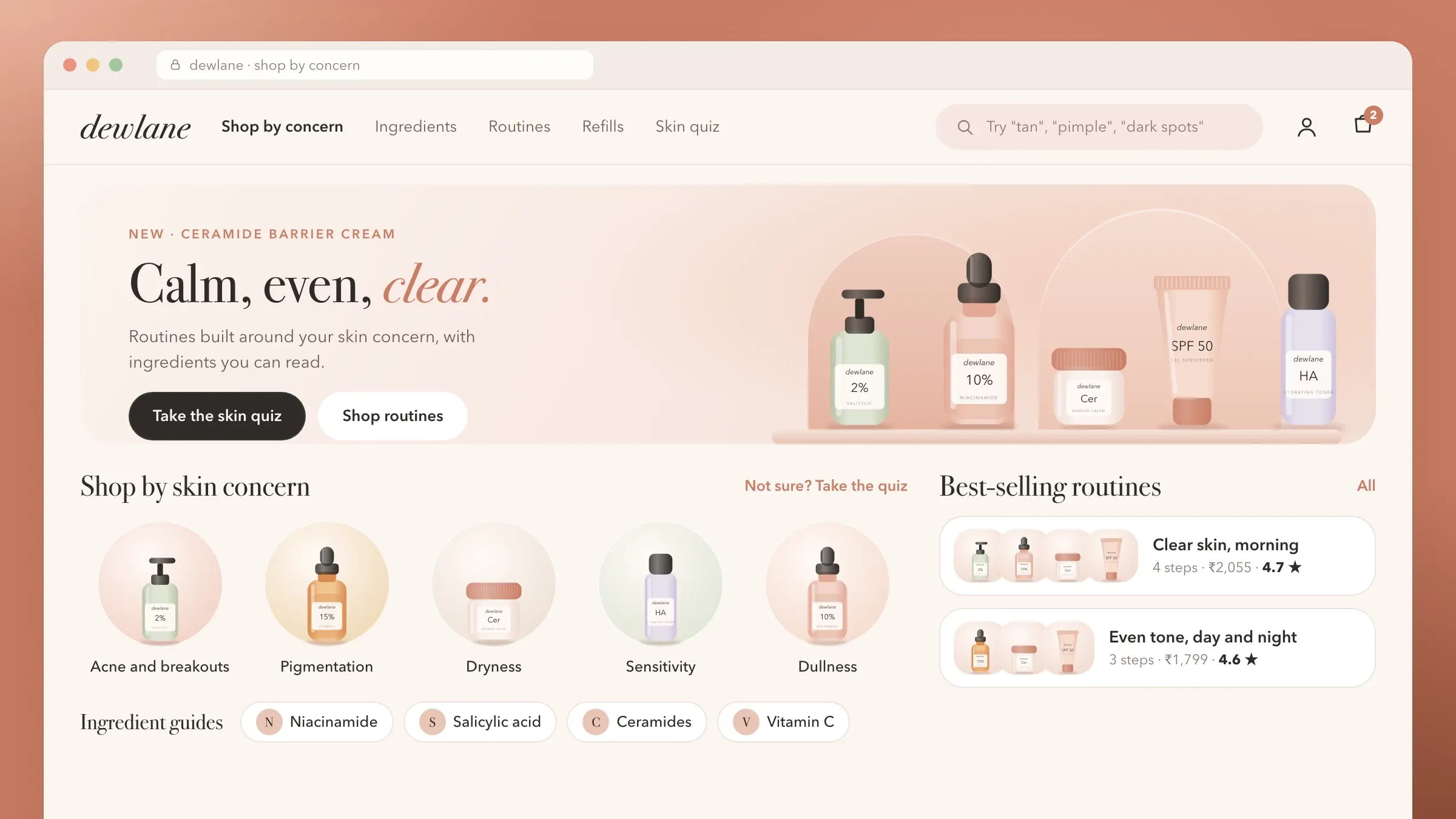
The new store is a headless D2C storefront: a fast Next.js front end, with Shopify running products, carts and orders behind it. Pages are generated ahead of time and served from the edge, and images are resized for every screen, so the store stays quick on mobile data.
Customers can browse the way they think:
- By skin concern: acne and breakouts, pigmentation, dryness, sensitivity, dullness.
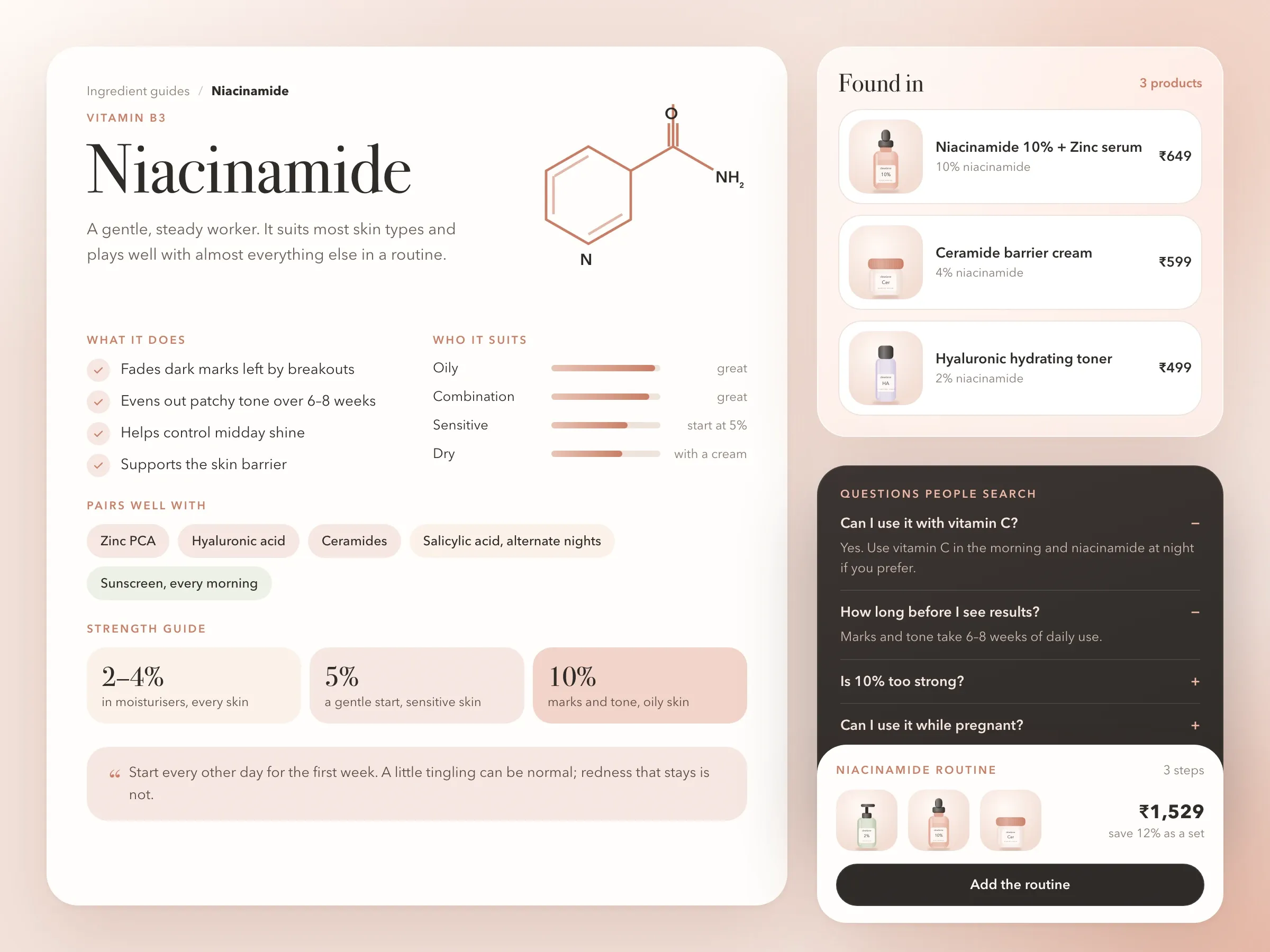
- By ingredient: a guide page for each key ingredient, explaining what it does, who it suits and which products contain it. These guides also answer the questions people type into search.
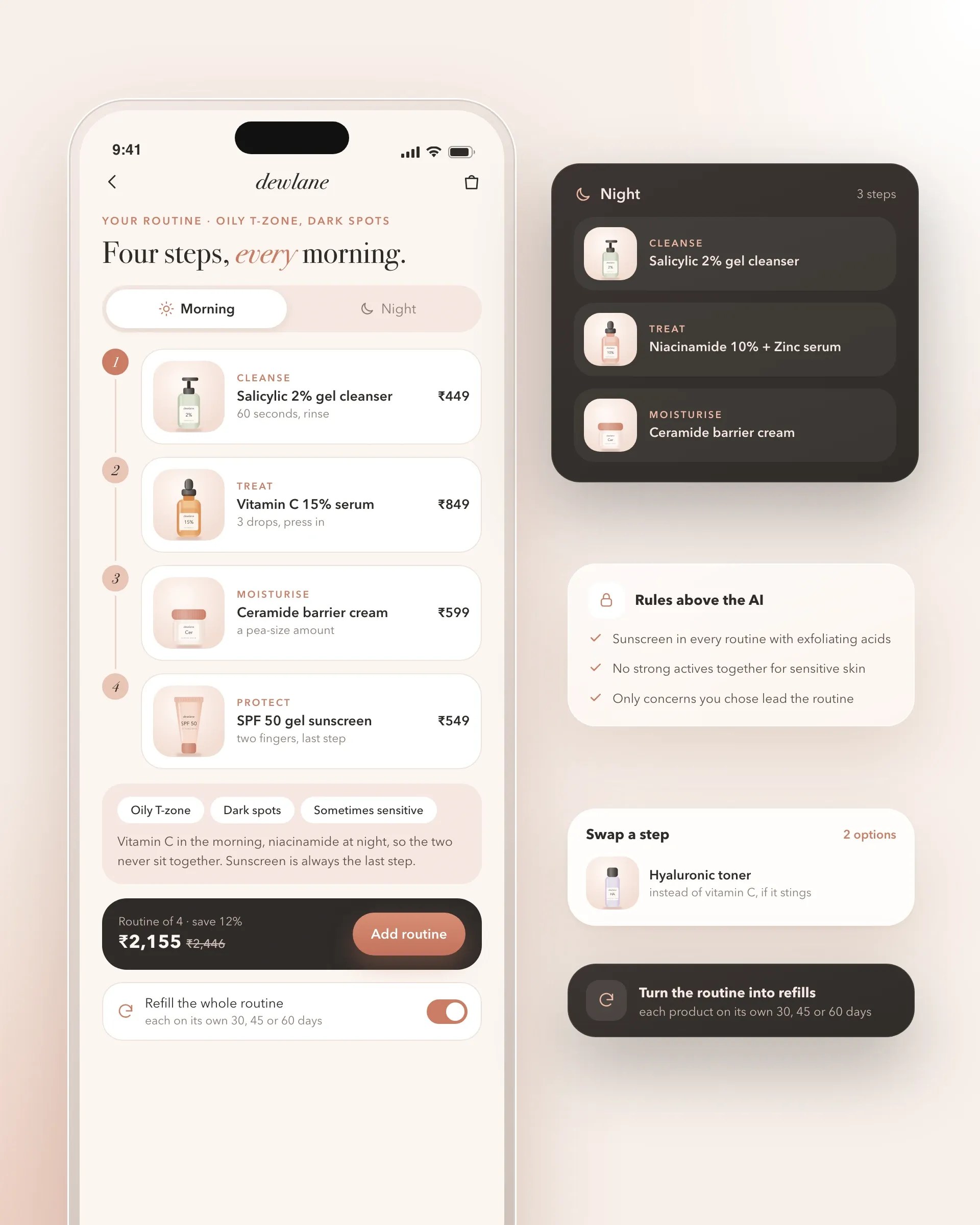
- By routine: a routine builder that arranges cleanser, treatment, moisturiser and sunscreen in the right order for morning and night.
Every product page leads with what the product does, for which concern, with which ingredients, and how to use it, before the price and the button. Reviews are collected from verified buyers after delivery and shown on the product they belong to.
The skin quiz and AI recommendations
A short skin quiz asks about skin type, main concerns, sensitivity, current routine and climate. Its answers, together with what each customer browses and buys, feed an AI recommendation engine that suggests the products and the routine that suit that customer.
Skincare needs guardrails, so the brand’s formulation team wrote rules that sit above the AI:
- strong actives are never suggested together for sensitive skin;
- sunscreen is always part of a routine that includes exfoliating acids;
- products for a concern the customer didn’t mention are never pushed as the main suggestion.
The AI decides what is most relevant, and the rules decide what is allowed. Recommendations improve as more customers buy, reorder and review.
Refill subscriptions on UPI AutoPay
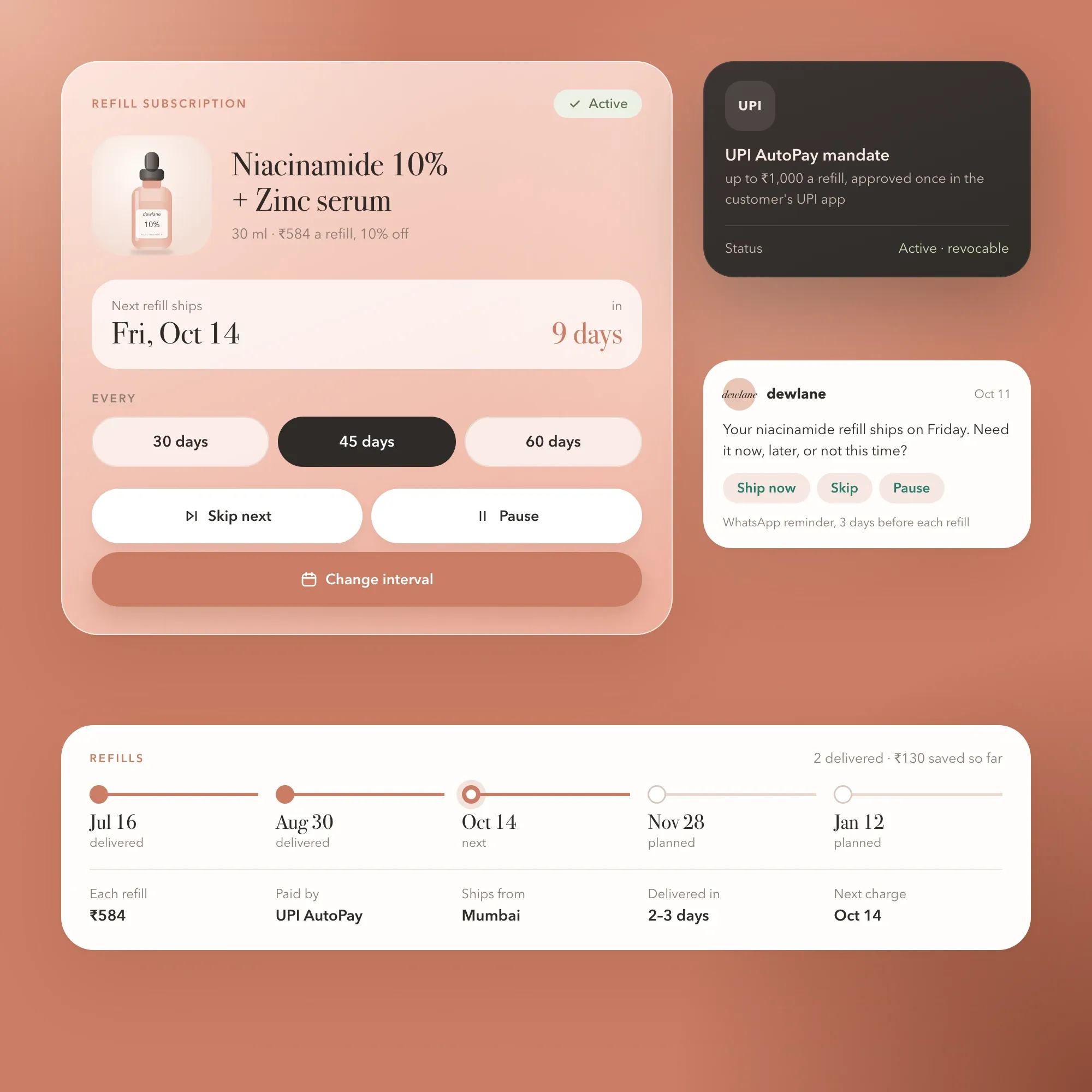
Customers can turn any everyday product into a refill subscription, every 30, 45 or 60 days. They approve a UPI AutoPay mandate or save a card once, and the refill ships automatically.
A WhatsApp reminder arrives a few days before each refill, with one-tap options to ship it, skip it, pause the subscription or change the interval. Customers stay in control, so subscriptions feel like a convenience rather than a trap, and the brand gets regular orders that no longer leak back to marketplaces.
Checkout, cash on delivery and delivery
Checkout fits on one screen, with UPI, cards, wallets and cash on delivery. As the customer types their pincode, the store shows whether it delivers there and an estimated delivery date.
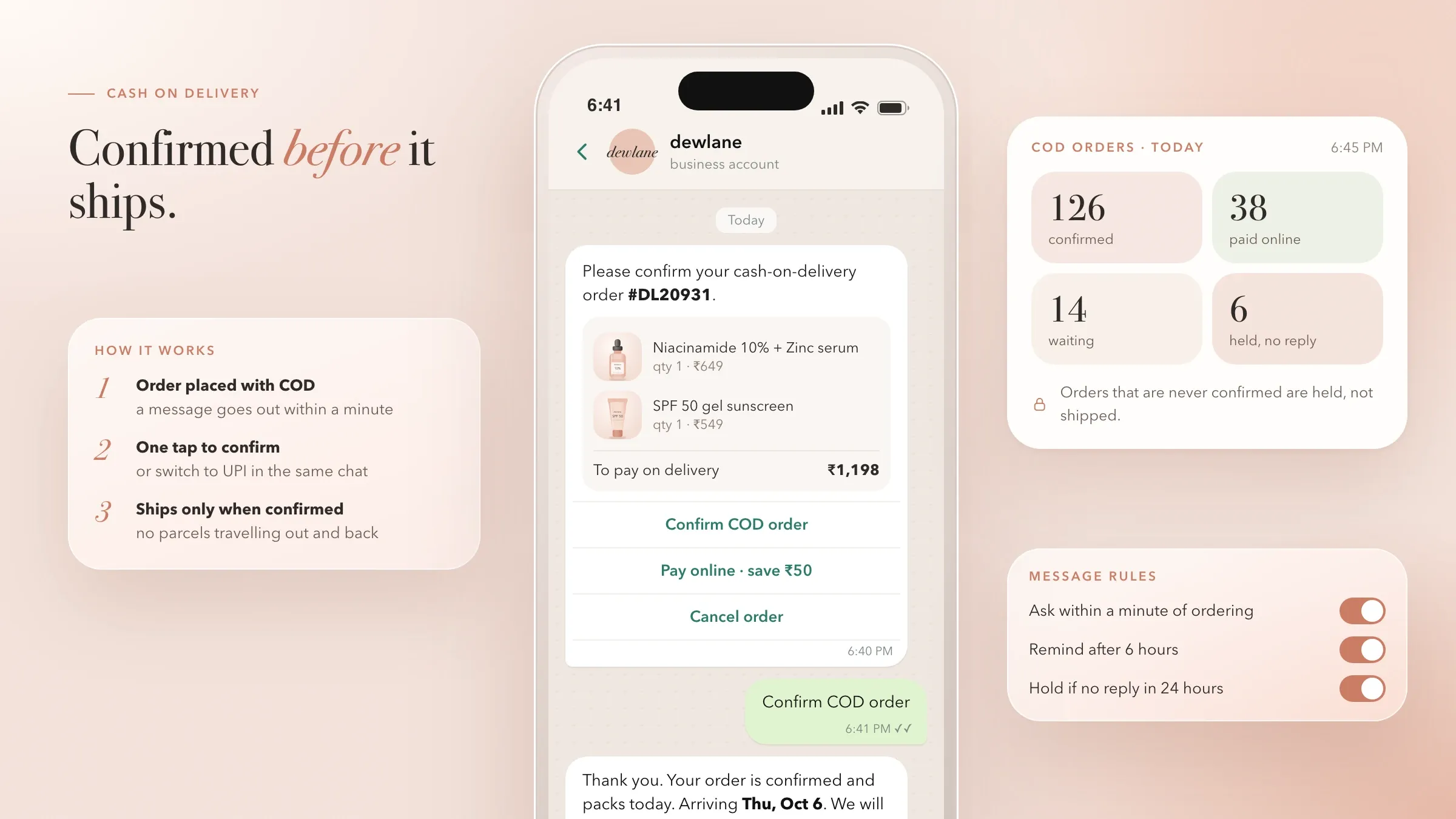
Cash-on-delivery orders are confirmed on WhatsApp before they ship. The customer confirms with one tap or switches to paying online in the same chat, and orders that are never confirmed are held. This cuts the parcels that travel out and back undelivered.
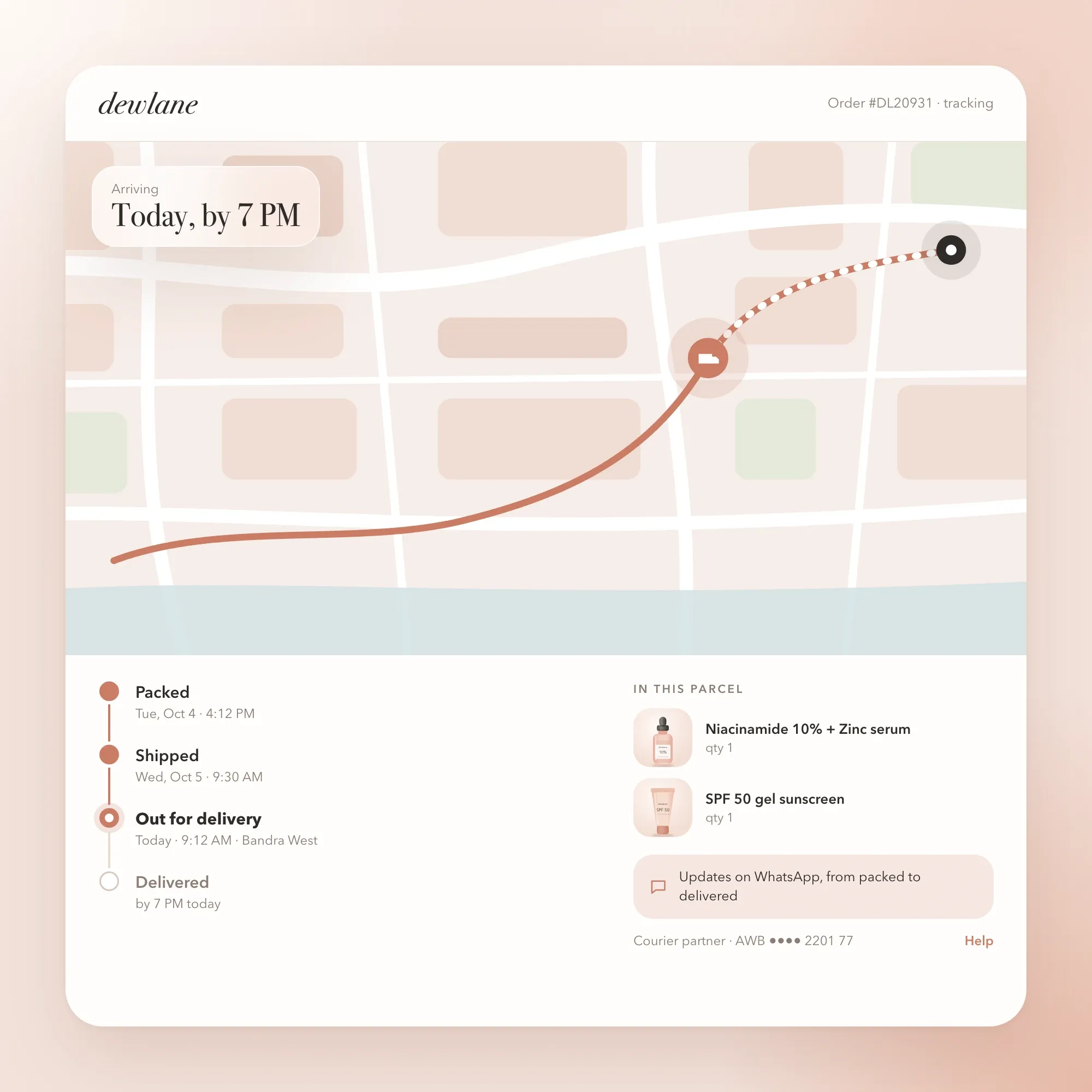
A shipping aggregator picks the courier for each order based on the pincode and delivery performance. Customers follow their order on a tracking page in the brand’s own design, with updates on WhatsApp from packed to delivered.
Content the marketing team runs
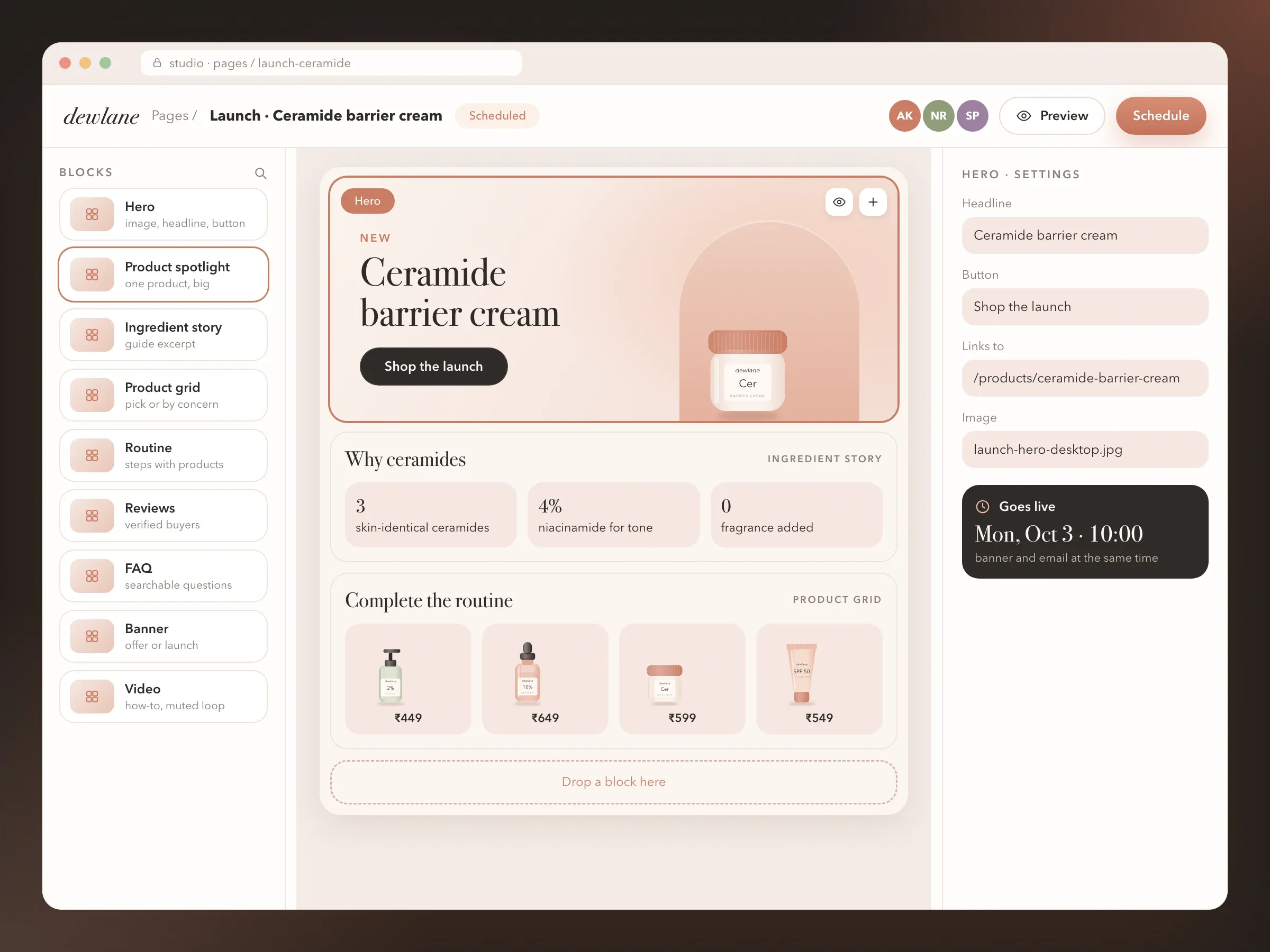
The marketing team edits the store themselves in Sanity, a headless CMS: landing pages, ingredient guides, bundles, launch pages and campaign banners. They build pages from ready-made blocks, preview every change before it goes live, and schedule launches to go live at a set time.
Search runs on Algolia and understands how customers actually type, including everyday words such as “pimple”, “tan” and “dark spots” alongside the product names.
How it’s built
The storefront is Next.js in TypeScript, deployed on Vercel. Shopify’s Storefront API supplies products, carts and checkout, and Shopify webhooks keep the store’s own PostgreSQL database in step with orders and subscriptions. That database also holds customer profiles, quiz answers and the data the recommendation engine learns from.
Razorpay handles payments and UPI AutoPay mandates, so card and bank details never touch the brand’s servers. A shipping aggregator handles courier allocation and tracking, and the WhatsApp Business API carries confirmations, reminders and delivery updates. Customers choose which messages they receive, and their choices are recorded.
Launch
Before launch, every old product, collection and page address was mapped to its new page with a permanent redirect, and titles, descriptions and structured data were carried across. Existing customers were invited first, on WhatsApp and email, with their order history waiting in their new accounts. Search and ad traffic followed once the store had settled.
Since launch, monthly releases have added new product lines, bundles and campaigns, most of them built by the marketing team without a developer.
The outcome
The brand now sells directly to its customers on a fast, mobile-first store it owns, with its customer data in its own hands. New visitors are guided to the right product for their skin, regular customers reorder through subscriptions instead of marketplaces, and cash-on-delivery orders are confirmed before they ship. Campaigns go live the day they are planned.
How the project ran
5 months in 6 phases
- Weeks 1–3
Discovery and customer research
Interviews with repeat customers, first-time buyers and the support team, a close read of marketplace reviews, and a map of every step from first visit to reorder.
- Weeks 4–9
Design system and storefront
A mobile-first design system, product pages built around ingredients and skin concerns, ingredient guides, and the routine builder.
- Weeks 8–12
Skin quiz and AI recommendations
The skin quiz, the recommendation engine, and the safety rules from the brand's formulation team, tested against real customer profiles.
- Weeks 10–16
Checkout, delivery and subscriptions
Payments, cash-on-delivery confirmation, courier allocation, the branded tracking page, WhatsApp updates and refill subscriptions on UPI AutoPay.
- Weeks 17–20
Launch
Old store addresses redirected, a launch to existing customers first, then to new visitors from search and ads.
- Week 21 onwards
Growth releases
Monthly releases for launches, bundles and campaigns, with the marketing team running content and offers themselves.
What we delivered
- Discovery and customer research
- Product design
- Web app
- AI agents and automation
- Cloud
- Maintenance and support
Inside the project
7 pictures
Questions and answers
10 answered
What did FIRELIFE Ventures build for a skincare brand in Mumbai?
FIRELIFE Ventures built a headless D2C e-commerce platform for a skincare brand in Mumbai. It includes a fast mobile storefront, a skin quiz with AI product recommendations, refill subscriptions on UPI AutoPay, cash-on-delivery confirmation on WhatsApp and live order tracking.
What is a D2C e-commerce platform?
A D2C (direct-to-consumer) e-commerce platform is a brand's own online store, where it sells straight to customers instead of through marketplaces. The brand keeps its margins, owns its customer data and controls the whole buying experience, from first visit to reorder.
What is headless commerce?
Headless commerce separates the storefront customers see from the commerce engine that handles products, carts and orders. The storefront can be designed freely and kept very fast, while the engine handles payments, stock and orders in the background.
Why build a headless D2C store instead of using a ready-made theme?
A headless storefront loads faster on mobile, can be designed around the brand rather than a template, and connects cleanly to quizzes, subscriptions, AI recommendations and content tools. Ready-made themes are quicker to start but harder to grow with.
How do AI product recommendations work for skincare?
The AI combines each customer's skin quiz answers, what they browse and what they have bought, then suggests the products and routine that suit them. Safety rules set by the brand's formulation team sit on top, so it never suggests combinations that don't belong together on sensitive skin.
How do refill subscriptions with UPI AutoPay work?
The customer picks a refill interval and approves a UPI AutoPay mandate once. A WhatsApp reminder goes out before each refill, the customer can skip, pause or change it in one tap, and otherwise the payment is collected and the refill ships automatically.
How does cash-on-delivery confirmation on WhatsApp help?
Every cash-on-delivery order gets a WhatsApp message asking the customer to confirm it before it ships. Orders that are never confirmed are held, which cuts the parcels that travel out and back undelivered, and customers can switch to paying online in the same chat.
How do you keep search rankings when moving to a new store?
Every old product, collection and page address is mapped to its new page with a permanent redirect, and titles, descriptions and structured data are carried across before launch. After launch, Search Console is checked daily until every page has been picked up.
How long does it take to build a D2C e-commerce platform?
The platform took five months from the first customer interviews to launch, including design, the skin quiz and AI recommendations, payments, delivery, subscriptions and the move from the old store. A simpler store can launch sooner.
Can FIRELIFE Ventures build a D2C platform for my brand?
Yes. FIRELIFE Ventures designs and builds D2C e-commerce platforms, from storefront and checkout to subscriptions, AI recommendations and delivery, and supports them after launch. Start a project through the contact page.
More from the portfolio
All portfolio-
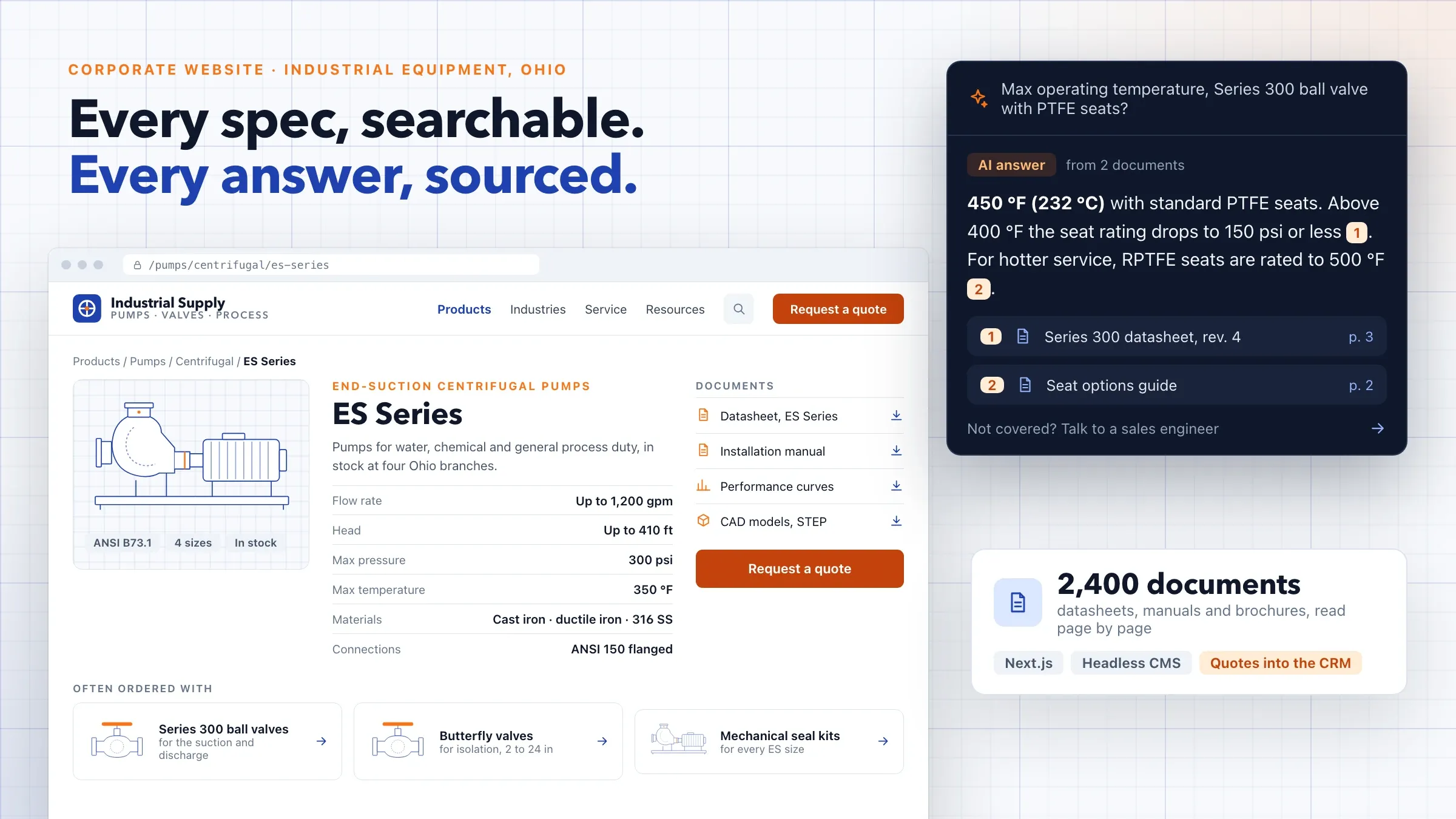 Industrial Equipment Website A corporate website on a headless CMS for an industrial equipment distributor in Ohio: a product catalogue the marketing team runs, AI search that answers from datasheets with sources, quotes straight into HubSpot, and a careful SEO migration.
-
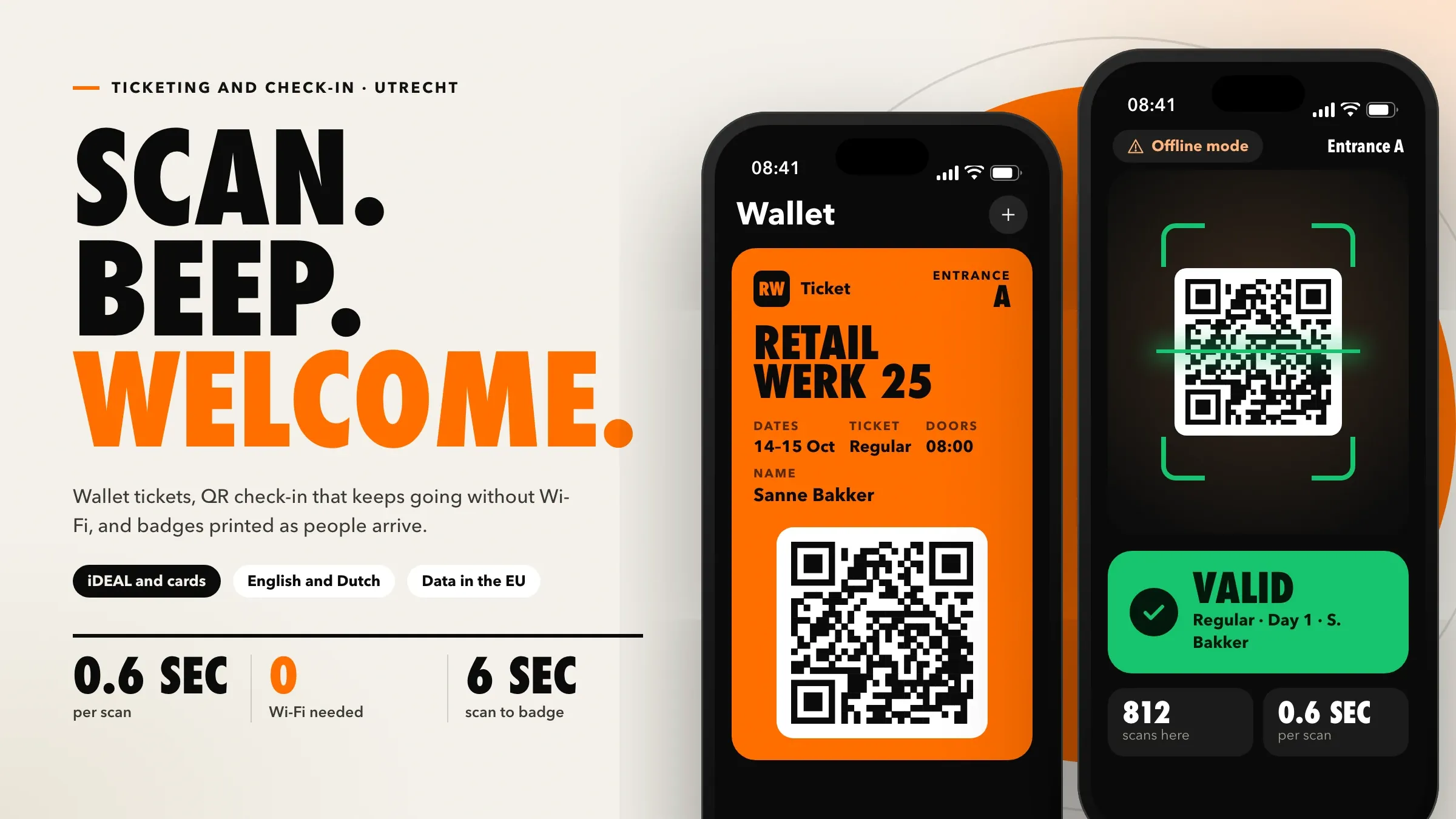 Conference Ticketing and Check-in An event ticketing platform for a conference and trade show organiser in Utrecht: tickets the organiser designs, VAT invoices for companies, wallet tickets, QR check-in that works without Wi-Fi, badges printed on arrival and an AI assistant for attendees.
-
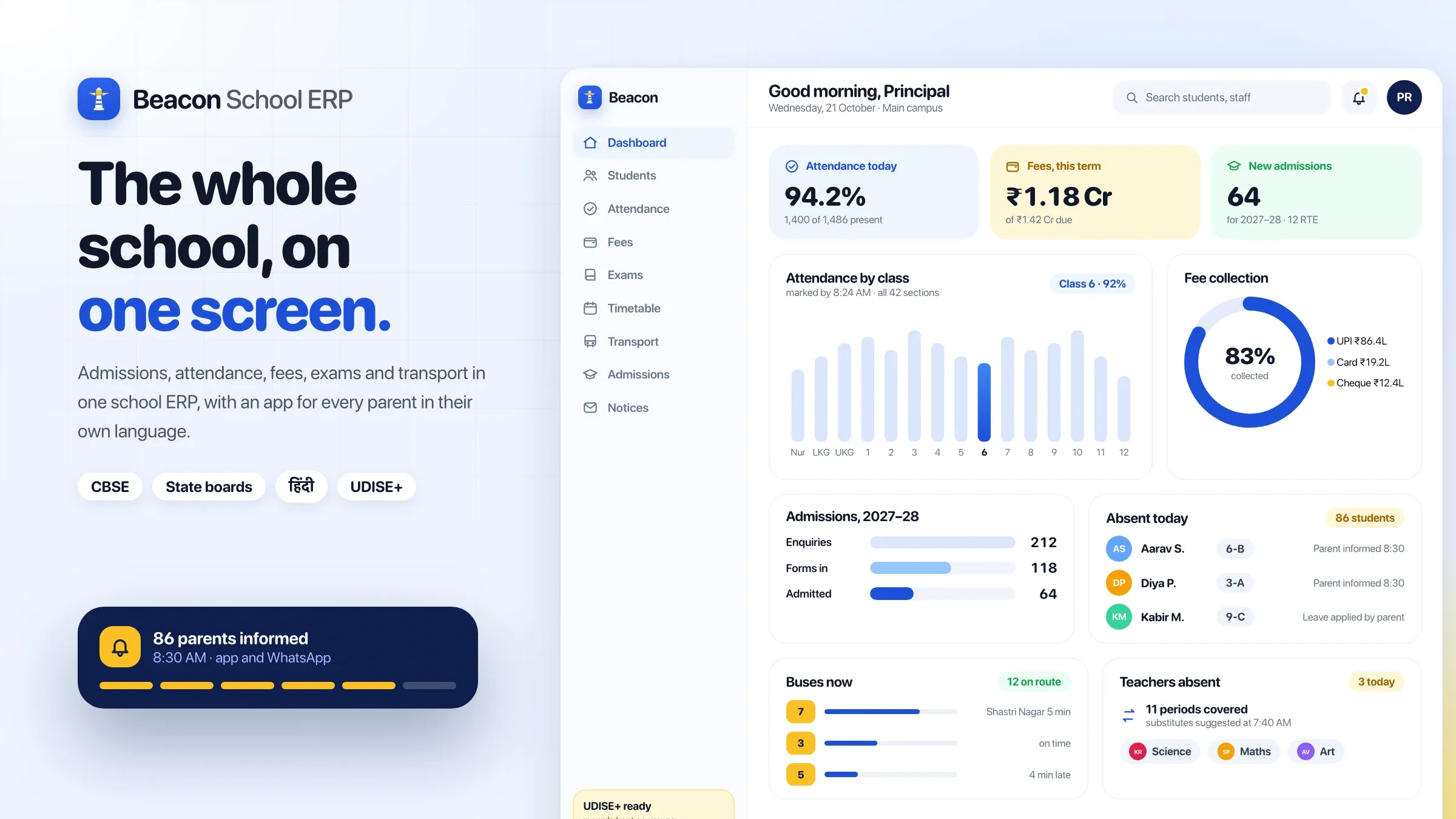 Beacon School ERP School ERP software that runs admissions, attendance, fees, exams and report cards, transport and government reporting in one system, with an app for every parent in their own language.
Need something like this built?
Tell us what you want to build and where you are with it, and we'll get back to you.
Start a project