Build something new restaurant ordering app
Take orders directly, without the commission
We build ordering apps and websites under your restaurant's own name: customers order delivery or pickup directly from you, every order lands on one kitchen screen, your riders are tracked live, and regulars earn points that bring them back.
- We start on your busiest night
- Your customers stay yours
- One kitchen screen for every channel
Sound familiar?
What we hear before we start
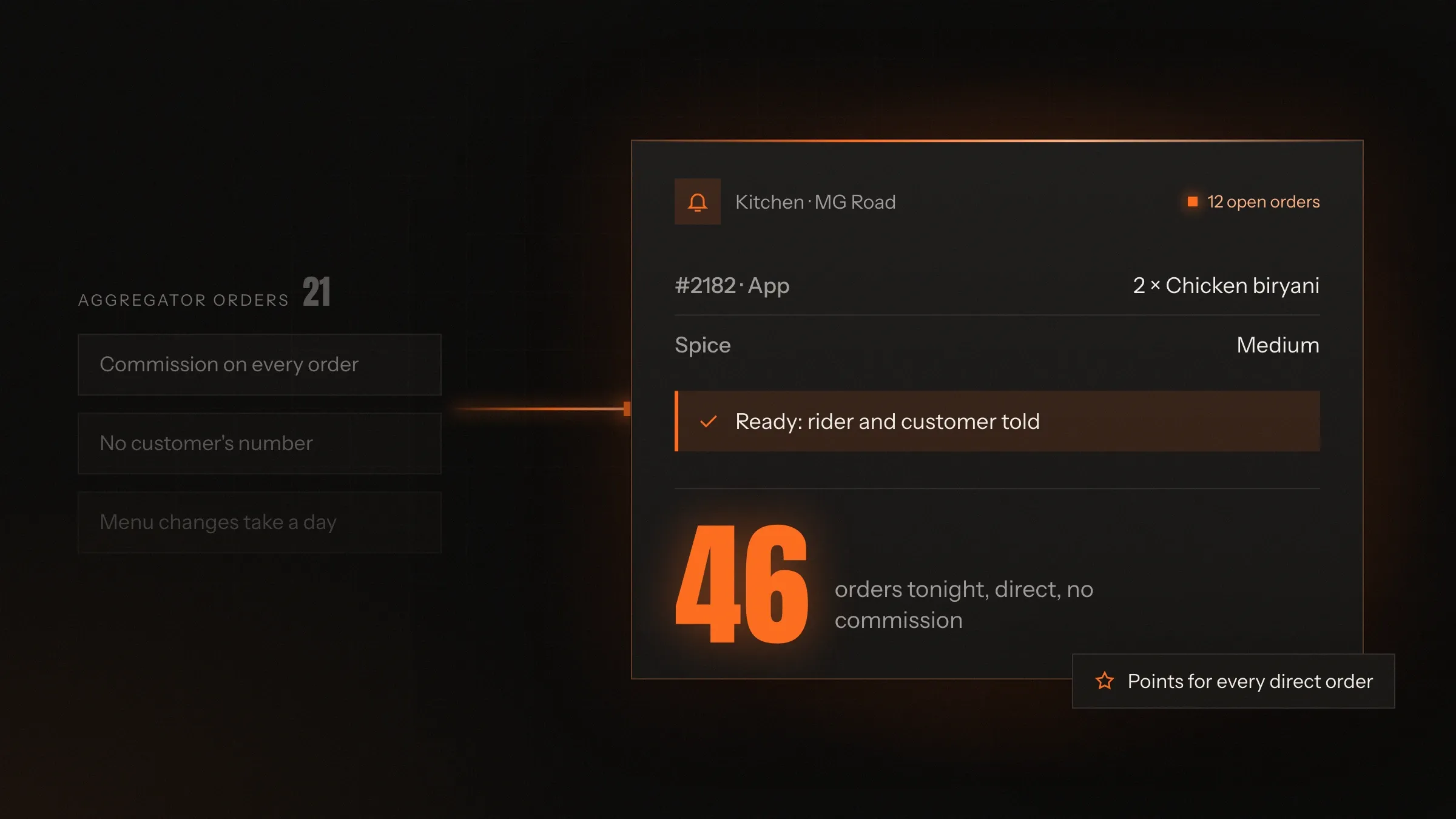
- Most of your online orders come through aggregators that take a commission on every one.
- Your regulars order through an app that shows them other restaurants first.
- The counter is a row of beeping tablets, and every order is keyed in again.
- Phone orders live on a notepad, and the kitchen works from paper slips.
- Customers call to ask where their food is.
- You have no way to reach the people who loved your food last week.
What changes
-
Today: Every online order pays a commission, and the customer belongs to the aggregator.
After: Regulars order from your own app and website, with no commission off the bill.
-
Today: Orders arrive on several tablets, a phone and the billing counter.
After: Every channel lands on one kitchen screen, in one order of work.
-
Today: Slips go missing and dishes go out in the wrong order.
After: Each station sees only its own items, with a timer, and taps them ready.
-
Today: Customers call to ask where their food is.
After: They follow the rider on a map, with a message at each step.
-
Today: Offers go to everyone as the same discount.
After: Points, birthday offers and outlet deals reach the customers they suit.
What it does for you
-
Your own app and website
Branded ordering on Android, iPhone and the web, with one menu per outlet, delivery or pickup, and orders scheduled for later.
For exampleA family orders dinner for 8 pm at 5 pm, from the outlet nearest home.
-
A menu built for one hand
The most-ordered dishes first, clear choices such as spice level and portion size, combos with the saving shown, and reorders in two taps.
For exampleA regular reorders last Friday's biryani and adds a raita without searching.
-
One kitchen screen
App, website, phone, table and aggregator orders in one queue, split by station, with a timer on every item.
For exampleThe tandoor station sees only its naans and kebabs, each counting up from when the order came in.
-
Delivery you can follow
A rider app with the evening's deliveries, directions and live location, or a delivery partner booked for each order.
For exampleA customer watches the rider turn into her street and walks down to the gate.
-
Loyalty that brings regulars back
Points on direct orders, birthday offers, referral rewards and outlet deals, sent to the customers they suit.
For exampleA customer who hasn't ordered for a month gets an offer on the dish she orders most.
-
Outlet managers in control
Prices, dishes, opening hours, delivery areas and minimum orders, changed by each outlet and live in the app at once.
For exampleThe fish curry runs out at 9 pm; the manager marks it unavailable and it disappears from the menu.
-
Order at the table
A QR code on each table opens the menu, sends the order to the kitchen and lets diners pay from their phones.
For exampleA table of four orders a second round of drinks without waving for a waiter.
-
Payments your customers use
UPI, cards, wallets and cash on delivery, with refunds for cancelled orders sent back the way they were paid.
For exampleA cancelled order is refunded to the customer's UPI account without a phone call.
How it works
-
A customer orders
From your app, your website, a QR code on the table, or a link on Instagram or WhatsApp.
-
They pay
By UPI, card, wallet or cash on delivery; online payments are confirmed before the kitchen starts.
-
The kitchen sees it
The order joins the kitchen screen, split by station, beside orders from every other channel.
-
Stations cook and tap ready
When every item is ready, the counter and the rider know at once.
-
The rider delivers
The customer follows the rider on a map and gets a message at each step.
-
They come back
Points, offers and a two-tap reorder bring regulars back to you, not to an aggregator.
Where we've built it
3 from our portfolio
-
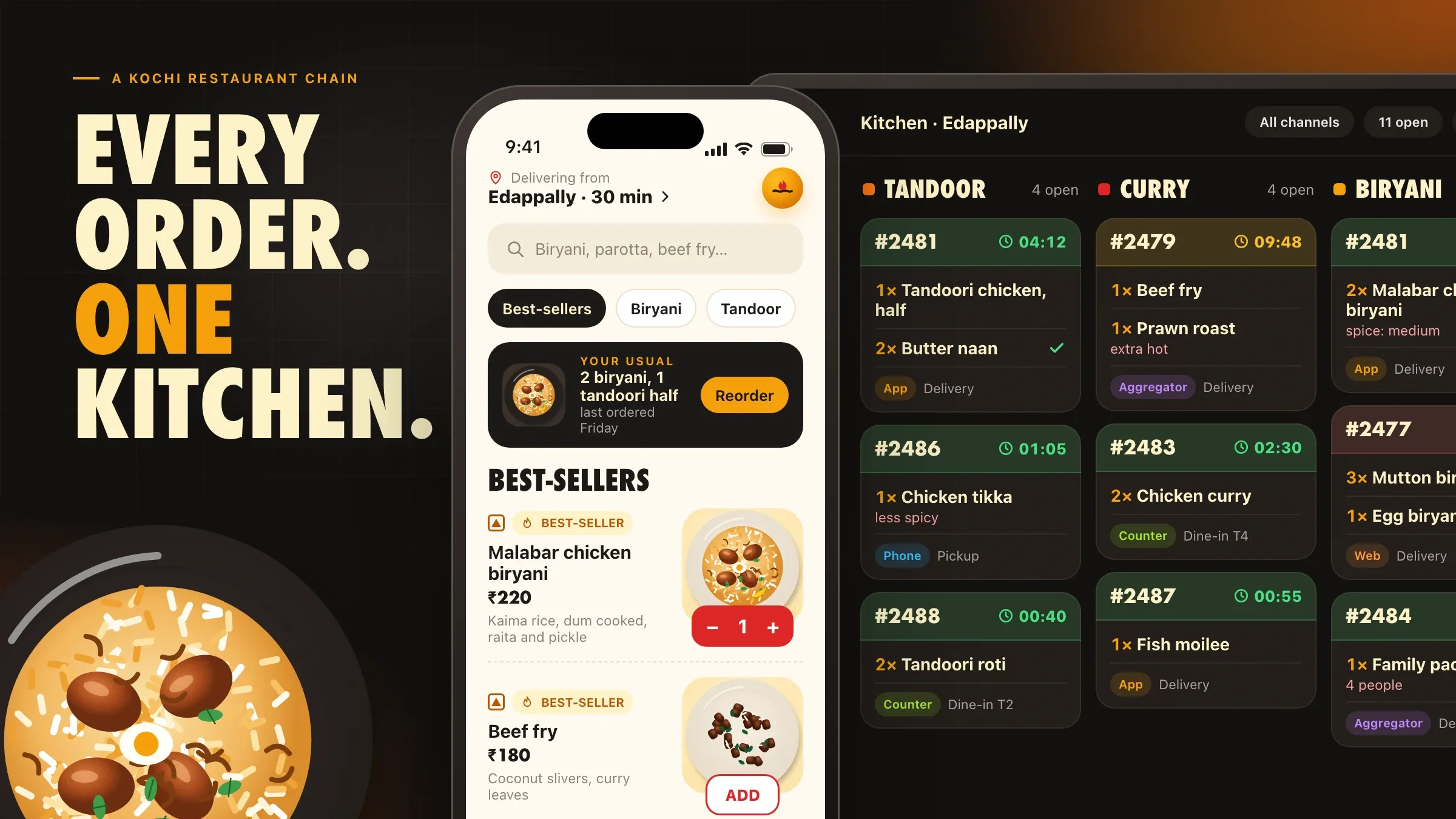 Direct ordering for a restaurant chain For a family restaurant chain in Kochi, a branded ordering app and website, one kitchen display for every channel, a rider app with live tracking, and loyalty points. Read the case study
-
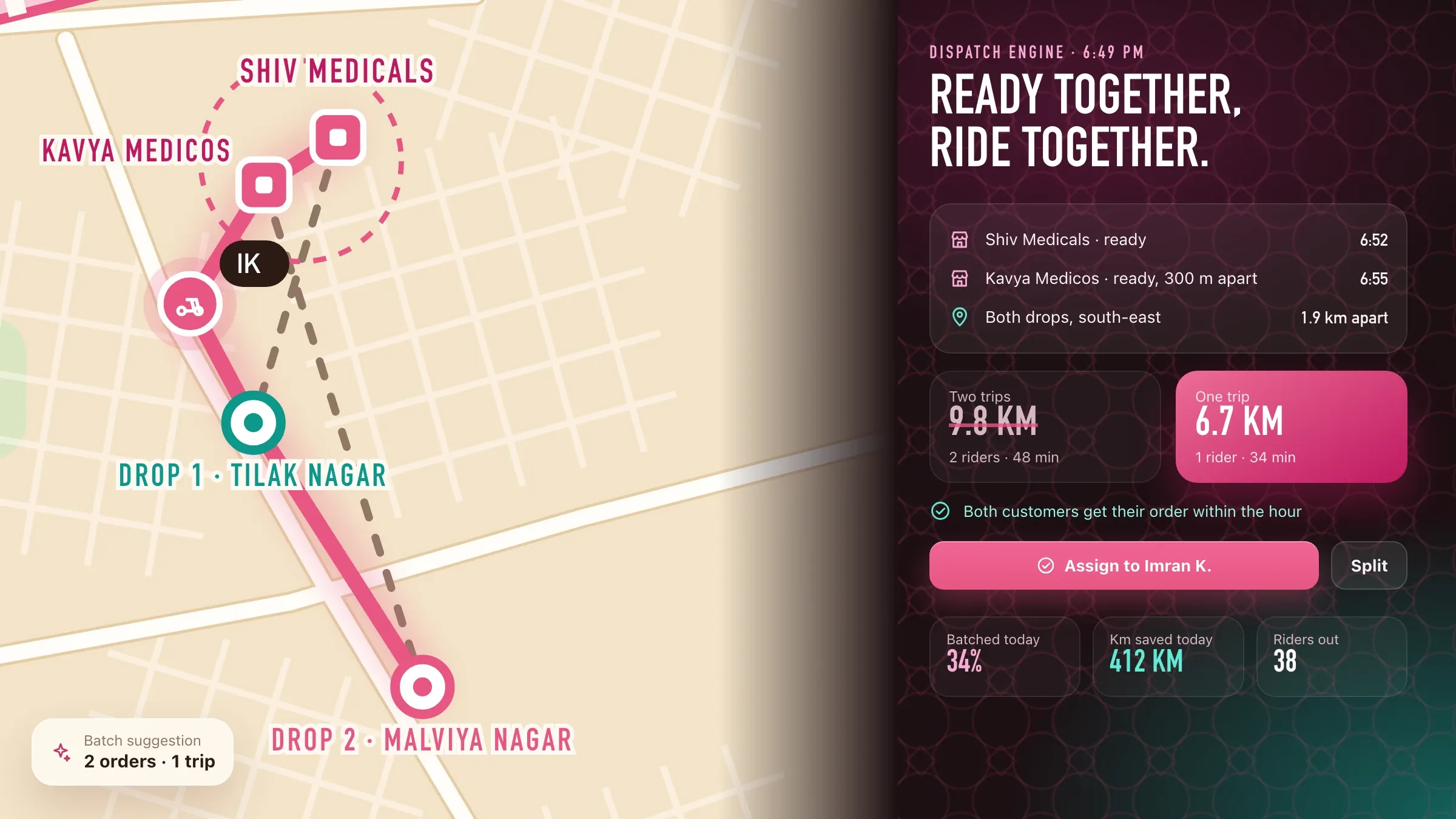 Delivery for kitchens without riders For a Jaipur startup we back, we built the dispatch engine that delivers for local shops and restaurants, and predicts when each restaurant order will be ready. Meet the startup
-
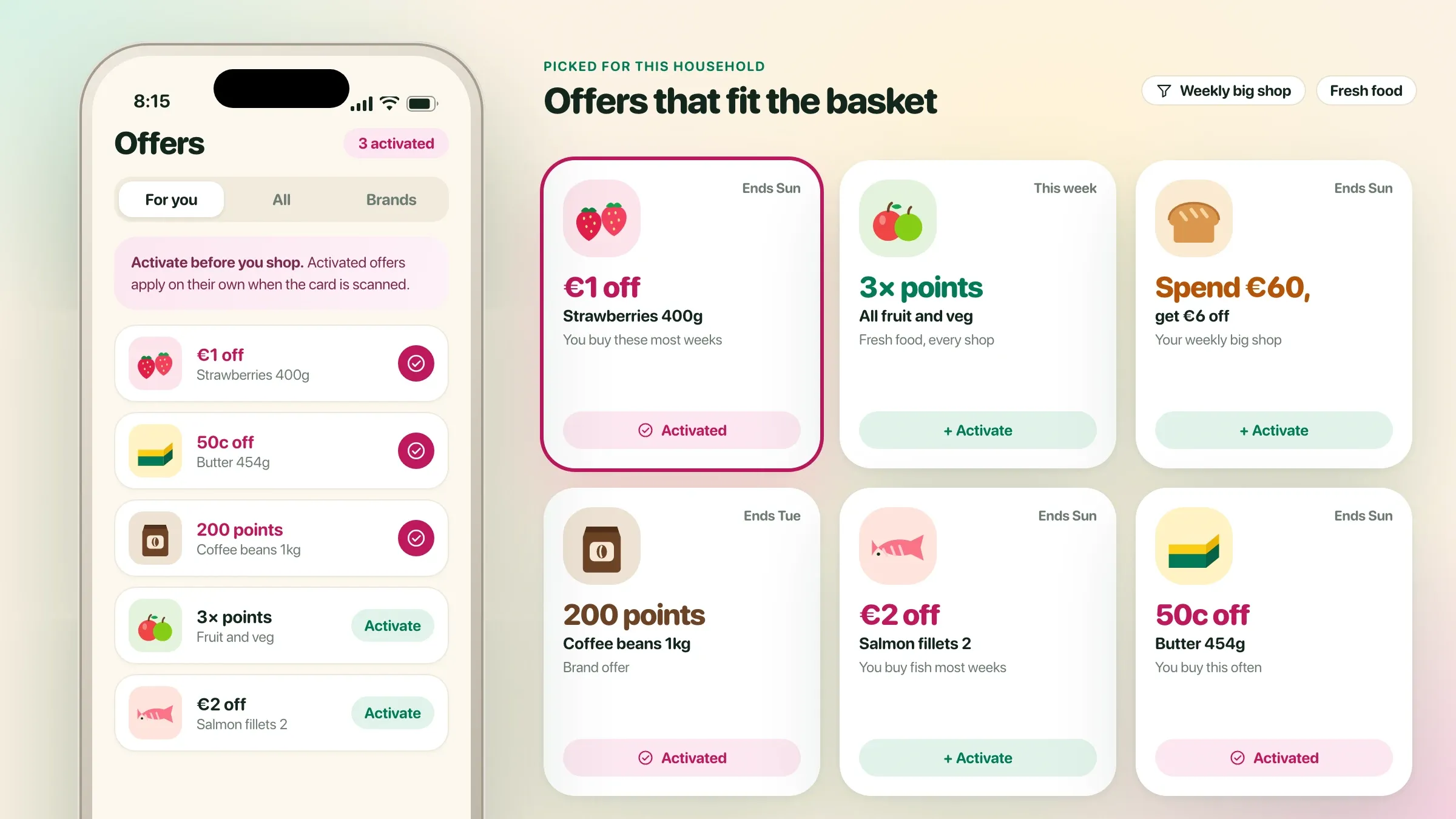 Offers that fit what people buy For a supermarket chain in Cork, a loyalty app with points, personalised offers that shoppers activate before they shop, and digital receipts. Read the case study
What a restaurant ordering app replaces
A restaurant ordering app is your own way to take online orders: an app and a website under your name, where customers order delivery, pickup or food at the table, and pay. Behind it sit the parts customers never see: a kitchen display, a rider app and a panel for each outlet.
What it replaces is the pile of tools most restaurants run today. A tablet for each aggregator on the counter. A phone and a notepad for regulars who call. Printed slips in the kitchen, sorted by whichever printer they came out of. A rider waiting by the door without knowing which bag is his.
We replace that with one system. Orders from every channel arrive in one place, the kitchen works in one order, riders and customers know where each order is, and the restaurant finally knows who its regular customers are.
Where direct ordering pays off first
Direct ordering pays off first with your regulars. People who already love your food don’t need an aggregator to find you; they need a quick way to order from you. Each of their orders placed directly skips the commission and stays in your own records.
Be clear about the costs that remain. Direct orders still carry payment gateway fees, delivery, packaging and the app’s running costs. What disappears is the per-order commission, and with it the aggregator’s hold on your customer.
Most restaurants keep the aggregators for new customers and grow the share of direct orders among regulars. That is the number we watch together: how many of the customers who found you elsewhere now order from you.
Getting regulars to order direct
An app nobody opens takes no orders, so the launch happens where your regulars already are. QR codes on tables, takeaway bags and bills invite them to order direct next time. A first-order offer or bonus points give them a reason to switch.
The app then has to be quicker than the habit it replaces. Saved addresses, a reorder button for last week’s meal, payment in two taps and an honest delivery time make the direct route the easy one.
After that, loyalty keeps them. Points on every direct order, a birthday offer, a referral reward, and a message to a customer who has gone quiet, with the dish they order most. For the Kochi chain, that knowledge stayed with the chain rather than with an aggregator.
One kitchen screen for every channel
The kitchen display is where a direct ordering system earns its keep on a busy night. Tablets in the kitchen show every order from every channel in one queue: the app, the website, table QR codes, phone orders entered at the counter, and aggregator orders.
Orders are split by station, so the tandoor, curry, biryani and drinks stations each see only their own items, each with a timer. When a station finishes an item, it taps it ready. When the whole order is ready, the counter and the rider know at once, and the customer gets a message.
Aggregator orders can be entered once at the counter, as at our Kochi chain, and then join the same queue. Where an aggregator offers a link to your billing software, they can arrive without anyone typing them.
Delivery: your riders or a partner
Delivery runs one of two ways. If you employ riders, they get a rider app that lists their deliveries, guides them to each address and shares their location while they deliver. Customers follow the order on a map, with a message when it is accepted, cooking, out for delivery and delivered. Cash collected at the door is recorded order by order and settled rider by rider at the end of the shift.
If you don’t run riders, each order can book a delivery partner automatically. The startup we back in Jaipur delivers for restaurants and local shops, and its dispatch engine predicts when a restaurant order will actually be ready, so the rider arrives as the food comes out of the kitchen.
Either way, each outlet delivers within its own area, set on a map, so every order goes to the nearest kitchen.
Menus, outlets and the details on the bill
Each outlet runs its own menu. Managers change prices, add festival specials, mark a dish unavailable the moment it runs out, and set opening hours, delivery area and minimum order. The app updates at once, so customers never order a dish the kitchen can’t make.
The menu itself is built for ordering on a phone: dishes grouped the way people order, the most-ordered first, choices such as spice level, portion size and add-ons with their prices, combos and family packs with the saving shown.
The bill carries what the law expects of it. In India that means GST on every bill and your FSSAI licence number; abroad, the local tax and the invoice format your country uses. Refunds for cancelled orders go back the way the customer paid.
What we need from you
We need your menus, your rules and a busy night in your kitchen. Menus mean each outlet’s dishes, prices, choices and photos; a spreadsheet and your current menu card are a fine start, and good food photos make a real difference to orders.
Your rules are the decisions only you can make: delivery areas and charges, minimum orders, whether you take cash on delivery, how long the kitchen needs on a busy night, and what loyalty is worth.
Some accounts stay in your name: the payment gateway, the app store accounts for Android and iPhone, the WhatsApp Business account and the domain. And you need someone who owns the app day to day, usually an operations or outlet manager.
Connecting to your billing and accounts
Your ordering app should talk to the billing software you already use at the counter. Direct orders can create bills there, so sales and GST are recorded once, and kitchen order tickets can print where a station still prefers paper.
Online payments are matched to orders, and the day’s sales by outlet and channel go to your accountant or Tally. Order confirmations, delivery updates and offers can go out on WhatsApp, and customer details stay in your own system, ready for the next campaign.
We check what your billing software allows at the start. Some offer a ready link for online orders; others need a small bridge we build, or a simple export at the end of each day. Either way, the kitchen and the accounts see each order once, and nobody types it twice.
How we measure whether it works
Before launch we agree the numbers that matter to you. Usually they are the share of orders that come direct, how many direct customers order again within a month, the time from order to kitchen ready and to the door, cancellations and refunds, and the app’s ratings.
We read them together each month, by outlet. They show what to fix next: a slow station on Friday nights, a delivery area that is too wide, an offer nobody uses, or a dish that sells well on the app but not at the table.
We also show what each direct order costs you: gateway fees, delivery, packaging and messages. That lets you compare a direct order with an aggregator order line by line, and decide how much of the difference to give back to regulars as points.
After launch: menus, festivals and new outlets
A restaurant changes every season, and the app has to keep up. Festival menus, new combos, price changes and limited-time dishes are set by your managers in minutes.
We handle what needs a developer: new features, app updates for new phones and app store rules, new outlets switched on with their own menus and delivery areas, and new channels such as table ordering when you are ready. Each month we look at the numbers with you and decide what comes next.
How we work with you
From the first call to running it
- Start
Spend a busy night with you
We watch your kitchen and counter on a weekend evening and write down how orders arrive, get cooked and leave.
- Design
Design for one hand and a hot kitchen
The menu, cart and checkout for phones, plus the kitchen screen, rider app and outlet panel, tried out with your staff.
- Build
Build and connect
Ordering, payments, the kitchen display, delivery and loyalty, connected to your billing software where you have one.
- Pilot
One outlet first
One outlet runs the whole system while we tune the kitchen screen with its chefs and the rider app with its riders.
- Launch
Every outlet, then your regulars
Outlets switch over in turn, and the launch is promoted where your regulars already are: tables, bags and bills.
- Every month
Menus, offers and new outlets
Festival menus, combos, offers and new outlets, with the numbers reviewed together.
Safe and in your control
Paid before it's cooked
The kitchen starts an online order only when the payment gateway confirms the payment.
Card details stay with the gateway
Customers pay through the payment provider's secure checkout, so card and bank details never reach your servers.
Cash that matches the orders
Cash collected by riders is recorded order by order and settled rider by rider at the end of each shift.
Your customers' data stays yours
Names, numbers and order history live in your own system, and marketing messages go only to customers who agree.
Each person sees their part
Chefs see their station, riders their deliveries, managers their outlet, and owners everything.
The queue survives a network drop
Kitchen screens keep the current orders on the tablet, so a short outage doesn't wipe the evening's queue.
Time and cost
The cost depends on how much of the system you need, not on a package. An ordering website for one outlet costs far less than apps, a kitchen display, riders and loyalty across a chain. After the first call we send a written plan and a quote.
Website, apps or both
A website is the quickest start. Android and iPhone apps add store listings, notifications and a home for loyalty.
Outlets and menus
Each outlet's menu, prices, hours and delivery area is set up and tested on its own.
Kitchen and counter
A kitchen display, table ordering or a link to your billing software each add work.
Delivery
Your own riders need a rider app and cash settlement; a delivery partner needs a link to their system.
Loyalty and offers
Points, referrals and targeted offers need rules, testing and a way to see what they bring back.
Running costs
Hosting, app store accounts, gateway fees, maps and WhatsApp or SMS messages grow with your orders.
Built with
Chosen for each project, never by habit
Questions and answers
13 answered
What is a restaurant ordering app?
A restaurant ordering app lets customers order directly from your restaurant on their phone or the web, for delivery, pickup or at the table. Orders go straight to your kitchen, and you keep the customer relationship and the order, with no aggregator commission.
Why should a restaurant have its own ordering app?
Because your regulars are worth more ordering from you than through an aggregator. Every direct order skips the commission, and you learn what each customer orders and how often, so you can reward them and bring them back.
Should we stop selling on food delivery apps?
Usually not. Aggregators such as Swiggy and Zomato are good at bringing new customers. Your own app is where those customers come back without a commission. Most restaurants keep both and use packaging, bills and table cards to invite regulars to order direct.
How much does a restaurant ordering app cost?
It depends on whether you need a website, apps or both, how many outlets and menus you run, whether you want a kitchen display, table ordering, your own riders and loyalty, and which systems it connects to. We send a written quote after the first call.
How long does it take to build a restaurant ordering app?
An ordering website for one outlet is a matter of weeks. Apps, a kitchen display, riders and loyalty for a chain take longer: our system for a restaurant chain in Kochi took four months from the first busy night to launch at every outlet.
What is a kitchen display system?
A kitchen display system replaces printed order slips with screens in the kitchen. New orders appear at once, split by station, with timers, and the kitchen taps each item ready, so the counter and riders know exactly when to pick up.
Can aggregator orders show on the same kitchen screen?
Yes. Aggregator orders can be entered once at the counter and join the same queue, as they do for our Kochi chain. Where an aggregator offers a link to your billing software, they can arrive on their own.
Can customers order from the table with a QR code?
Yes. Each table gets its own QR code. Diners open the menu on their phone, order, add to the order later and pay when they are done, and the order goes to the kitchen screen like any other.
How does delivery work if we don't have riders?
A delivery partner can collect from your kitchen and deliver within the city, booked automatically for each order. We back a delivery startup in Jaipur that does this for restaurants and local shops.
How do loyalty points work in a restaurant app?
Customers earn points on every direct order and spend them on later orders. You add birthday offers, referral rewards and outlet deals, and send them to the customers they suit rather than as one discount for everyone.
Can the app work in Hindi, Gujarati or Malayalam?
Yes. The menu, app and messages can be in English and Indian languages such as Hindi, Gujarati or Malayalam, with dish names kept the way your customers know them.
Do you build ordering apps for restaurants outside India?
Yes. FIRELIFE Ventures works with small and mid-size businesses worldwide from Rajkot, India, on India time. Outside India we set up local payments, such as cards, Apple Pay and Google Pay through Stripe, and local tax on the bill.
What happens after the app goes live?
We run it with you: festival menus, new combos and offers, new outlets switched on, app updates for new phones, and a monthly look at direct orders, repeat customers and kitchen times.
Tell us what you want to build
Write a few lines about the idea and who it is for. We reply with our questions, a first plan and how we would start.
Write to us