Build something new loyalty app development
Reward the customers who come back
We build loyalty apps that reward your regular customers: a digital loyalty card scanned at the tills you already have, points or stamps on every visit, offers that fit what each customer buys, and a console your marketing team runs itself.
- We start at your till, not the app store
- Built around the tills you already have
- Privacy choices in plain view
Sound familiar?
What we hear before we start
- Your loyalty scheme is a plastic card that customers forget at home.
- Every offer goes to everyone, in the same leaflet or the same SMS.
- You can't tell who your most loyal customers are, or when they stop coming.
- Points are tracked on paper, or in a tool that doesn't talk to your tills.
- Cashiers worry that anything new will slow the queue.
- Customers ignore yet another app that asks for everything and gives little back.
What changes
-
Today: A plastic card, forgotten at home.
After: A card on the phone, or in Apple Wallet and Google Wallet, scanned like any other.
-
Today: The same discount for everyone.
After: Offers chosen for how each customer actually buys.
-
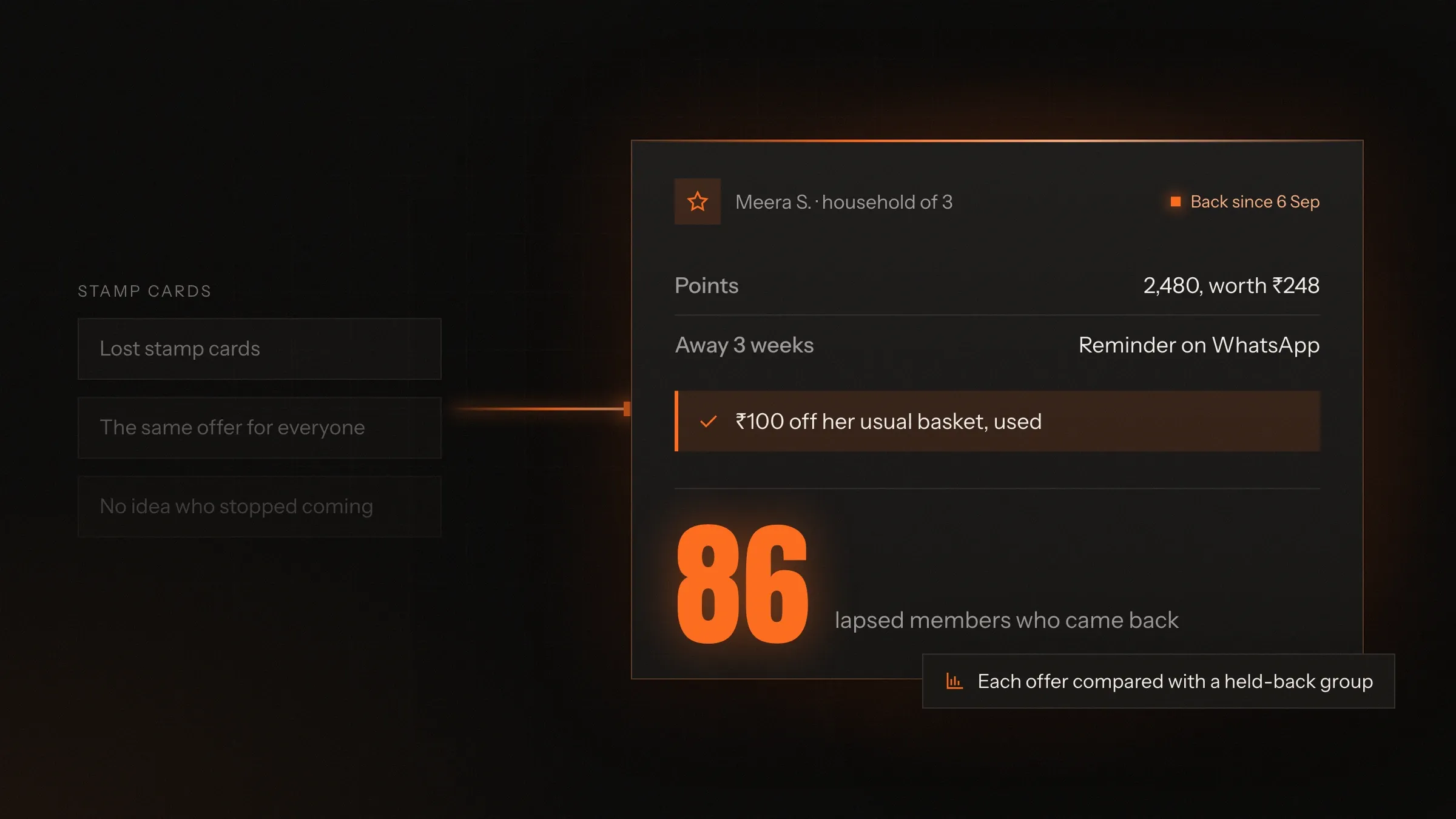
Today: Regulars drift away, and nobody notices.
After: Customers whose visits drop get a reason to come back before they're gone.
-
Today: Points are added by hand, or not at all.
After: Points and offers are applied at the till automatically, on every visit.
-
Today: Marketing guesses which offers worked.
After: The console shows which offers were activated and used, store by store.
What it does for you
-
A digital loyalty card
A barcode or QR code in the app, or in Apple Wallet and Google Wallet, scanned at the till exactly like a plastic card.
For exampleA shopper without the app adds the card to her phone's wallet and scans it at the till.
-
Points, stamps or tiers
Points on spend, stamp cards for visits, tiers for your most loyal customers, or cashback, with rules you set.
For exampleEvery tenth coffee is free, counted automatically from the bills.
-
Offers that fit
Customers grouped by how they buy, offers built for each group, activated in the app and applied at the till.
For exampleA family that buys fresh produce every week gets extra points on fruit, not on meat it never buys.
-
Win back the ones drifting away
Spot customers whose visits are dropping and send them a reason to return, on the app, WhatsApp or SMS.
For exampleA weekly shopper who hasn't been in for three weeks gets an offer on their usual basket.
-
Household accounts
Several cards adding to one points balance that any member of the household can spend.
For exampleTwo parents and a teenager collect points on one household balance.
-
Referral rewards
Rewards for bringing a friend, paid only after the friend's first real purchase.
For exampleA member shares a code, and both get points once the friend has shopped.
-
Digital receipts
Every purchase in the app, with the points earned and the money saved.
For exampleA shopper sees the points and savings from Saturday's shop without keeping the paper.
-
A console for your marketing team
Customer groups, offers, supplier-funded deals, schedules and results, without a developer.
For exampleThe team schedules a weekend offer for top-up shoppers and sees redemptions by store on Monday.
How it works
-
A customer joins
In the app, from a QR code at the till, or by moving their old card number across with its points.
-
They show their card
From the app or their phone's wallet, scanned at the till or added at an online checkout.
-
The till asks the loyalty system
The basket goes to the loyalty system, which adds the points and applies activated offers.
-
The receipt shows it
Points earned and money saved appear on the receipt and in the app.
-
The system learns
Each purchase updates how the customer shops and which group they belong to.
-
The next offer fits better
Offers, reminders and rewards follow what they actually buy.
Where we've built it
4 from our portfolio
-
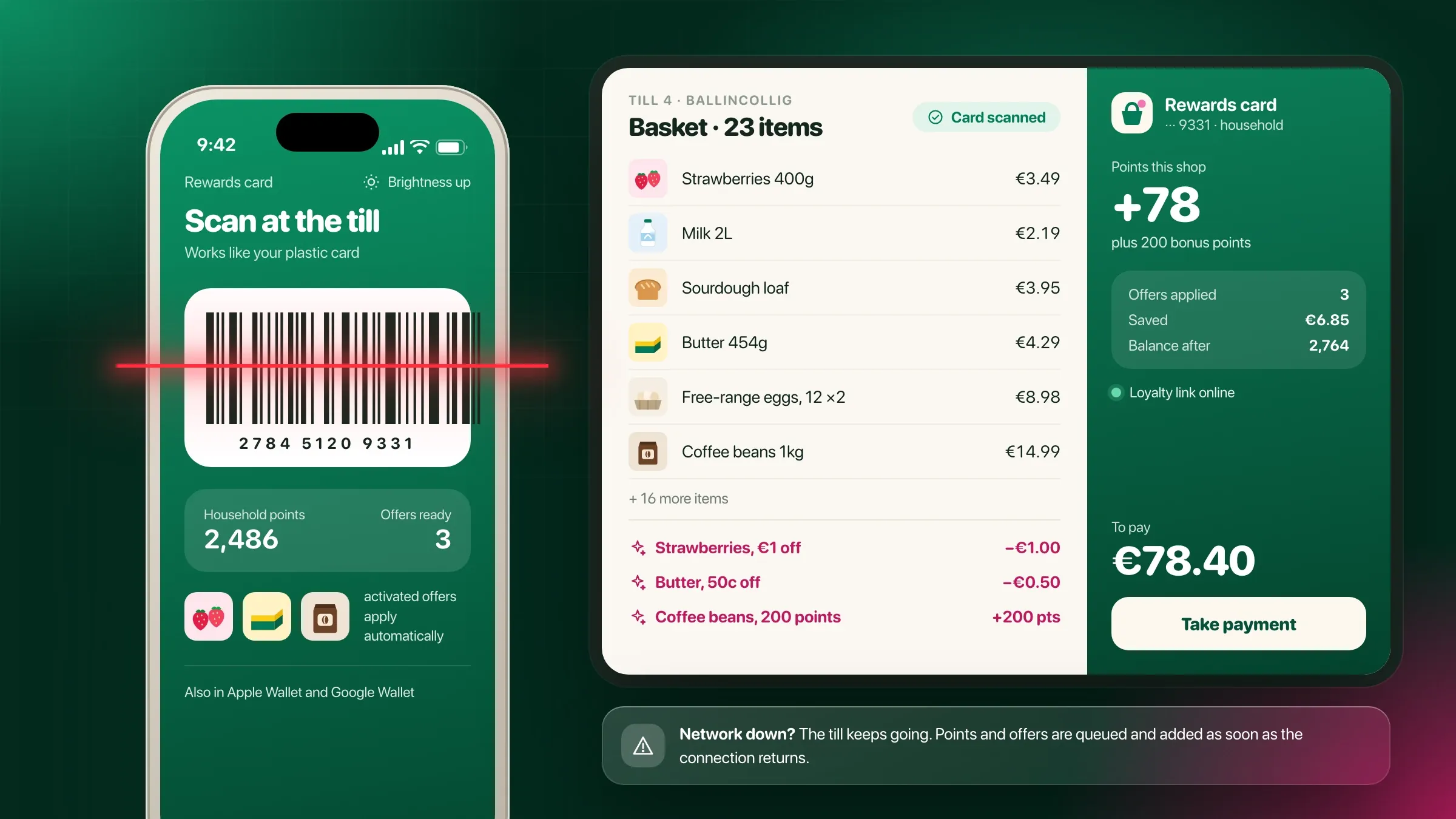 A supermarket loyalty card on the phone For a supermarket chain in Cork, a digital loyalty card scanned at the existing tills, household points, personalised and supplier-funded offers, and digital receipts. Read the case study
-
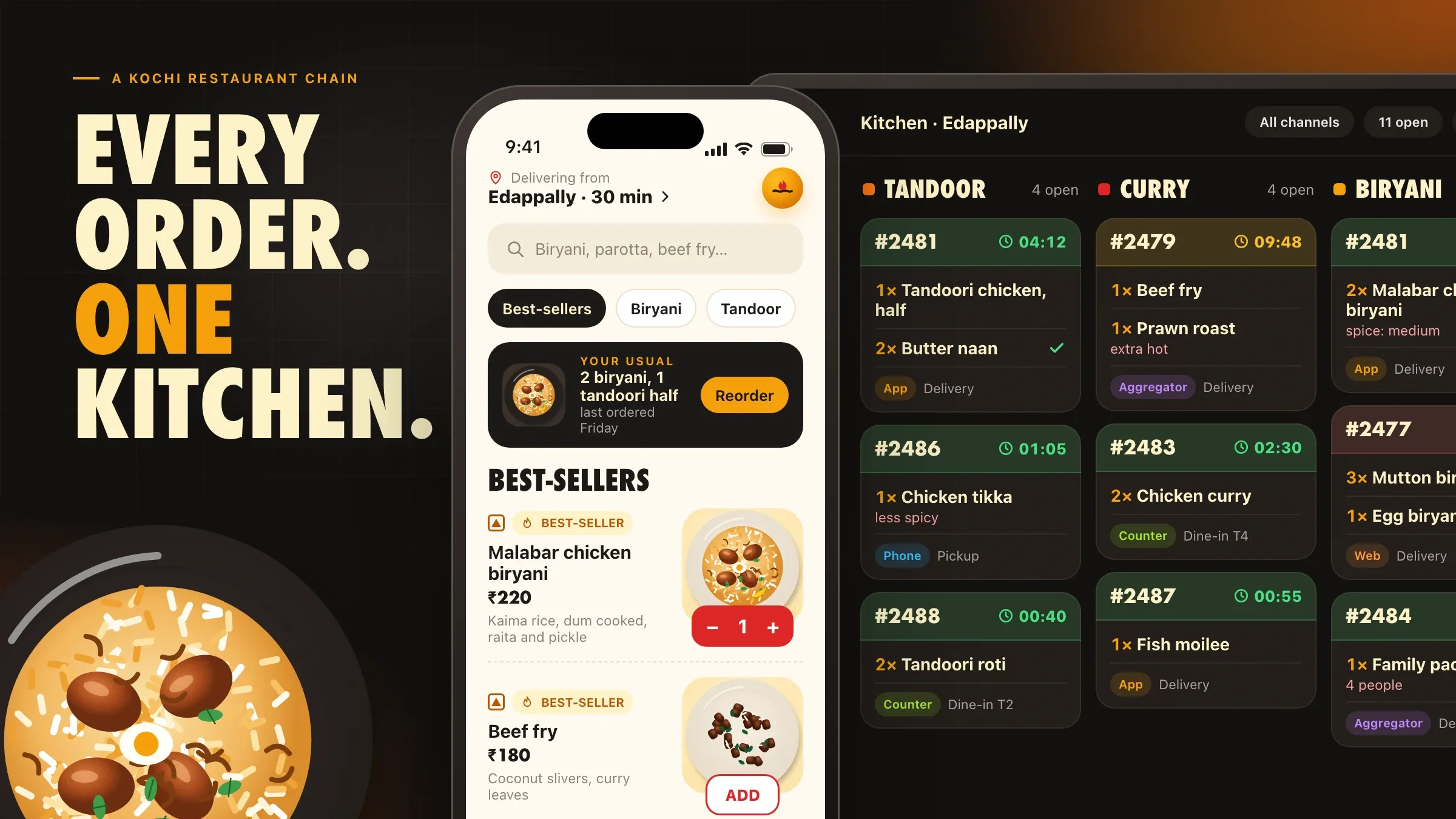 Points that bring regulars back to order direct For a restaurant chain in Kochi, loyalty points on every direct order, with birthday offers, referral rewards and outlet deals sent to the customers they suit. Read the case study
-
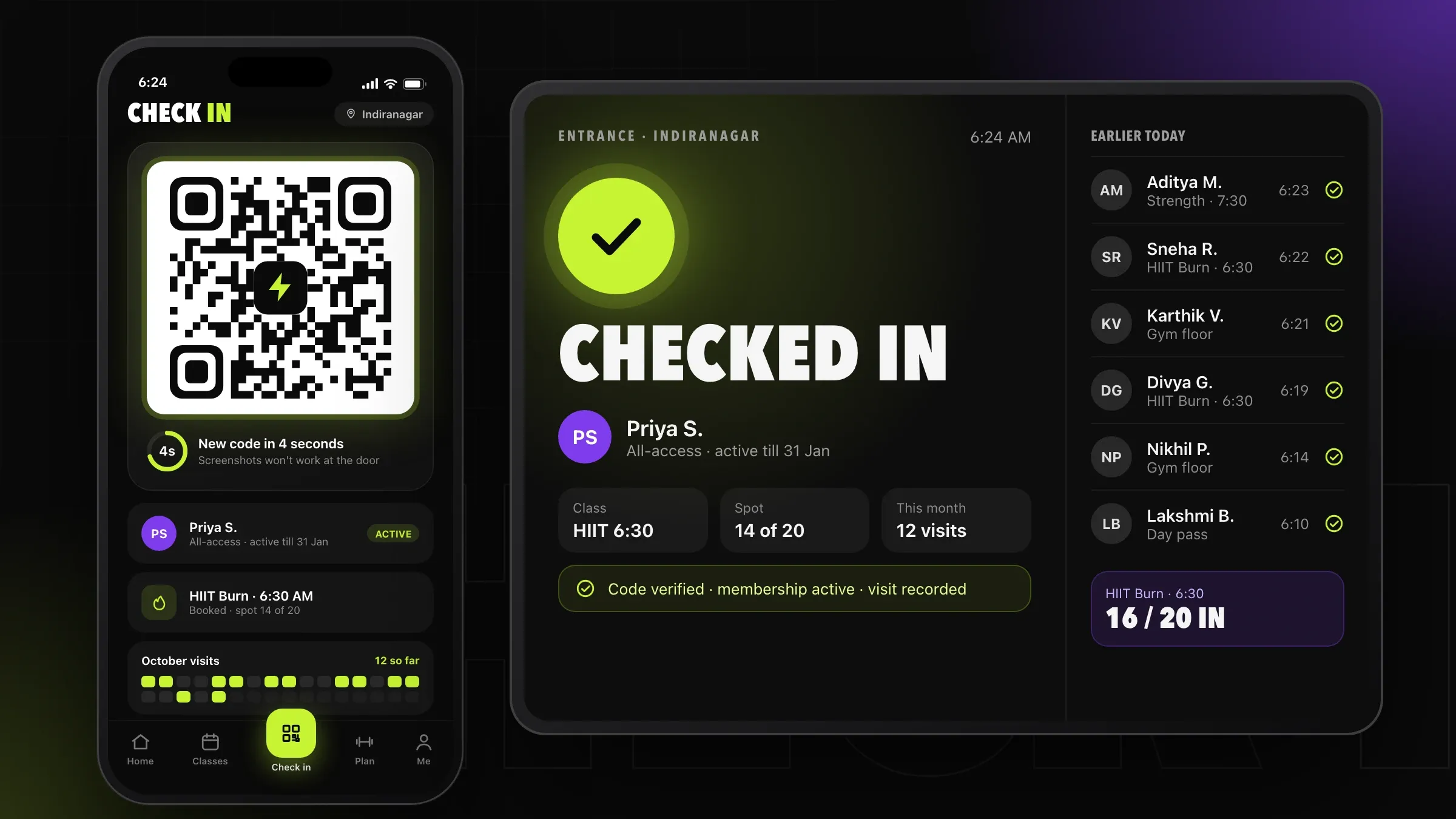 Members kept before they lapse For a chain of fitness studios in Bengaluru, memberships on UPI AutoPay and a dashboard that shows members whose visits have dropped, so the team can reach out first. Read the case study
-
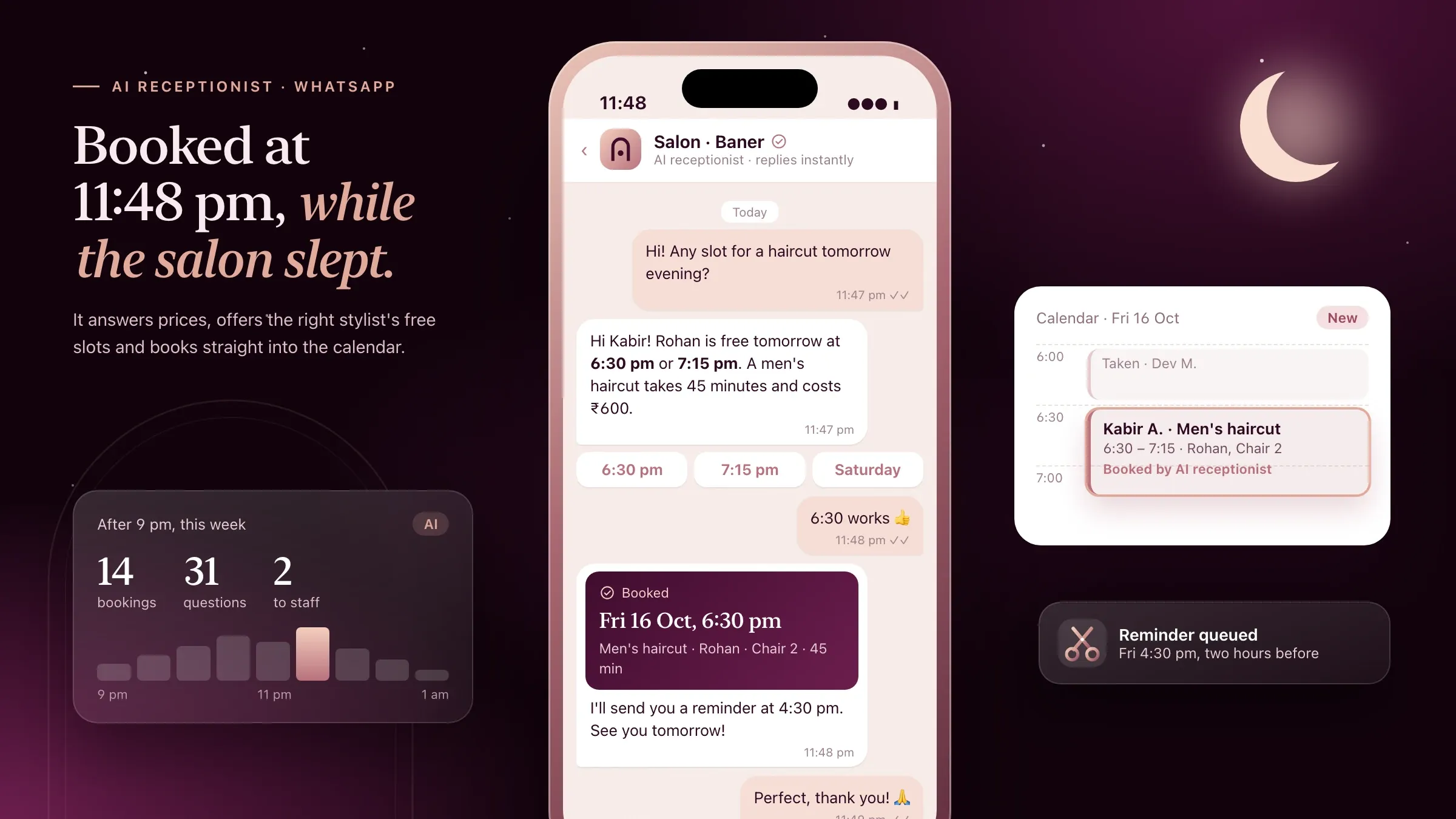 Reminders that bring clients back For a Pune salon software startup we back, we built the AI receptionist on WhatsApp, which reminds clients to book again six weeks after a haircut or colour. Meet the startup
What a loyalty app does
A loyalty app rewards customers for coming back, and tells you who they are. The customer carries a card on their phone, collects points or stamps every time they buy, and gets offers worth having. You learn what your regulars buy, how often they come and when they start to drift.
It is three parts working together. The app and wallet card are what customers see. The loyalty system holds every member, balance and offer. And the link to your tills and online store is what makes points appear on the receipt without anyone typing a number.
Most of the work is in that link and in the programme’s rules, not in the app screens. A beautiful app that slows the queue, or gives rewards nobody wants, fails in the first month.
Where loyalty pays off first
Loyalty pays off first in businesses where the same people buy often: supermarkets and grocery stores, restaurants and cafés, salons, gyms and studios, pharmacies, and fashion or beauty brands with regular customers.
In these businesses a small change in how often regulars return is worth more than a big push for new ones. A shopper who comes back one extra time a month, or a member who renews instead of drifting off, adds up across thousands of customers.
The second payoff is knowledge. Without a programme, a till sees a basket; with one, it sees a household. You learn who your most loyal customers are, what they buy together and when their habits change, and your offers stop being guesses.
Designing rewards people care about
The programme’s rules matter more than the app. Rewards have to be easy to understand, worth having and reachable soon. A customer who needs a year to earn anything stops counting.
Stamps suit simple, frequent purchases: every tenth coffee, every sixth haircut. Points suit varied baskets, with a clear rate such as points per hundred rupees and a clear value when spent. Tiers give your most loyal customers more, such as extra points or early access. Cashback is the easiest of all to explain.
We design the rules with you before any screens: what earns, what it’s worth, when points expire, what can’t be combined, and what the programme costs you at different levels of use. Then we test them with real customers.
At the till: where loyalty succeeds or fails
The till is where a loyalty programme succeeds or fails. If the scan is slow, cashiers skip it; if the card isn’t to hand, customers don’t bother. So the card is a barcode or QR code scanned exactly like a plastic card, from the app or from Apple Wallet and Google Wallet, and plastic cards can keep working too.
The till sends the basket to the loyalty system, which adds points and applies the customer’s activated offers before the receipt prints. If the network drops, the till carries on, and the points are queued and added when the connection returns. In Cork we built exactly this link to the supermarket chain’s existing tills.
Online, the same card number works at checkout, so points from the website and the shop add up to one balance.
Offers that fit each customer
Personalised offers are where a loyalty programme starts to pay for itself. Customers are grouped by how they buy: a weekly big shop, frequent top-ups, fresh food, family essentials, or a habit of trying new things. Your marketing team builds offers for each group: money off what they buy often, extra points on what they’re starting to explore, or a spend-and-get offer for the weekly shop.
Customers activate the offers they want in the app before they shop, and activated offers apply automatically at the till. Offers paid for by a supplier rather than by you are recorded on every use, so each supplier can be reported to and billed accurately.
Offers can also follow the calendar: festival weeks, the start of the school year, the first weekend after payday, or a hot spell. Your team plans them in advance in the console, with a limit on how many offers one customer receives in a week, so the programme never feels like spam.
Bringing back customers who drift away
The most valuable message is the one sent before a regular is lost. The system knows each member’s usual rhythm, weekly, monthly or every six weeks, and notices when it breaks.
A weekly shopper who hasn’t been in for three weeks gets an offer on their usual basket. A gym member whose visits have dropped shows up on the studio manager’s list, as they do for the fitness chain in Bengaluru. A salon client gets a friendly reminder six weeks after a haircut, as the AI receptionist we built for a Pune salon software startup sends on WhatsApp.
These messages go only to customers who agreed to receive them, by app notification, WhatsApp or SMS, and the results show which ones actually bring people back.
Privacy, consent and fair rules
A loyalty programme runs on personal data, so privacy is designed in from the start. Customers decide whether to receive marketing and can change their minds at any time. They can download or delete their data from the app. Only what the programme needs is collected, and it is kept only as long as needed, designed for the GDPR in Europe and India’s data protection law.
Fair rules protect you too. Points are reversed when items are returned, referral rewards need a real first purchase, and manual adjustments need a reason and are logged. Points issued, spent and expired are reported every month, so your accountant always knows the value you owe customers.
What we need from you
We need time at your tills and access to how they work. That means a conversation with your till or POS supplier about how a sale can be sent to the loyalty system, and a few days watching real queues.
We also need your decisions: what the programme rewards, what points are worth, who your customers are and what you want them to do more of. If you have an existing scheme, we need its member list and balances so nobody loses a point.
If your tills can’t send a basket to another system, we find out early and agree the route with you: a software update from the till supplier, a small bridge we build, or a plan that starts online and reaches the tills later.
And we need someone in marketing who owns the programme: who builds offers, reads the results and decides what to try next.
How we measure whether it works
Before launch we agree what success looks like. Usually: how many sales carry a loyalty card, how many members come back each month, how often they visit and how much they spend compared with customers outside the programme, and how many lapsing customers return after a reminder.
For offers, we keep a small group of eligible customers out of each one, so you can see what the offer actually changed rather than what would have happened anyway. The console shows every result by store and by customer group.
We also watch the cost side: the value of points issued and spent, the discounts given through offers, and the money received from suppliers for funded offers. Set against the extra visits and spend, that tells you what the programme earns, not just how busy it looks.
After launch: running the programme
A loyalty programme gets better the longer it runs, because every visit teaches it more. We run it with you: new offers and customer groups each month, features your members ask for, app updates, and the reports that show what worked.
When the programme is settled, the next steps are usually the ones that use what it has learned: offers that follow each customer’s own habits, a tier for your most loyal regulars, or loyalty extended to your online store and WhatsApp.
How we work with you
From the first call to running it
- Start
Start at the till
We spend time at your tills and with regular customers, and look at how your tills record a sale today.
- Design
Design the programme and the app
What earns points, what they're worth, how offers work, and the app, wallet card and console, tried out with real customers.
- Build
Build and link to your tills
The loyalty system, the app and the till link, with a fallback for when the network drops.
- Pilot
A few stores first
Cashiers trained, existing members moved across, and every scan checked against the tills' own records.
- Launch
Every store
Signs at the entrance and every till, with staff ready to help customers move their cards.
- Every month
Tune the offers
New offers, groups and features, with redemptions and repeat visits reviewed together.
Safe and in your control
The queue never waits
If the loyalty system or the network is slow, the till carries on and points are added as soon as it's back.
Privacy choices in plain view
Customers choose whether to get marketing, change their minds at any time, and can download or delete their data.
Only the data you need
The programme collects what it uses and keeps it only as long as needed, built for the GDPR and India's data protection law.
Points that can't be gamed
Points are reversed on returns, referrals need a real purchase, and manual adjustments need a reason and are logged.
Points your accountant can trust
Points issued, spent and expired are reported every month, so the value you owe customers is always known.
Staff access by role
Cashiers see a card's status, marketing sees groups and results, and only a few people see personal details.
Time and cost
The cost depends mainly on how your tills connect and how personal the offers need to be, not on a package. A points card for one shop with modern billing software costs far less than a chain with older tills, households and personalised offers. After the first call we send a written plan and a quote.
Your tills
Modern POS software with an API connects quickly; older tills may need a bridge and help from the till supplier.
Points, tiers and rules
Simple points are quickest. Tiers, households, cashback and expiry each add rules and testing.
Offers and groups
Personalised and supplier-funded offers need customer groups, a console and reports.
App, wallet or both
An app for Android and iPhone, wallet cards, a website, or all three.
Moving existing members
Old card numbers and points balances brought across, with checks so nothing is lost.
Running costs
Hosting, notifications, WhatsApp or SMS messages and app store accounts grow with your members.
Built with
Chosen for each project, never by habit
Questions and answers
13 answered
What is a loyalty app?
A loyalty app replaces the plastic loyalty card with one on the customer's phone. Customers collect points or stamps, get offers and see their receipts, and the business learns what its regulars buy so it can reward them in ways they value.
Do customers have to download an app?
No. Customers can add the loyalty card to Apple Wallet or Google Wallet, or keep a plastic card, and still collect points. The app adds offers, receipts and the points balance for those who want them.
Can a loyalty app work with our existing tills?
Usually, yes. The till sends each basket to the loyalty system and gets back the points and offers before the receipt prints. Modern POS software often has an API; older tills may need a bridge and the till supplier's help, which we check at the start.
Points, stamps, tiers or cashback: which should we use?
Stamps suit simple, frequent purchases such as coffee or haircuts. Points suit varied baskets such as groceries or fashion. Tiers give your most loyal customers more, and cashback is the easiest to understand. Many programmes combine points with a few targeted offers.
How much does loyalty app development cost?
It depends on how your tills connect, the rules of the programme, personalised offers, whether you need an app, wallet cards or both, and how many existing members move across. We send a written quote after the first call.
How long does it take to build a loyalty app?
A points programme for one shop with modern billing software is a matter of weeks. Till integration across a chain, households and personalised offers take longer: the supermarket loyalty app in Cork took six months, including a two-store pilot.
How are personalised offers chosen?
Customers are grouped by how and what they buy, such as a weekly big shop, quick top-ups or a love of fresh food. Your marketing team builds offers for each group, and customers activate the ones they want before they shop.
What happens if the network drops at the till?
The till keeps working. Points and offers for that sale are queued and added as soon as the connection returns, so customers never wait at the checkout because of the loyalty system.
How do you stop people abusing the points?
Points are reversed when items are returned, referral rewards need a real first purchase, manual adjustments need a reason and are logged, and unusual patterns are flagged for your team to check.
How does a loyalty app handle customer data?
Customers choose clearly whether to receive marketing and can change that at any time. They can download or delete their data, only what the programme needs is collected, and access is limited to the staff who need it.
Can the loyalty app be in Hindi, Gujarati or other languages?
Yes. The app, wallet card text and messages can be in English, Hindi, Gujarati and other languages, with each customer choosing theirs.
Do you build loyalty apps for businesses outside India?
Yes. FIRELIFE Ventures works with small and mid-size businesses worldwide from Rajkot, India, on India time. Our loyalty work includes a supermarket chain in Ireland, built for the GDPR and linked to its existing tills.
What happens after the loyalty programme launches?
We run it with you: new offers and customer groups, features your members ask for, app updates, and a monthly look at how many sales carry a card, how often members return and which offers worked.
Tell us what you want to build
Write a few lines about the idea and who it is for. We reply with our questions, a first plan and how we would start.
Write to us