Build something new e-commerce development
Open your online store
We design and build online stores that sell on a phone: a fast storefront, a checkout with the payment methods your customers already use, delivery worked out by pincode or postcode, and an admin your team runs without a developer.
- We start with how your customers buy
- Payments your customers already use
- Old links redirected, rankings kept
Sound familiar?
What we hear before we start
- Most of your sales go through marketplaces that take a commission and keep your customers.
- Your store is slow on a phone, and visitors leave before the page appears.
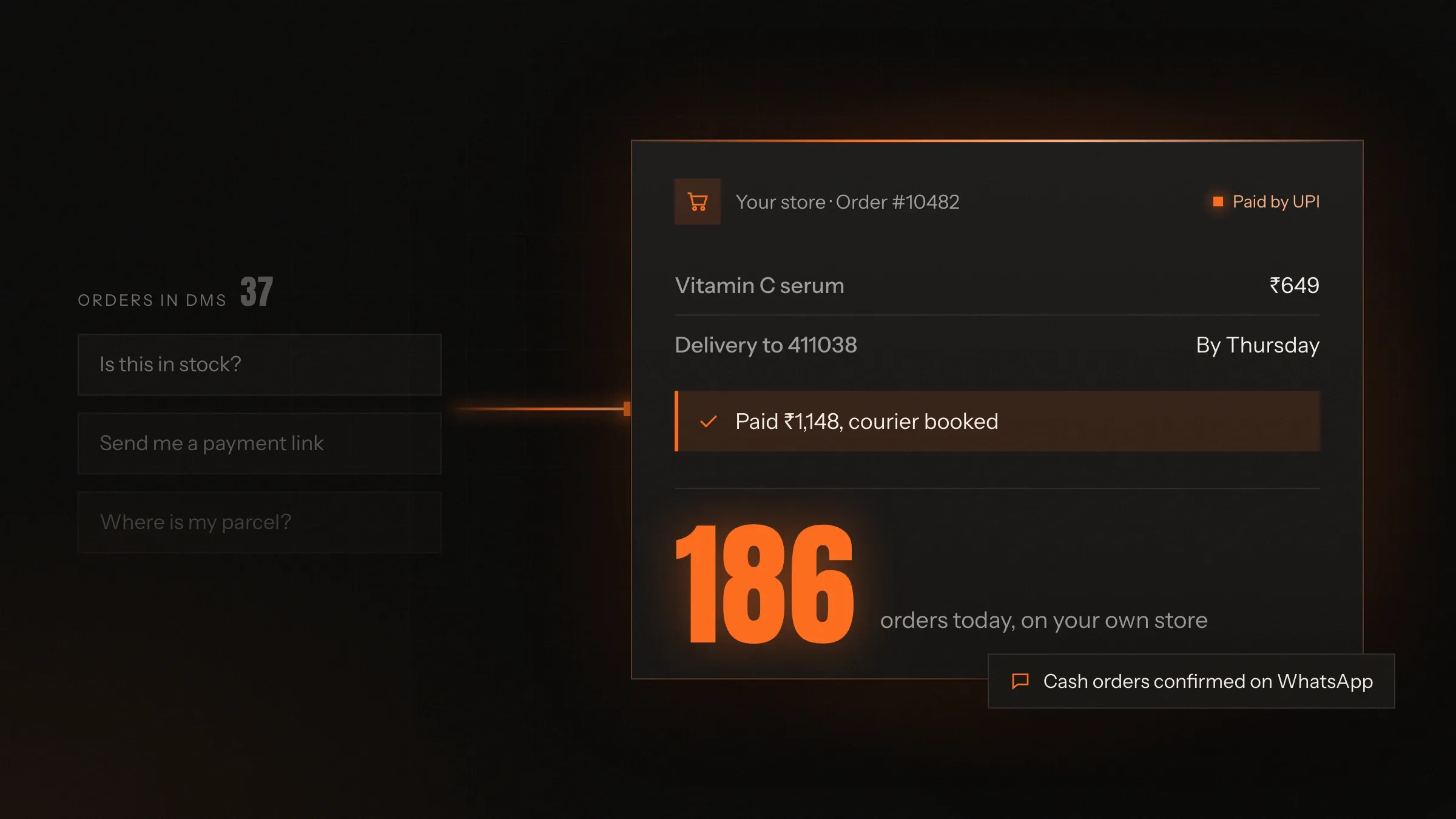
- Cash-on-delivery parcels come back refused, and you pay shipping both ways.
- Customers message you all day to ask where their order is.
- Every new offer or launch page waits in a developer's queue.
- Stock on your store and on the marketplaces never quite agrees.
What changes
-
Today: Customers find you on a marketplace and buy from whoever is cheapest that day.
After: Customers buy from your own store, and you know who they are.
-
Today: Pages crawl on mobile data and visitors give up.
After: Pages are built ahead of time and open quickly on mid-range phones.
-
Today: Cash-on-delivery orders ship blind, and too many come back.
After: Each cash-on-delivery order is confirmed on WhatsApp before it ships.
-
Today: Your team answers 'where is my order?' all day.
After: Customers follow their parcel on your tracking page, with WhatsApp updates.
-
Today: A campaign page takes a week in the developer's queue.
After: Your marketing team builds and schedules pages from ready-made blocks.
What it does for you
-
A storefront built for phones
Fast pages, clear product photos, filters that match how people shop, and search that understands everyday words.
For exampleA shopper types 'tan removal' and finds the right serum, though its name never uses those words.
-
Checkout on one screen
UPI, cards, wallets, net banking and cash on delivery in India; cards, wallets and local methods abroad, with the delivery date shown before payment.
For exampleA customer enters her pincode, sees delivery by Thursday and pays by UPI in two taps.
-
Delivery worked out by pincode
Whether you deliver there, by when and with which courier, decided order by order through a shipping aggregator or your own couriers.
For exampleAn order to a small town in Saurashtra goes to the courier with the strongest record there.
-
Fewer parcels coming back
Cash-on-delivery orders confirmed on WhatsApp, failed deliveries followed up straight away, and returns and exchanges requested from the order page.
For exampleA buyer who wasn't home gets a WhatsApp message to pick a new time before the parcel heads back.
-
Reorders and subscriptions
Refill reminders, subscriptions on UPI AutoPay or a saved card, and one-tap reorders of a past basket.
For exampleA moisturiser refill ships every 45 days, with a reminder to skip or pause a few days before.
-
Pages your team runs
Landing pages, banners, bundles and guides built from ready-made blocks, previewed and scheduled without a developer.
For exampleThe marketing team schedules the Diwali sale page to go live at midnight.
-
Stock in step everywhere
One stock count for your store, the marketplaces you sell on and your shop counter, so the same item is never sold twice.
For exampleThe last pair sells on a marketplace, and your own store marks it sold out straight away.
-
Numbers you can act on
Sales, margin after fees and shipping, returns by pincode and repeat customers, in one dashboard.
For exampleYou see which product loses money once returns and ad spend are counted.
How it works
-
A shopper arrives
From search, an ad, Instagram or a WhatsApp link, usually on a phone.
-
They find the right product
By browsing the way they think, filtering by size or price, or searching in their own words.
-
They pay their way
UPI, card, wallet, net banking or cash on delivery, on one screen.
-
The order is checked
The payment is confirmed with the gateway, stock is reserved, and cash-on-delivery orders are confirmed on WhatsApp.
-
It ships with the right courier
Invoice, label and courier are set by pincode, and the customer gets a tracking link.
-
They come back
Reorder reminders, subscriptions and offers based on what they actually bought.
Where we've built it
4 from our portfolio
-
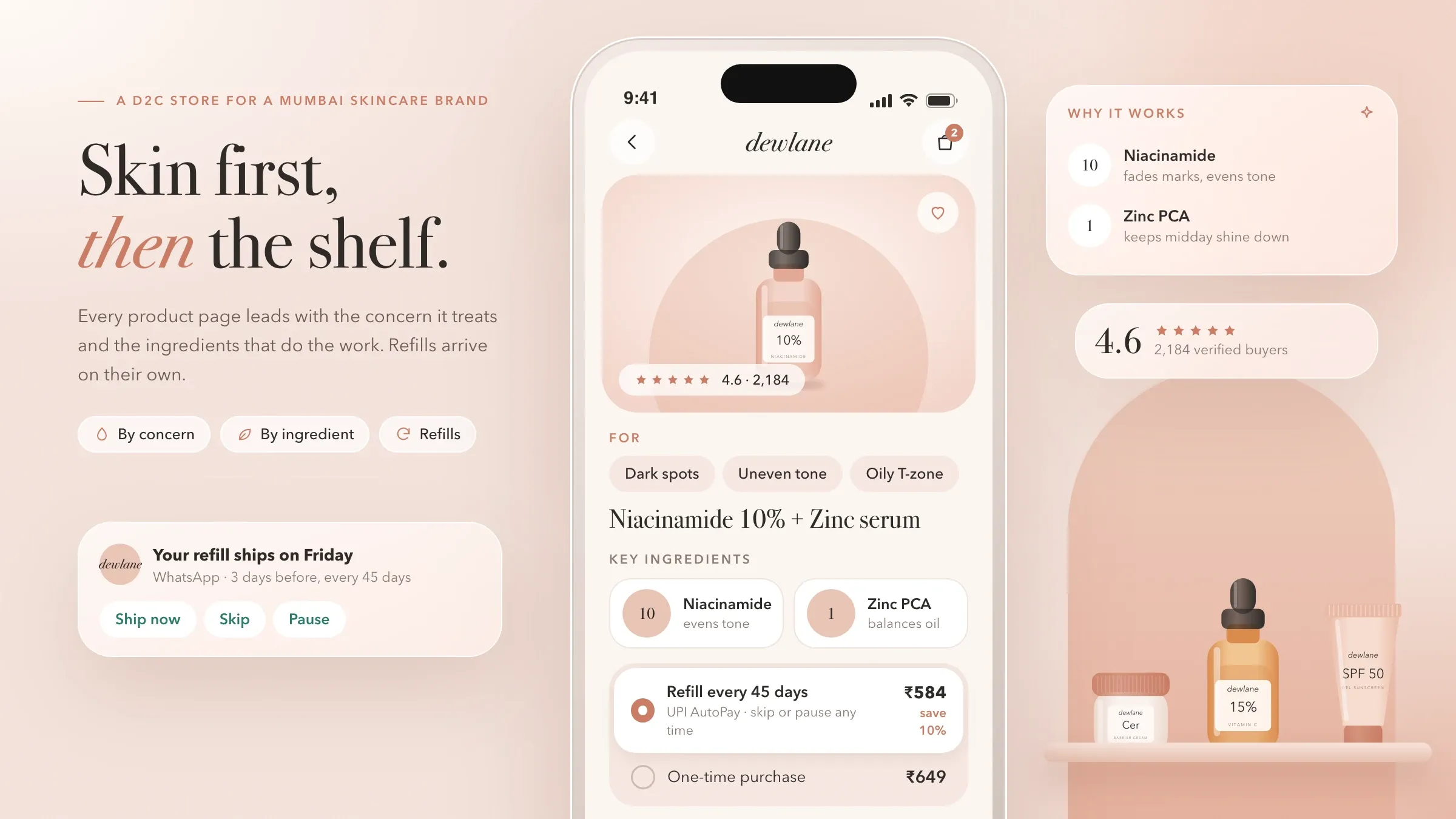 A skincare brand selling direct For a skincare brand in Mumbai, a headless store with a skin quiz, refill subscriptions on UPI AutoPay and cash-on-delivery orders confirmed on WhatsApp. Read the case study
-
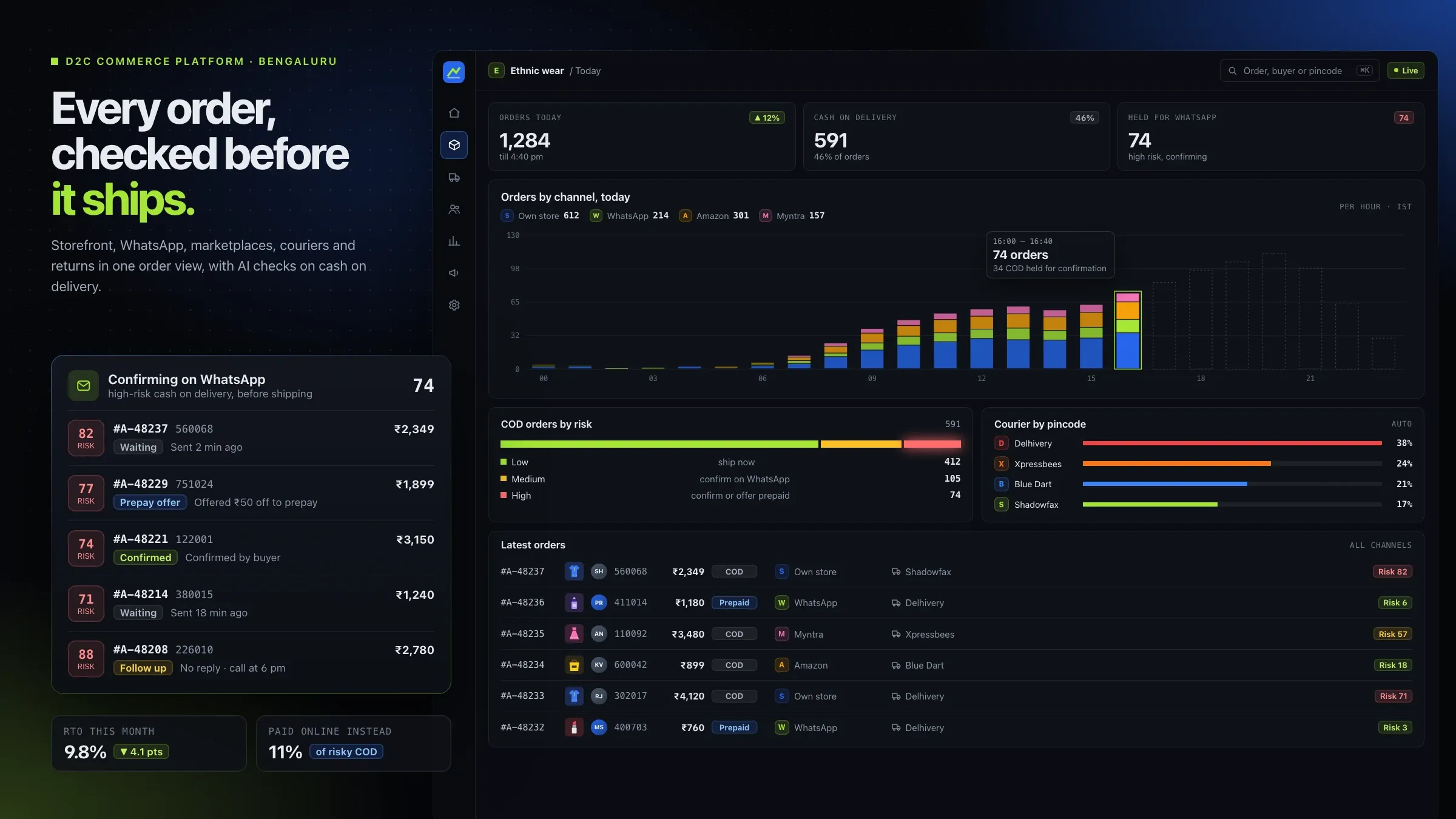 Protecting the profit on every order For a Bengaluru startup we back, we build the commerce platform D2C brands run on: AI checks on cash-on-delivery orders, courier choice by pincode and stock in sync with marketplaces. Meet the startup
-
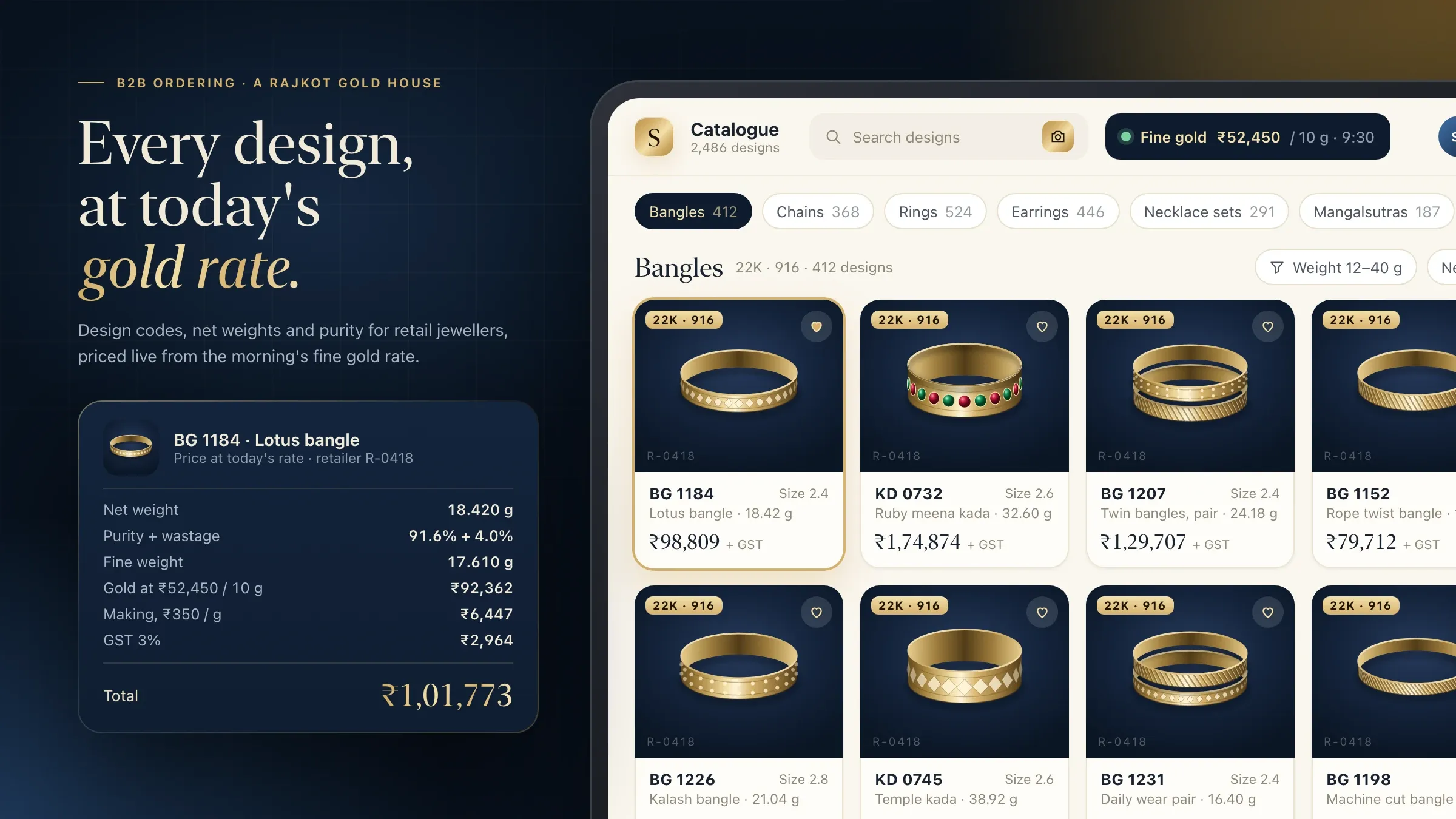 B2B ordering at the day's gold rate For a gold jewellery wholesaler in Rajkot, a catalogue and ordering app where retailers see prices at the day's gold rate, search by photo and track every order. Read the case study
-
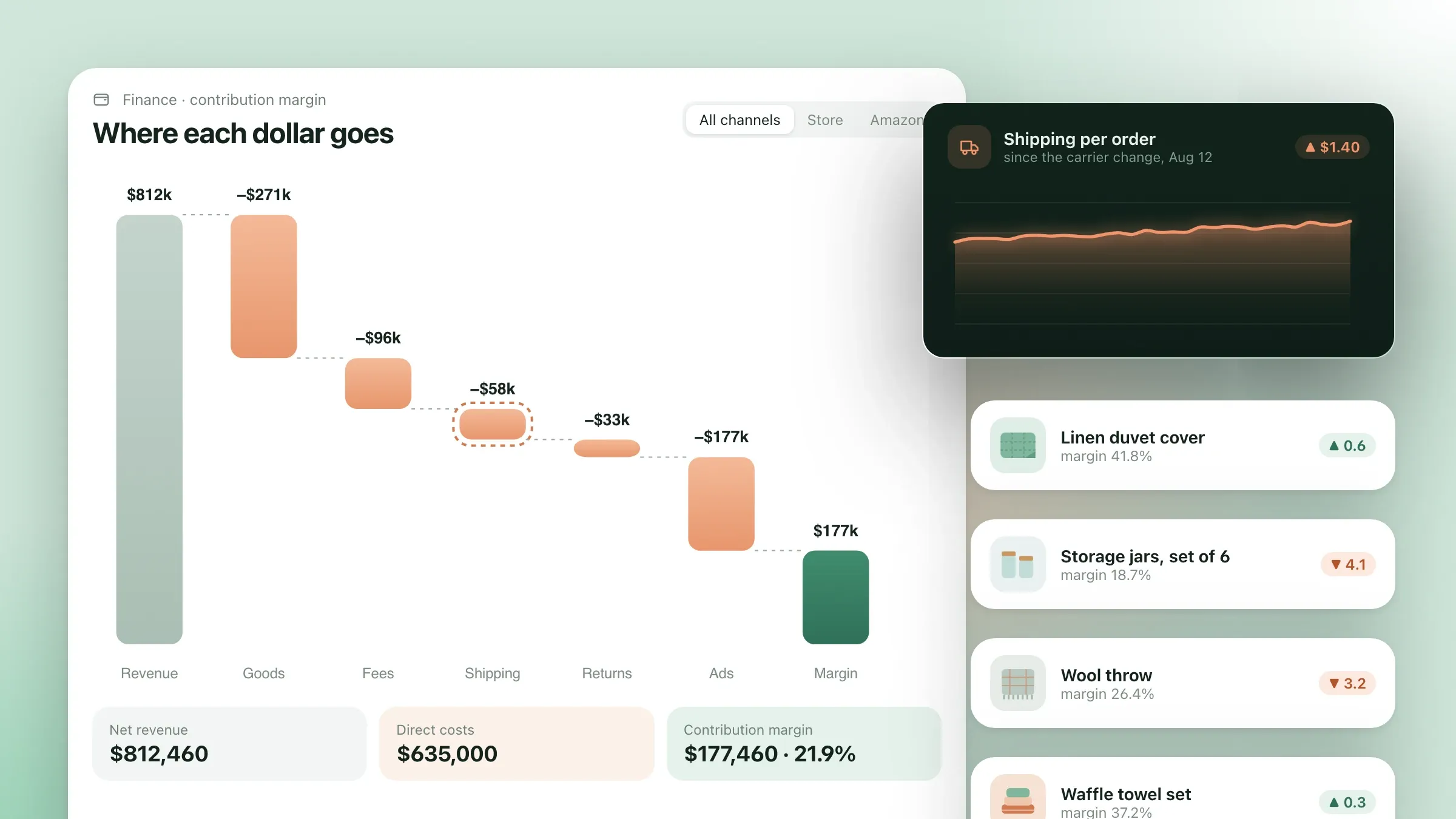 Profit per product, after every cost For a home goods e-commerce brand in Denver, dashboards that bring the store, Amazon, ads and accounting together, with margin per product after every cost. Read the case study
What goes into an online store
An online store is four things working together: the pages people browse, the checkout where they pay, the delivery that gets the parcel to them, and the admin where your team runs products, orders and offers. A store that does the first well and the rest badly still loses money.
Most of the work sits behind the pages. Payments have to be confirmed with the gateway before an order counts. Stock has to be reserved so two people can’t buy the last piece. Every order needs a GST invoice, a courier, a label and a tracking link. Returns, refunds and exchanges need rules your team agrees with.
We build the whole chain, from the product page to the parcel at the door, and connect it to the tools you already run, so an order placed at midnight is packed in the morning without anyone retyping it.
Where your own store pays off first
Your own store pays off first with customers who already know you. Marketplaces are good at bringing new buyers, but every order pays a commission and the buyer stays theirs. On your own store, a repeat customer costs you nothing to reach again, and you know what they bought, when and why.
The usual first wins are reorders, bundles and launches. A customer whose bottle is running out gets a reminder from you, not from a marketplace. A new range reaches your existing customers on WhatsApp the day it goes live. A bundle that would be lost in a marketplace listing gets its own page.
Most brands keep selling on marketplaces too. The store and the marketplaces share one stock count and one order view, so the marketplaces bring new customers and your store keeps them.
Shopify, headless or fully custom
The engine is the first big decision, and the right one depends on how unusual your selling is. Shopify with a ready-made theme is the quickest start, and right for many shops. Its limits show when you want a faster store on mobile data, a design that doesn’t look like a template, or features such as quizzes, subscriptions and custom bundles.
A headless store keeps Shopify, or a similar engine, for products, carts and orders, and puts a custom storefront in front. That is how we built the skincare store in Mumbai: pages generated ahead of time and served from the edge, so they open quickly on mid-range phones.
A fully custom engine suits businesses whose pricing doesn’t fit a cart: prices that follow the day’s gold rate, trade customers with their own price lists and credit limits, or catalogues too large or too complex for an off-the-shelf engine. We recommend one after the first call, with the reasons written down.
Checkout and payments, in India and abroad
The checkout should fit on one screen and offer the methods your customers already use. In India that means UPI, cards, wallets, net banking and cash on delivery, through a gateway such as Razorpay. Abroad it means cards, Apple Pay, Google Pay, PayPal and local methods such as iDEAL in the Netherlands, usually through Stripe.
We show the delivery date before payment, keep the form short and fill in the city and state from the pincode. Card details go straight to the gateway, never through your servers, and an order is marked paid only when the gateway confirms it.
Every order gets a GST invoice with the right rates and HSN codes, or a VAT invoice where you sell abroad. For stores that sell in several countries, prices can be set per currency rather than converted at checkout, so a customer sees a firm price in the currency they know.
Delivery, cash on delivery and returns
Delivery is decided order by order. As a customer types their pincode, the store checks whether you deliver there and by when. When the order is placed, a shipping aggregator or your own couriers take it, with the courier chosen by its record for that pincode.
Cash on delivery is still a large share of orders in India, and it is where profit leaks. Each cash-on-delivery order can be confirmed on WhatsApp before it ships, with the option to pay online in the same chat. Orders that are never confirmed are held. When a courier reports a failed attempt, the buyer gets a message straight away to fix the address or choose a new time, before the parcel turns back.
Returns and exchanges are requested from the order page. A reverse pickup is booked, the item is checked when it arrives, and the refund or replacement follows, with the customer told at each step.
Getting found: speed, search and structured data
A store has to be found before it can sell. We build pages that load quickly, carry clear titles and descriptions, and include product structured data, so search engines can show price, stock and reviews beside your listing.
Product pages lead with what people search for: the problem the product solves, the material or ingredient, the size and the price. Guides and category pages answer the questions customers type, which brings in visitors who aren’t searching for your brand yet. A product feed keeps Google Merchant Center and shopping ads in step with your catalogue.
If you are moving from an old store, every old address is mapped to its new page before launch, so the rankings you have earned come with you.
What we need from you
We need your catalogue, your rules and a few accounts in your name. The catalogue means products, variants, prices, GST rates and HSN codes, photos and descriptions; a spreadsheet is a fine start, and we help fill the gaps.
The rules are the decisions only you can make: where you deliver, shipping charges, whether you offer cash on delivery, your return and exchange policy, and which offers can combine.
The accounts stay yours: the payment gateway, which runs its own checks on your business before it pays out, the courier or shipping aggregator, the WhatsApp Business account and the domain. We set them up with you, but they belong to your business. You also need someone who owns the store day to day, usually from marketing or operations.
Connecting the store to the rest of the business
A store should be one part of your business, not an island. Stock can come from your billing or POS software, your warehouse system or your ERP, so what the store shows is what is on the shelf. Orders, invoices and payments can flow to Tally or your accounting software without retyping.
Marketplaces connect through their own APIs, so one stock count serves every channel and every order appears in one view. WhatsApp carries confirmations, delivery updates and reorder reminders, and enquiries can land in your CRM. Where your existing software has no API, we build a small bridge or use scheduled imports.
How we measure whether it works
Before we build, we agree the few numbers that matter for your store. Usually these are how fast pages open on a phone, how many visitors who start checkout finish it, how many cash-on-delivery orders are confirmed and delivered, how many customers buy again, and the margin per order after fees, shipping and returns.
Those numbers go into a dashboard your team can read without an analyst. After launch we look at them with you, find where shoppers drop out, and fix what is costing you orders: a slow page, a confusing size chart, a courier that fails in one region, an offer nobody uses.
After launch: running and growing
A store is never finished. New ranges arrive, sale days come round, gateways and couriers change their APIs, and customers ask for new ways to pay.
We run the store with you. Before each big sale we check the store against the traffic and the offers planned. Every month we ship releases for new ranges, bundles and campaigns, many of which your team then runs on its own. When a channel starts to matter, such as a new marketplace, WhatsApp selling or a second country, we add it to the same stock and order view.
How we work with you
From the first call to running it
- Start
Map how your customers buy
We look at your products, your current channels and the questions customers ask, and agree what the store must do on day one.
- Design
Design it on a phone first
Product pages, checkout and the admin are designed for the phone first, then the desktop, and checked with real customers where we can.
- Build
Build and connect
We build the store and connect payments, couriers, WhatsApp, your stock and your accounts, testing every payment method and delivery rule.
- Launch
Move across and open
Products, customers and order history move across, old links are redirected, and existing customers are invited first.
- Every month
Grow it
Releases for new ranges, offers and channels, ready for every sale day, with the numbers reviewed together.
Safe and in your control
Card details never touch your servers
Payments run through the gateway's own secure pages or fields, so card and bank details stay with the payment provider.
Paid means paid
An order is marked paid only when the gateway confirms it to the server, never just because the browser says so.
Customer data handled with care
Only the data the store needs, consent recorded for marketing messages, and staff access by role, built for India's data protection law and the GDPR where it applies.
Ready before the sale
Pages are served from the edge and the store is tested for sale-day traffic before the sale, not during it.
Rankings carried across
Every old product and page address is redirected, with titles, descriptions and structured data carried over.
A way back from every change
Backups of the store's own data, and every release can be rolled back if something goes wrong.
Time and cost
The cost depends on what your store has to do, not on a package. A small catalogue on a ready-made engine costs far less than a store with subscriptions, B2B prices and marketplace sync. After the first call we send a written plan and a quote.
Ready-made engine or custom
A custom storefront on Shopify is quicker to build; a fully custom engine suits unusual pricing, B2B rules or very large catalogues.
Products and variants
Sizes, colours, bundles, B2B price lists and product content all add to setup and testing.
Payments and delivery
Each payment method, courier, country and currency is set up and tested on its own.
Systems to connect
Marketplaces, your billing or POS software, Tally or your ERP, your CRM and WhatsApp.
Moving from an old store
Products, customers, order history and redirects take careful work, more so for a large store.
Running costs
Hosting, the commerce engine's plan, gateway fees and WhatsApp messages grow with your orders.
Built with
Chosen for each project, never by habit
Questions and answers
13 answered
What is e-commerce development?
E-commerce development is building an online store: the pages customers browse, the cart and checkout, payments, delivery, and the admin your team uses to run products, orders and offers. It can use a ready-made engine such as Shopify, a fully custom build, or a custom storefront on top of an engine.
Should we use Shopify or build a custom store?
Use Shopify with a theme if it already does what you need and you want to start quickly. Choose a custom storefront on top of Shopify when speed, design or features such as quizzes and subscriptions matter, and a fully custom build when your pricing, B2B rules or workflow don't fit any engine. We recommend one after the first call.
What is a headless online store?
A headless store separates the pages customers see from the engine that runs products, carts and orders. The storefront can be designed freely and kept very fast, while the engine handles checkout, stock and orders in the background.
How much does e-commerce development cost?
It depends on the engine, the number of products and variants, the payment and delivery options, the systems the store connects to, and whether you are moving from an old store. We send a written quote after the first call, based on what the store must do on day one.
How long does it take to build an online store?
A store on a ready-made engine with a clear catalogue is a matter of weeks. Custom features, B2B pricing, marketplace sync or a move from a large store take longer: our skincare store for a Mumbai brand took five months, including customer research, a skin quiz and subscriptions.
Which payment methods can the store take?
In India: UPI, cards, wallets, net banking, EMI where the gateway offers it, and cash on delivery. Abroad: cards, Apple Pay, Google Pay, PayPal and local methods such as iDEAL in the Netherlands. We set up the gateway that suits your market, such as Razorpay in India or Stripe abroad.
How do you cut cash-on-delivery returns?
Every cash-on-delivery order is confirmed on WhatsApp before it ships, with the option to pay online instead. Risky orders can be checked by address and pincode history, and failed delivery attempts are followed up with the buyer straight away, before the parcel heads back.
Will we lose our Google rankings if we move to a new store?
Not if the move is planned. Every old product, collection and page address is redirected to its new page, titles, descriptions and structured data are carried across, and Search Console is checked after launch until the new pages are picked up.
Can the store keep stock in step with marketplaces and our shop?
Yes. Stock can be kept in step between your store, the marketplaces you sell on and your billing or POS software, so the same item isn't sold twice. How each one connects depends on its API, which we check at the start.
Can the store work in Hindi, Gujarati or other languages?
Yes. Product pages, checkout and WhatsApp messages can be in English, Hindi, Gujarati and other languages, with the customer choosing. Each language is read through, product by product, before launch.
Can you build a B2B or wholesale store?
Yes. Trade customers sign in to see their own prices, credit limits and order history, and order in bulk. We built this for a gold jewellery wholesaler in Rajkot, where every price follows the day's gold rate.
Do you build online stores for businesses outside India?
Yes. FIRELIFE Ventures works with small and mid-size businesses worldwide from Rajkot, India, on India time. Our e-commerce work includes a skincare brand in Mumbai and dashboards for an e-commerce brand in Denver, and we set up the payment methods and currencies your market uses.
What happens after the store goes live?
We keep it running and growing: monthly releases for new ranges and offers, checks before every sale day, updates when a gateway or courier changes its API, and a look at the numbers with you.
Tell us what you want to build
Write a few lines about the idea and who it is for. We reply with our questions, a first plan and how we would start.
Write to us