Build something new SaaS development
Launch your SaaS and charge from day one
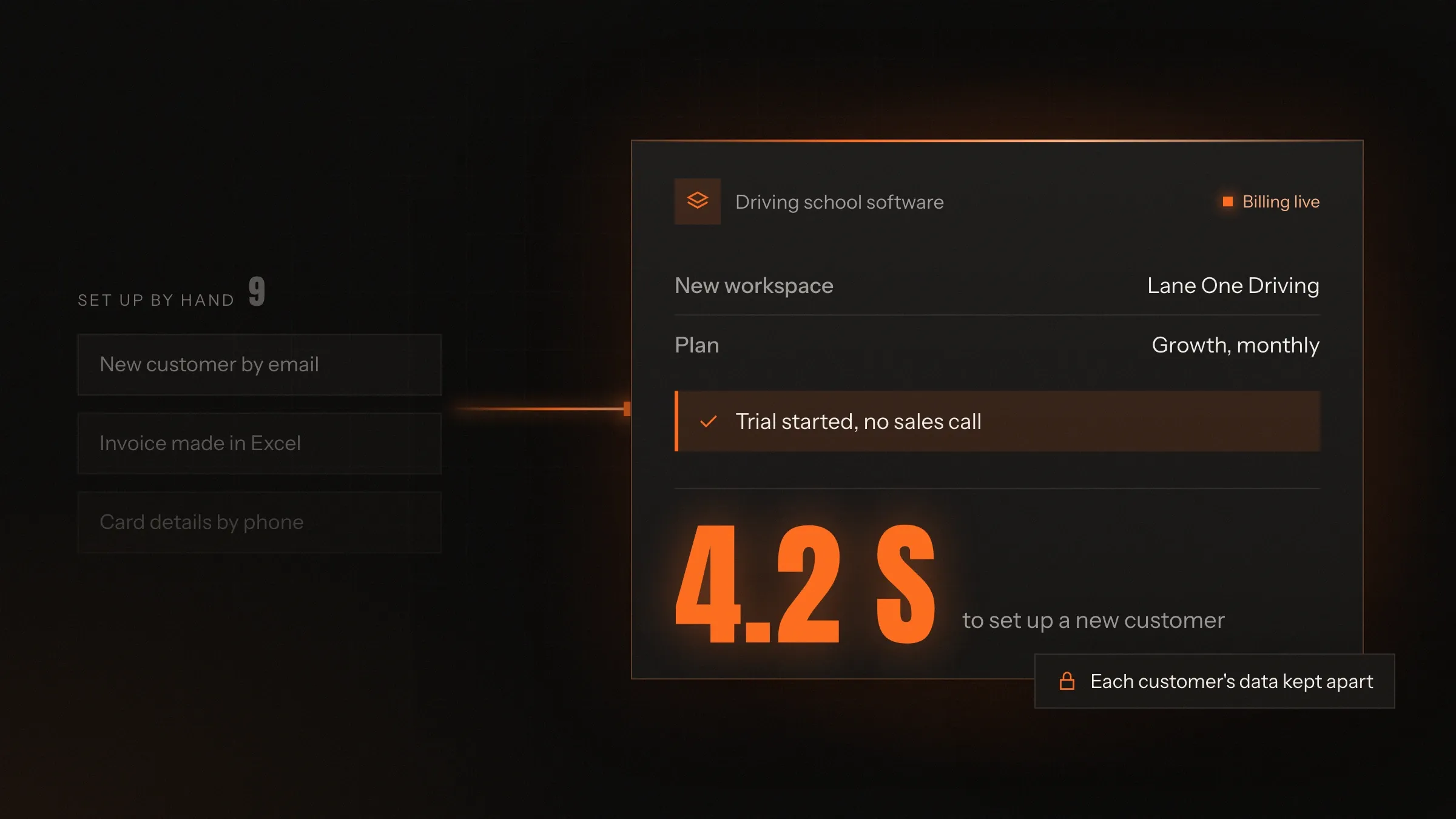
We build SaaS products that businesses sign up for, set up on their own and pay for every month: a private space for each customer, plans and billing, onboarding without a sales call, and a console for your team to run it all.
- Billing in the first release
- Each customer's data kept apart
- We're building SaaS of our own too
Sound familiar?
What we hear before we start
- Customers want your tool, but every new one means a call, a manual set-up and a spreadsheet row.
- Your software was built for one client, and now it has to serve fifty.
- Invoices, renewals and failed payments are chased by hand at the end of every month.
- You aren't sure how to price it, or how to change prices later without upsetting early customers.
- Each customer asked for something special, and the code has split into versions.
What changes
-
Today: Each new customer needs a call, a set-up and a row in a spreadsheet.
After: Customers sign up, import their data and start working on their own.
-
Today: A separate copy of the software for each client, each slightly different.
After: One product serves every customer, with settings instead of separate versions.
-
Today: Invoices are raised and chased by hand.
After: Subscriptions renew on their own, with invoices, retries and reminders on time.
-
Today: You find out a customer was unhappy when they cancel.
After: Usage shows who is stuck or going quiet, so you can help before they leave.
-
Today: Prices and plan limits are buried in the code.
After: Plans, trials and limits are changed from your own console.
What it does for you
-
Self-serve sign-up
Visitors sign up, start a trial and set up their account without talking to anyone.
For exampleA salon imports its client list and sets up its services, staff and prices in an afternoon.
-
Plans and billing
Plans, trials, upgrades, add-ons and limits, paid by card, UPI AutoPay or invoice.
For exampleA customer moves up a plan halfway through the month and pays only the difference.
-
A private space for each customer
Every customer gets its own workspace, users and settings, with its data kept apart.
For exampleA distributor's sales team sees its own leads, and never another company's.
-
Roles inside each account
Owners, managers and staff in every customer account, with permissions the customer sets.
For exampleA clinic owner adds a receptionist who can book appointments but can't see the bills.
-
A console for your team
Every customer, plan, payment and support request in one place, with the actions your team needs.
For exampleYour support lead extends a trial for a customer still importing five years of data.
-
Usage and account health
Who signed up, who reached first value, who is stuck in set-up and who has gone quiet.
For exampleAn account that hasn't signed in for a fortnight is flagged for a friendly call.
-
Integrations and an API
The connections customers expect, such as WhatsApp, payments, accounting and calendars, plus an API for their own tools.
For exampleAn online store books a delivery automatically through the platform's plugin.
How it works
-
A visitor signs up
From your website, with an email address, a Google account or a phone number.
-
Their workspace is created
A separate, secure space with their own settings, ready in seconds.
-
They set it up themselves
Guided steps import their data, invite their team and connect their tools.
-
They choose a plan
The trial becomes a subscription, paid by card, UPI AutoPay or invoice.
-
Billing runs itself
Renewals, invoices, retries for failed payments and reminders happen on schedule.
-
You learn and improve
Usage, revenue and support requests show what to build next.
Where we've built it
5 from our portfolio
-
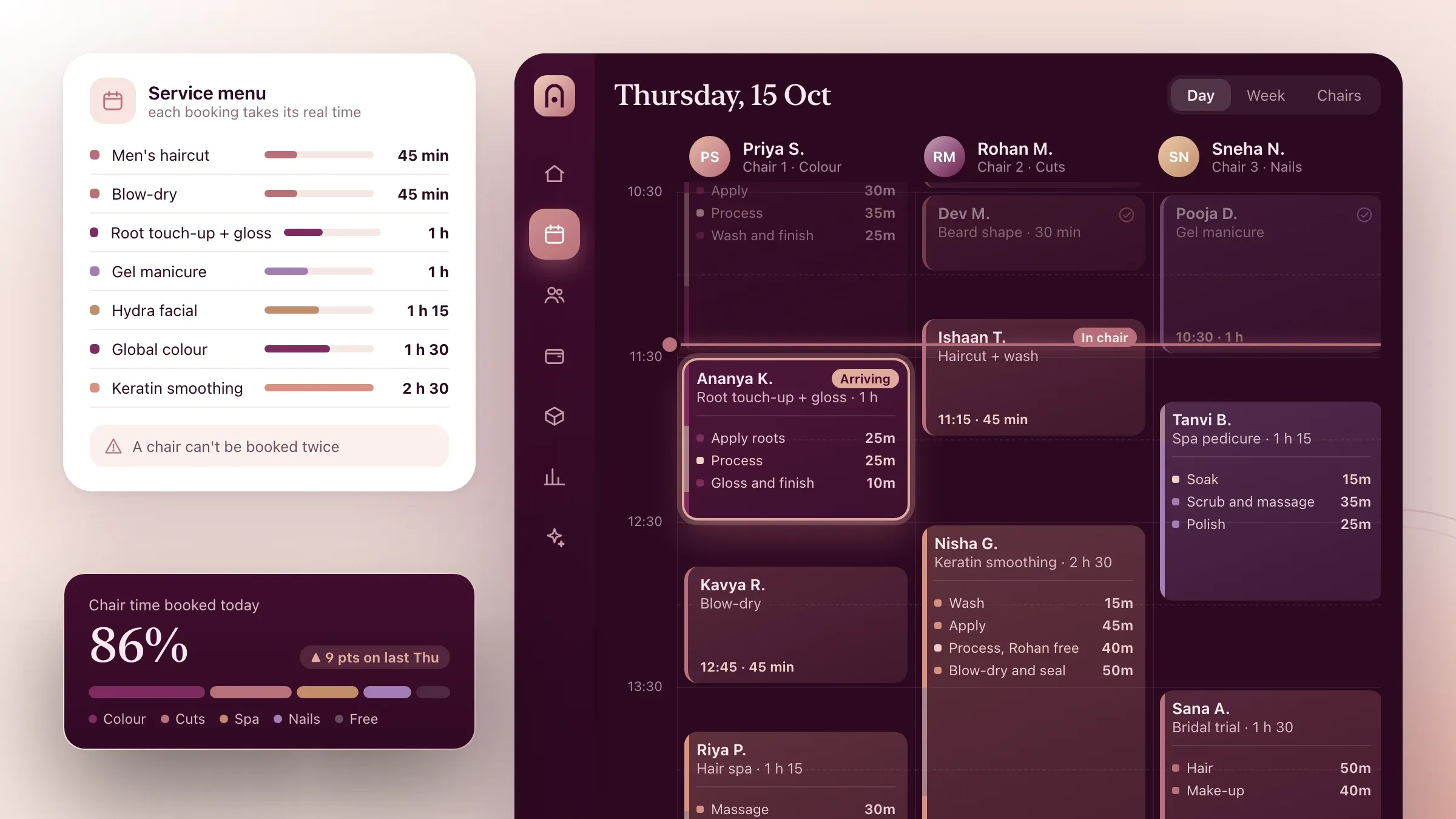 Salons that sign up on their own For a salon software startup in Pune, we designed self-serve sign-up, so salons set up without a sales call and run their day on monthly subscriptions. Meet the startup
-
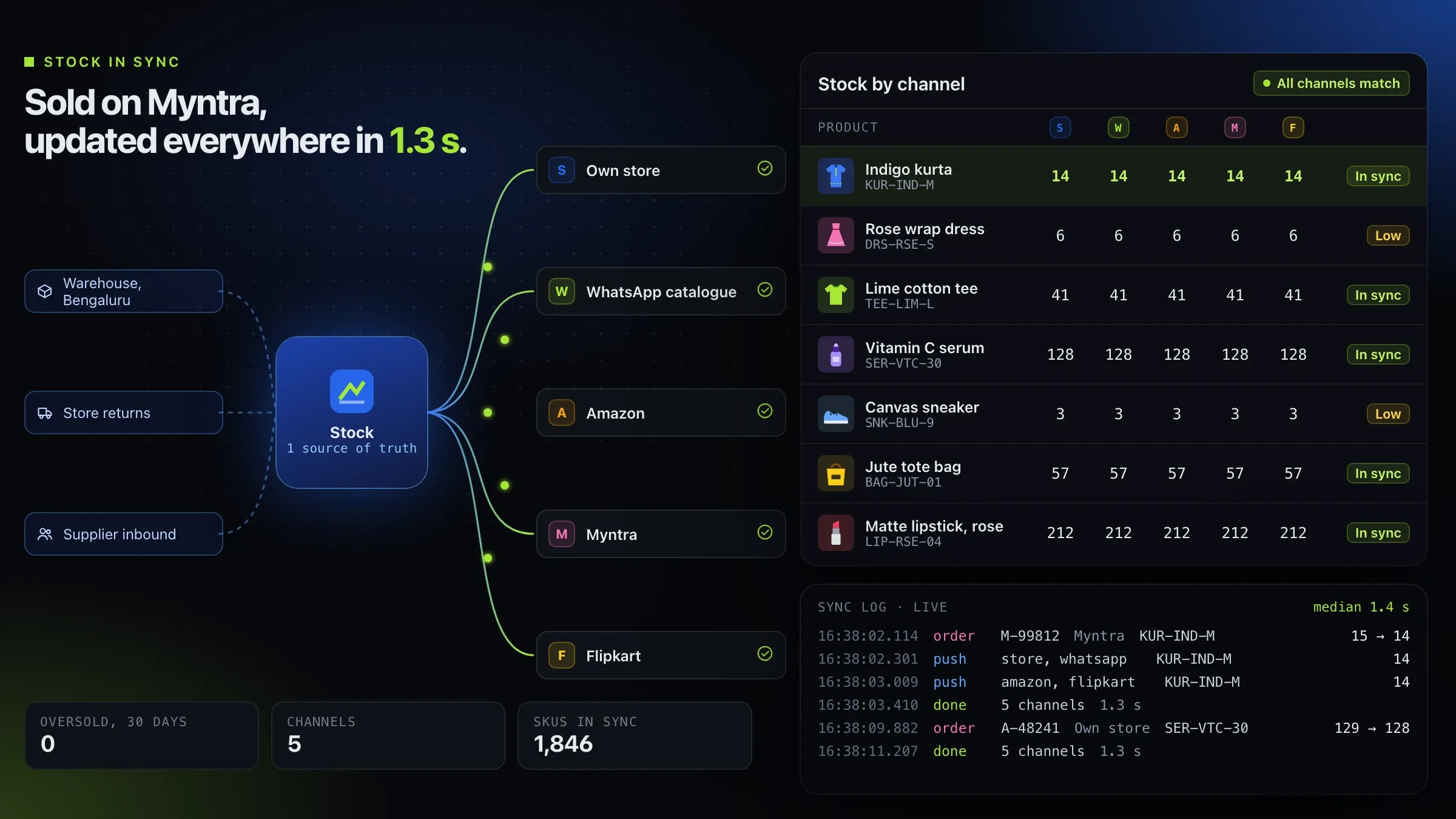 One platform for many brands For a commerce startup in Bengaluru, we build the core platform that runs storefronts, orders and returns for a pilot group of fashion and beauty brands. Meet the startup
-
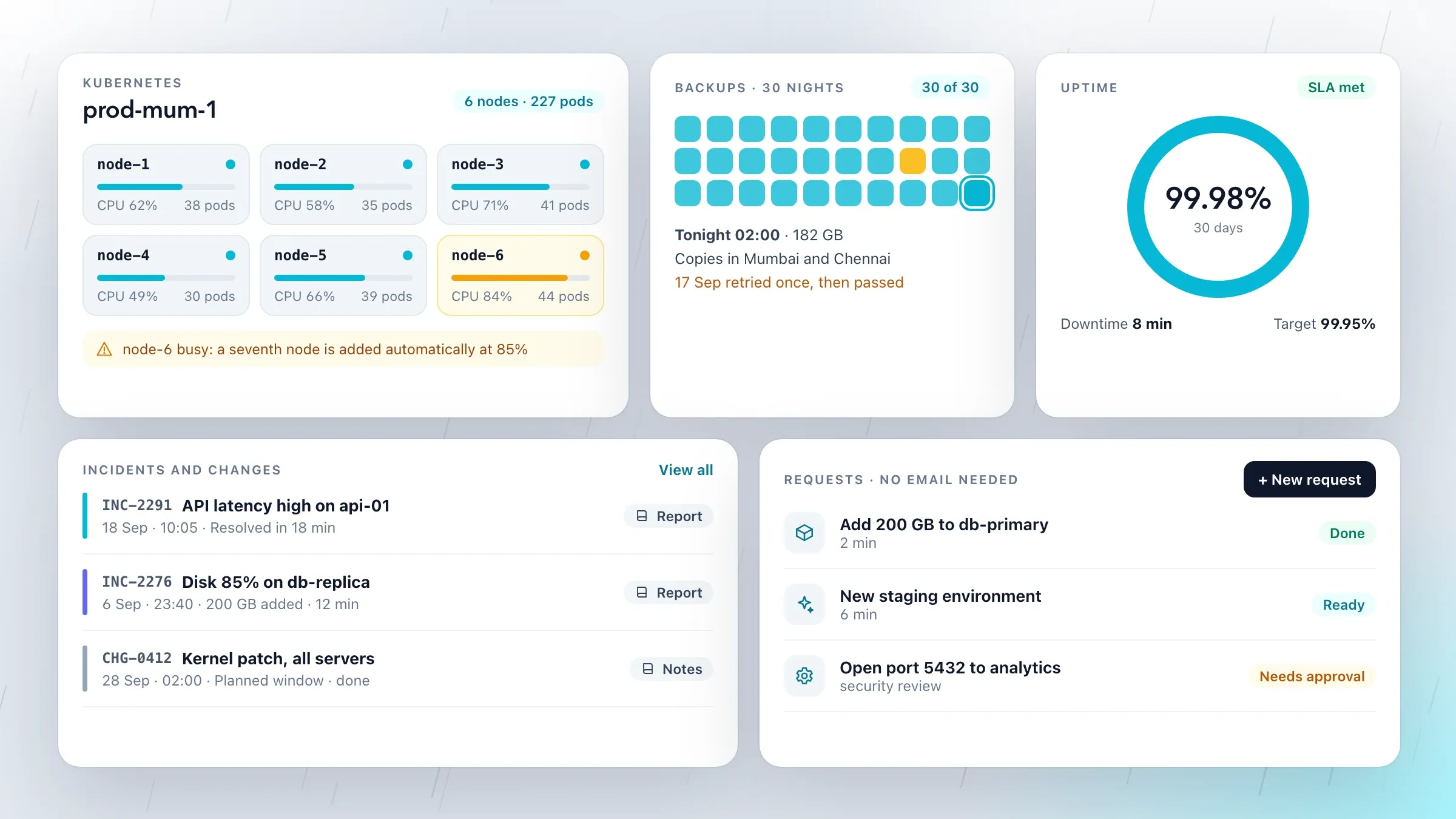 A customer portal with usage and billing For our managed cloud partner in Mumbai, we built the customer portal for servers, usage, backups and GST invoices, and automated set-up of new environments. View the investment
-
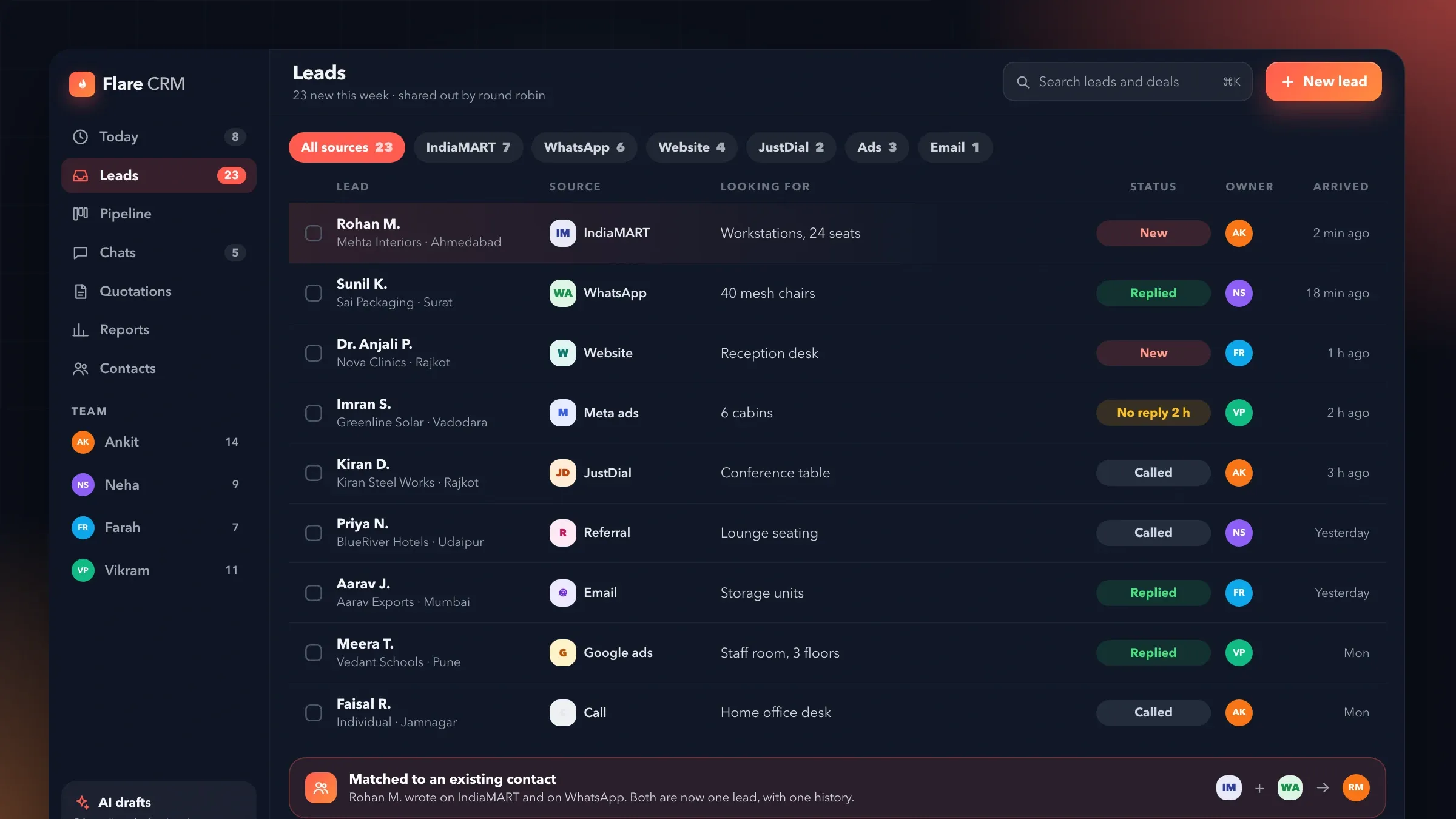 Flare CRM, our own CRM software Our CRM for small sales teams, in development: leads from every channel in one list, WhatsApp inside every deal, and each company's data kept separate. See the product
-
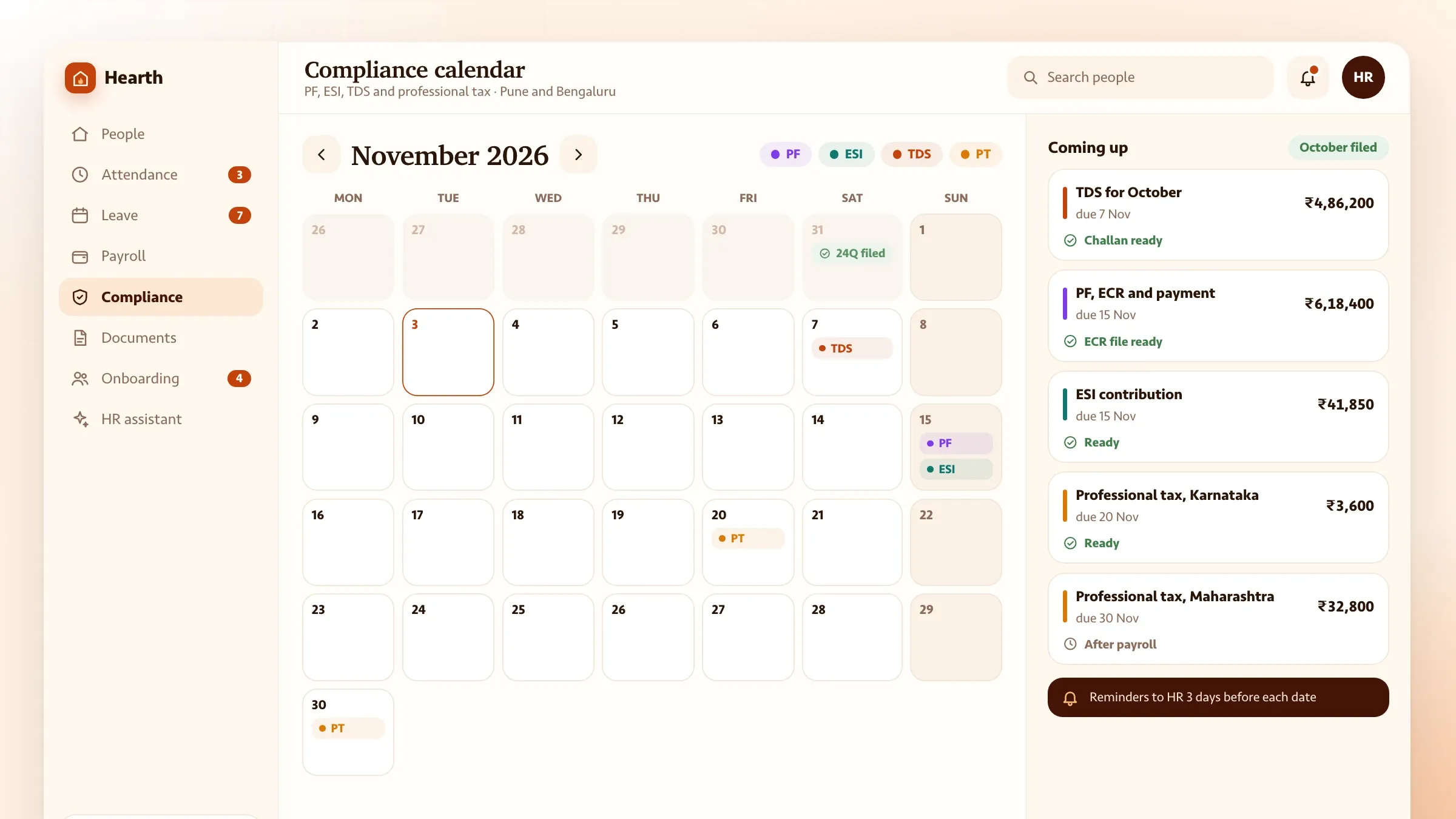 Hearth HRMS, our own HR software Our HR and payroll software, in development, with a self-service app for staff and Indian statutory deductions worked out in every payroll run. See the product
What makes software a SaaS product
A SaaS product is software that many businesses sign up for and pay for by subscription, over the internet. SaaS stands for software as a service: the customer installs and hosts nothing, and you run one product for all of them.
Building one means building two things. The first is the product itself: the job it does for customers, whether that is managing leads, running payroll or taking bookings. The second is everything that turns it into a business: sign-up, a private space for each customer, plans and billing, onboarding, a console for your team, and the security and reliability paying customers expect.
Many first attempts get the product right and the second part wrong, so every new customer still needs a call, a manual set-up and an invoice raised by hand. We build both from the first release, so you can charge from day one.
Start with one job, done well
The SaaS products that grow usually start by doing one job better than anything the customer has tried before. Salon software that runs the salon’s whole day, from bookings to staff commissions. A CRM that puts WhatsApp inside every deal. A commerce platform that protects the profit on cash-on-delivery orders.
So we start by naming that job and the customer who needs it most. That decides the first release: the core workflow, built carefully, with sign-up and billing around it. Features for other kinds of customer, and modules for later, wait until paying customers ask for them.
If the idea hasn’t been tested yet, an MVP may be the right first step. If customers are already waiting, or you are turning software you built for one client into a product, we can go straight to a first release that charges.
One product, many customers
A SaaS product serves every customer from one system, with each customer’s data in its own private space. This is called multi-tenancy, and it is what keeps running costs down and gives every customer each improvement on the same day.
The hard part is making sure no customer can ever see another’s data. We design for that from the start: every record belongs to one customer account, every query is limited to that account, and automated tests check that the walls hold. Larger customers who need it can have their data held in a database or region of its own.
Differences between customers are handled with settings, not separate copies of the code. Each customer chooses its own stages, fields, templates, tax rates or working hours, while the product underneath stays one. That is what lets a small team support a large number of customers.
Sign-up and onboarding without a sales call
Customers should be able to sign up, set up and get value without talking to anyone. Self-serve sign-up is what lets a SaaS product grow faster than its sales team.
The path matters more than the sign-up form. We design every step from the first visit to the moment a new customer first gets value: importing their data, inviting their team, connecting their tools and doing the core job once. For the salon software startup FIRELIFE backs in Pune, we designed sign-up so a salon imports its client list and sets up its services, staff and prices on its own, in an afternoon.
Imports deserve special care. Most customers arrive with spreadsheets or data from another tool, so the product maps their columns, merges duplicates and shows what will happen before anything is saved. A smooth import is often the difference between a trial that turns into a customer and one that is abandoned.
Plans, pricing and billing
Billing should work in the first release, because charging is how you learn whether the product is worth paying for. We build plans, trials, upgrades, downgrades, add-ons and limits so you can change them from your console rather than in code.
How you charge depends on how customers get value: per account or per location for shops and clinics, per user for tools every team member uses, or by usage for messaging and processing. Many products combine a base plan with usage on top.
In India, subscriptions can renew by card or UPI AutoPay through Razorpay, with the pre-debit notice the RBI requires, and every payment produces a GST invoice. For customers abroad, Stripe handles cards and local payment methods, with invoices in the right currency and with the right tax. Failed payments are retried, customers are reminded, and an account is restricted only after the grace period you choose.
What we need from you
We need a clear view of your customer, your thinking on price, and a person who owns the product.
The customer comes first. We want to talk to a few of them, or to the people who will sell to them, to understand the job the product does and what they use today. If you already sell the software to one or two clients, their experience is worth more than any guess.
On price, you don’t need final numbers, but you need a view: who pays, for what, and roughly what it is worth to them. We help turn that into plans the product can enforce.
And we need a product owner on your side who decides what goes into each release and talks to customers. That person, not us, should own the product’s direction.
A console for running the business
Your team needs its own view of the whole product. The console shows every customer account, its plan, its usage, its payments and its support history, and lets your team act: extend a trial, apply a discount, reset a login, or see what a customer sees, with their permission.
It also shows the health of the business: sign-ups, trials that turn into customers, monthly recurring revenue, upgrades, cancellations and the reasons given. Accounts that have gone quiet are flagged, so someone can help before they cancel.
Support belongs here too. Customers raise requests from inside the product, and your team sees them with the account’s details attached. Common questions can be answered by an AI assistant from your own help articles, with everything else passed to a person.
Security and customer trust
Businesses trust a SaaS product with their customers, money and staff data, so security can’t wait for later. Each customer’s data is kept apart, sign-in supports two-step verification and single sign-on, everything is encrypted, and every admin action is logged.
Payments go through Stripe or Razorpay, so card and UPI details never reach your servers. Data is hosted in the region your customers need: many Indian customers want their data in India, under India’s data protection law, and European customers often ask for the EU and the GDPR.
As you grow, larger customers will send security questionnaires. Building these basics in from the start means you can answer them honestly, without a rebuild.
Measuring a SaaS business
A SaaS product is judged by a handful of numbers, and it should report them from day one. They are sign-ups and where they came from, how many new accounts reach first value and how quickly, how many trials become paying customers, monthly recurring revenue, upgrades and cancellations.
We look at these with you every month, alongside what customers say in support and on calls. The steps where new customers get stuck are usually the most valuable thing to fix next, because everyone lost there is a customer who never pays.
After launch: growing with your customers
A SaaS product is never finished. Paying customers ask for features, new kinds of customer arrive, competitors move and the platforms underneath change.
We run and grow the product with you: monitoring and fixes, updates to frameworks and security, and new features in regular releases, chosen from usage, revenue and support requests. As the number of customers grows, we tune the product to stay fast and keep the cost of serving each one in check.
We are building SaaS products of our own as well, such as Flare CRM and Hearth HRMS, so the questions you will face, from pricing and billing to your first large customer, are ones we work through ourselves.
How we work with you
From the first call to running it
- Start
Shape the product and the price
We agree who it is for, the first job it does and how you will charge: per account, per user or by usage.
- Design
From sign-up to first value
We design the path from sign-up to the moment a new customer first gets value, and you try it yourself.
- Build
Product, accounts and billing together
The core features, separate customer workspaces, plans and payments, all in the first release.
- Pilot
First paying customers
A small group of real customers signs up on their own while we watch where they get stuck.
- Launch
Open sign-ups
Sign-ups open to everyone, with your console, support and monitoring in place.
- Every month
Grow and improve
We review usage, revenue and support with you, and ship what keeps customers and wins new ones.
Safe and in your control
Each customer's data kept apart
Every record belongs to one customer account, and automated tests check that no account can see another's data.
Secure sign-in
Two-step verification for everyone, and single sign-on for larger customers who ask for it.
Card details stay with the provider
Payments run through Stripe or Razorpay, so card and UPI details never reach your servers.
Backups for every customer
Data is backed up automatically, and one customer's data can be restored or exported on its own.
Data where customers need it
Hosting in India, Europe or the United States, so customers can meet their own data rules.
Every action on record
Admin and customer actions are logged, so your support team can see what happened and customers can trust it.
Time and cost
The cost of building a SaaS product depends on the first job it does and how it is sold, not on a feature count. Most products launch with one job done well, self-serve sign-up and billing in place, then grow with paying customers. After the first call we send a written plan and a quote for the first release.
The first job it does
One core workflow done well is the quickest start. Each extra module adds design, building and testing.
How customers sign up and pay
Self-serve sign-up with card or UPI payments is the usual start. Invoiced contracts and usage-based pricing add work.
Who uses it inside each account
One kind of user is simpler than owners, managers, staff and their own customers, each with a different view.
Integrations customers expect
WhatsApp, payments, accounting and calendars each add a connection to build and keep working.
Where data must live
Hosting in one region is simplest. Keeping customers' data in several regions adds set-up.
Running costs
Hosting, email, SMS and AI costs grow with customers, and the plan shows how they scale.
Built with
Chosen for each project, never by habit
Questions and answers
12 answered
What is SaaS development?
SaaS development is building software that many businesses use over the internet and pay for by subscription, instead of buying and installing it. It covers the product itself and what makes it a business: sign-up, a separate account for each customer, plans, billing and a console to run it.
How much does it cost to build a SaaS product?
It depends on the first job the product does, how customers sign up and pay, how many kinds of user it serves inside each account and what it connects to. One job done well with sign-up and billing costs far less than a suite of modules. After the first call we send a written plan and a quote.
How long does it take to build a SaaS product?
It depends on the scope. A focused first release with sign-up and billing takes much less time than a product with many modules, which is one reason to launch with one job done well. The written plan after the first call sets out the timeline.
What is multi-tenancy, and why does it matter?
Multi-tenancy means one copy of the software serves many customers, each in its own private space. It keeps running costs down and gives every customer each improvement at once. Done properly, no customer can ever see another's data, which we design and test for from the start.
Should we charge per user, per account or by usage?
It depends on how your customers get value. Per user suits tools every team member uses; per account or per location suits businesses such as shops and clinics; usage suits messaging or processing. We help you choose, and build billing so that plans can change later.
Can customers pay by UPI AutoPay as well as by card?
Yes. In India, subscriptions can renew on UPI AutoPay or a card mandate through Razorpay, with the pre-debit notice the RBI requires and a GST invoice each time. For customers abroad, Stripe handles cards and local payment methods, with invoices in their currency.
Should we offer a free trial?
Often, yes, if new customers can see value on their own within the trial. If set-up is complex, a guided start or a paid pilot can work better. We design the trial around the moment a customer first gets value.
Can you turn our existing software into a SaaS product?
Often, yes. Software built for one client can be reworked to serve many: separate customer data, settings instead of custom code, sign-up and billing. We review what you have first and say plainly what can be kept.
Can our SaaS work in Hindi, Gujarati or other languages?
Yes. Screens, emails and WhatsApp messages can be in several languages, chosen by each customer or each user, which matters for products sold across India.
Where will our SaaS product be hosted?
On AWS or Google Cloud, in the regions your customers need. Customers in India often want their data kept in India, and customers in Europe often ask for the EU.
Do you build SaaS products for founders outside India?
Yes. FIRELIFE Ventures works with founders and businesses worldwide, from Rajkot, India, on India time. We are also building SaaS products of our own, such as Flare CRM and Hearth HRMS.
What happens after the SaaS product launches?
We run and grow it with you: monitoring, fixes, security updates and new features chosen from usage, revenue and support requests, with a review together every month.
Tell us what you want to build
Write a few lines about the idea and who it is for. We reply with our questions, a first plan and how we would start.
Write to us