Build something new MVP development
Launch your MVP and learn fast
We build minimum viable products for founders: the smallest real version of your idea that people can use, pay for and react to, so you learn what works before you spend on everything else.
- Built around the question you need answered
- Real users before more features
- Made to grow, not to throw away
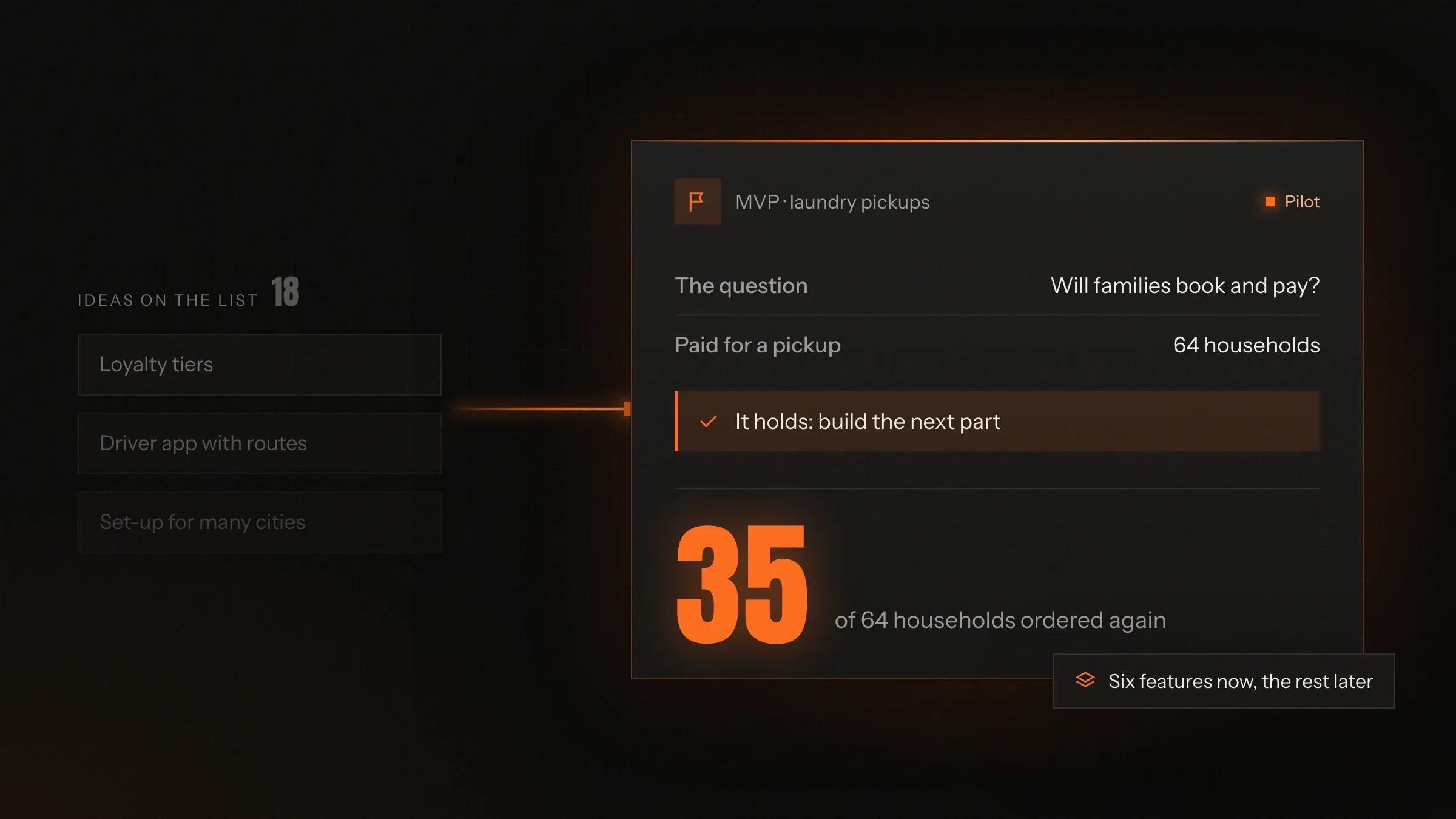
Sound familiar?
What we hear before we start
- You have an idea and a list of fifty features, and no way to tell which ones matter.
- An agency quoted you for the whole product, when all you want to know is whether anyone will use it.
- Investors keep asking about traction, and all you have is slides.
- Your service runs on WhatsApp, calls and a spreadsheet, and it's starting to creak.
- You built a first version once. It took a year, and nobody used the part you spent most on.
What changes
-
Today: Months of building before a single user sees anything.
After: A focused first version in real users' hands, then improved from what they do.
-
Today: Every feature on the list feels essential.
After: Each feature is kept, moved to later or cut, against the one question the MVP must answer.
-
Today: Feedback comes from friends being kind.
After: Evidence comes from what users do: sign-ups, repeat use, payments and the steps where they give up.
-
Today: Video calls, spreadsheets and WhatsApp groups hold the service together.
After: The service runs on its own product, and the founders spend their time on customers.
-
Today: The first version has to be thrown away before the business can grow.
After: It's built on sound foundations, so what works is extended instead of rebuilt.
What it does for you
-
Answer the real question
Every MVP is built to test one thing: will people sign up, come back, or pay?
For exampleA tutoring business tests whether parents will pay for small online batches before building a full platform.
-
Take real payments
UPI, cards and subscriptions from the first customer, so you learn what people will pay, not what they say they would.
For exampleA salon owner moves from a free trial to a monthly plan, paid by card.
-
Run the service behind it
A simple console where the founders manage users, orders and content without calling a developer.
For exampleA founder approves new shops and changes delivery prices from a laptop.
-
Do the hard parts by hand
Steps that would take long to automate start as a person behind a simple screen, until the volume justifies software.
For examplePickups are assigned to drivers by one person each morning while the app tests demand.
-
Measure what users do
Sign-ups, first use, repeat use, payments and drop-off points recorded from the first day.
For exampleThe founders see where new users stop during sign-up and fix that screen first.
-
Give investors something real
A working product with real usage behind it, rather than a prototype, for your next conversation.
For exampleA founder opens the live app and last month's usage in a meeting, instead of a mock-up.
How it works
-
Name the question
Write down what must be true for the idea to work, and pick the riskiest assumption.
-
Find the smallest test
Choose the fewest features that let real users answer that question.
-
Build it properly
A small, solid product on foundations that can grow, with payments and measurement in place.
-
Put it in real hands
A pilot group of real customers uses it, and we talk to them as well as count.
-
Read the results
Usage, payments and conversations show whether the assumption held.
-
Decide what's next
Build on it, change direction or stop, based on what you learned rather than on hope.
Where we've built it
5 from our portfolio
-
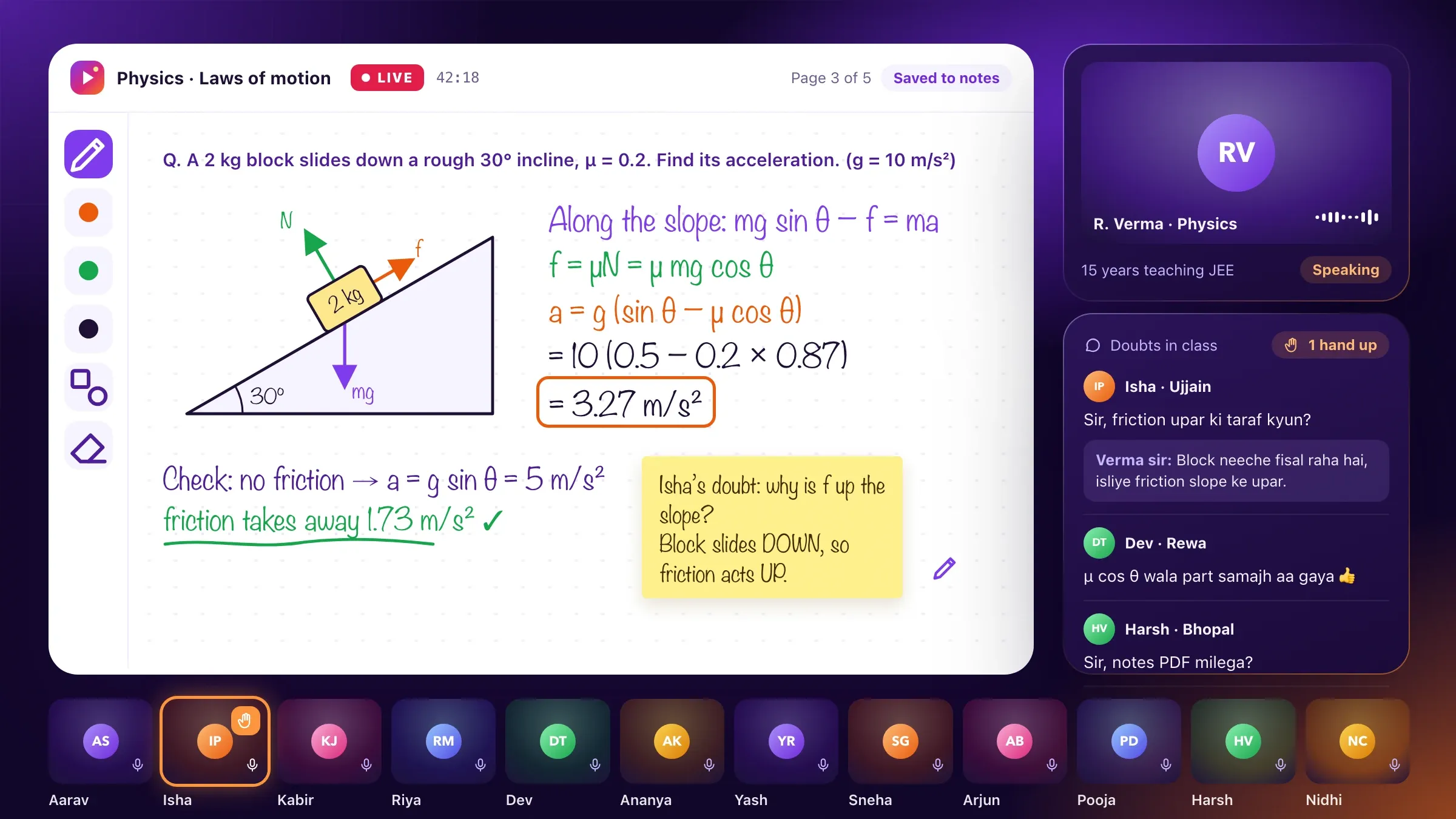 From video calls to its own platform For a JEE and NEET startup in Indore that began on ordinary video calls and a spreadsheet, our engineers built its own app for live classes, tests and parent reports. Meet the startup
-
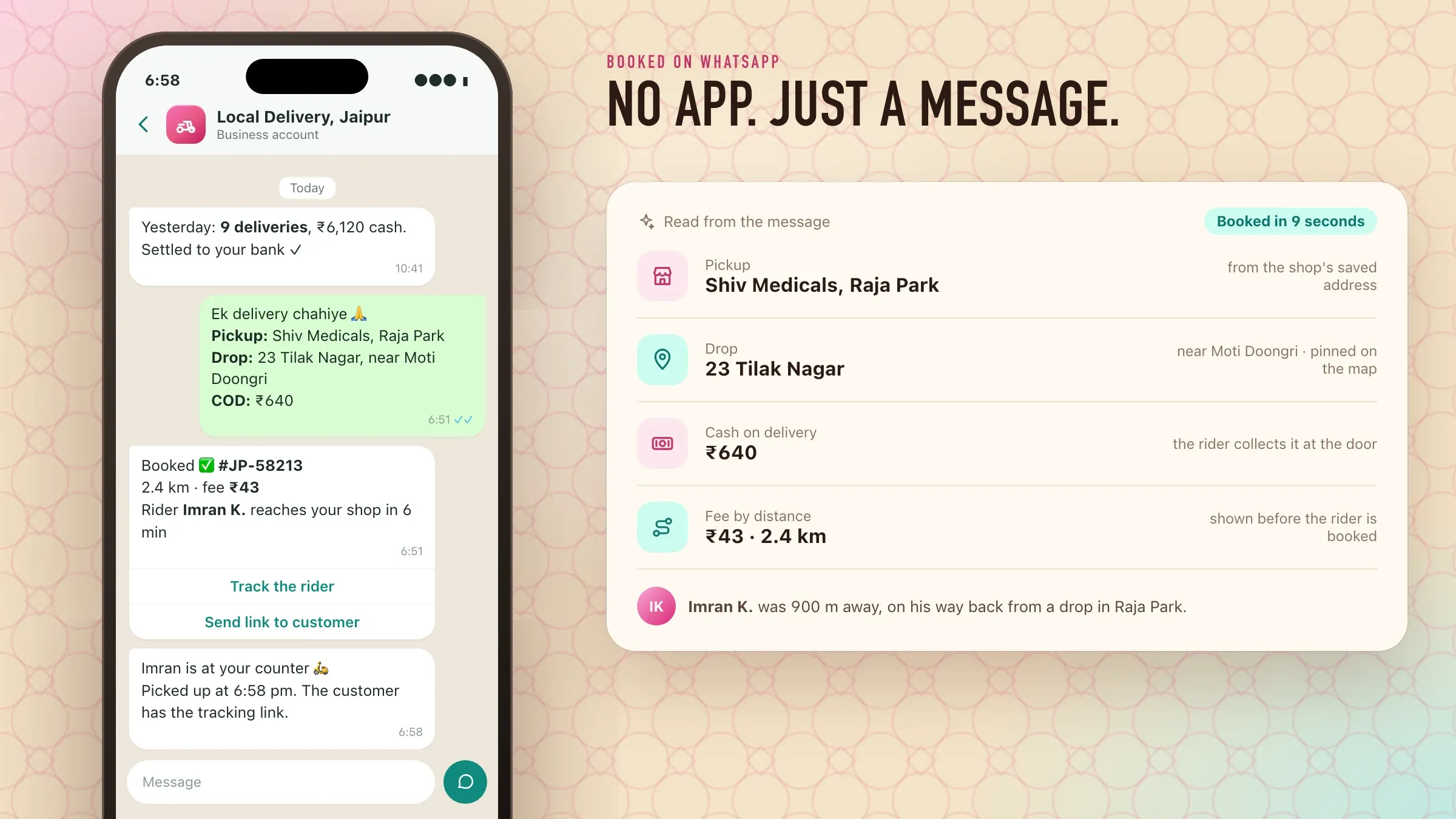 From a shared spreadsheet to a dispatch engine For a Jaipur delivery startup that started with its own riders and a spreadsheet, we built the merchant and rider apps, WhatsApp booking and live tracking. Meet the startup
-
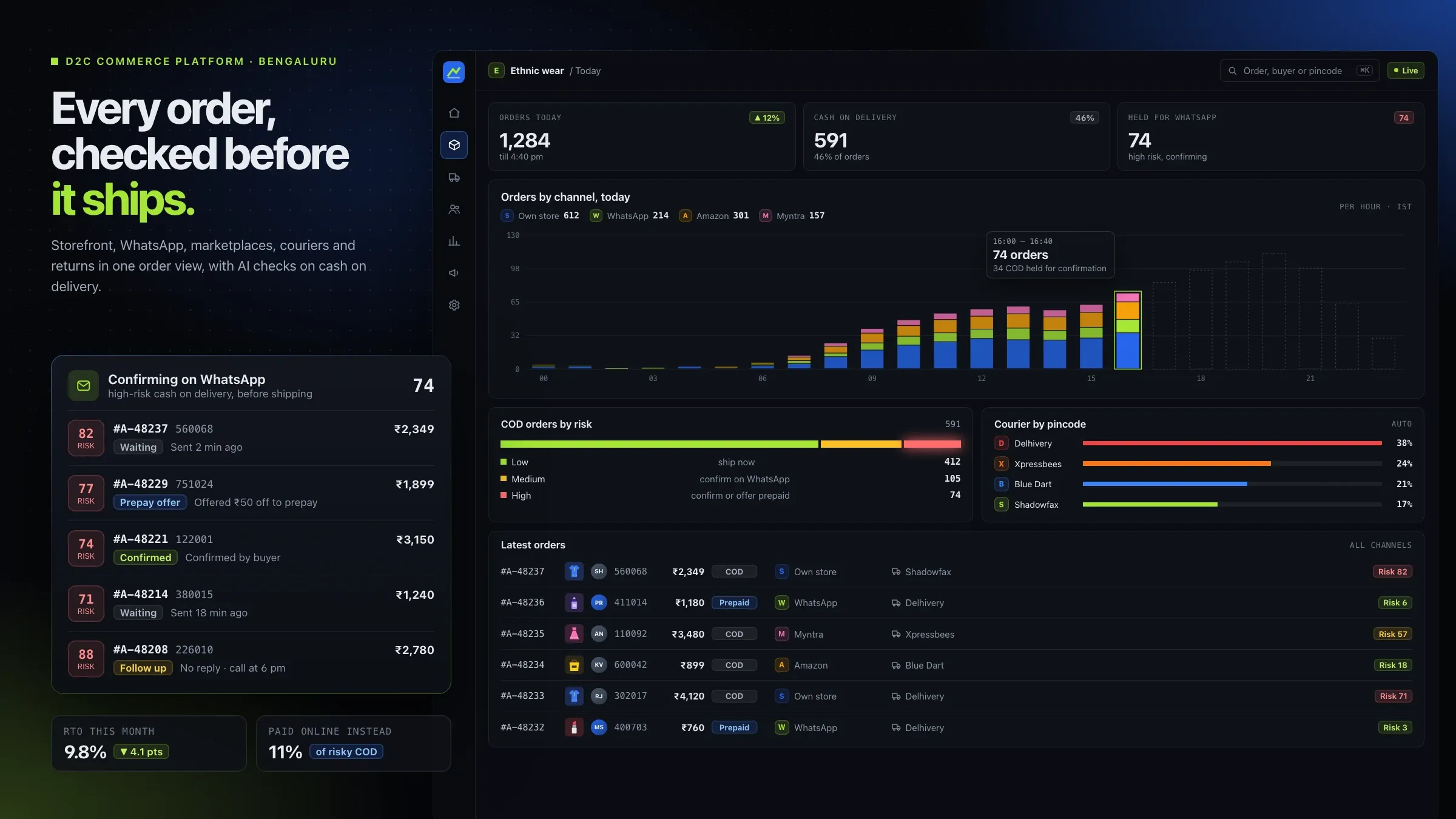 A pilot with a small group of brands For a commerce startup in Bengaluru, we build the core platform with the founders, running first for a pilot group of fashion and beauty brands. Meet the startup
-
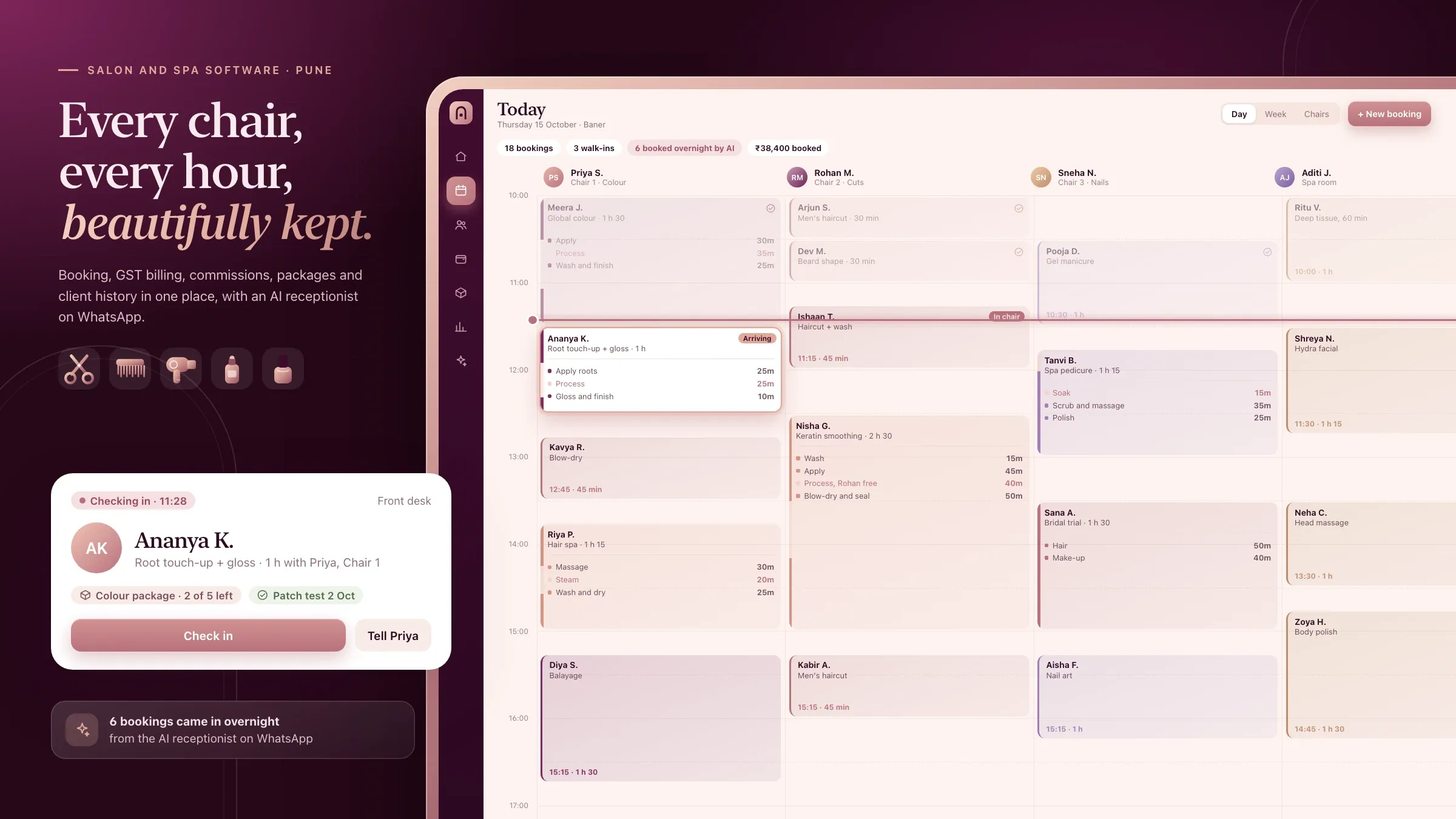 Sign-up without a sales call For a salon software startup in Pune, we designed self-serve sign-up, so a salon imports its clients and sets up services, staff and prices on its own. Meet the startup
-
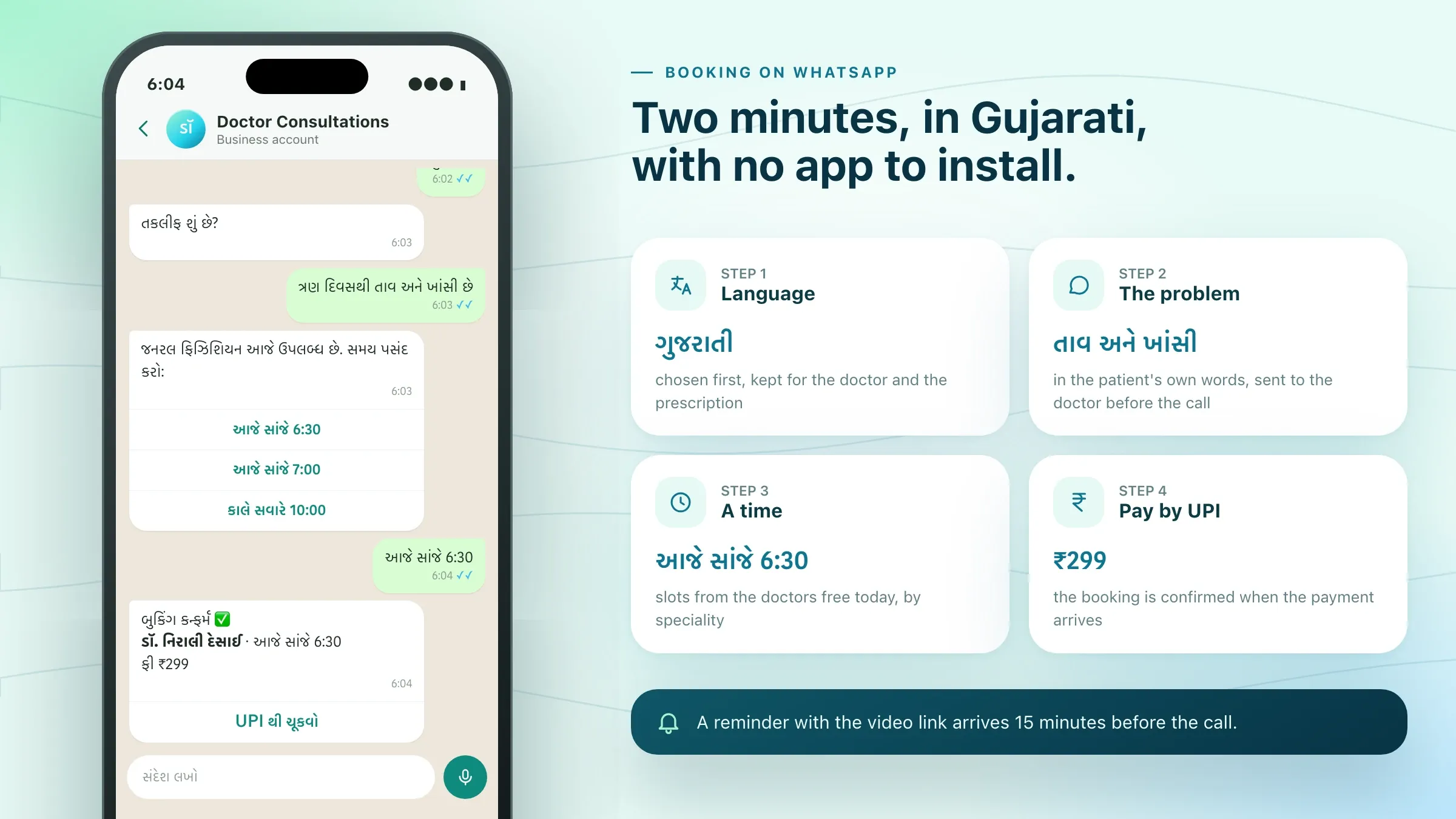 From phone calls to apps in three languages For a HealthTech startup in Ahmedabad that began with phone consultations, we built the patient app in Gujarati, Hindi and English, and the doctor's app. Meet the startup
What an MVP is, and what it isn’t
An MVP is the smallest real product that answers your biggest question. MVP stands for minimum viable product: minimum, because it leaves out everything that isn’t needed yet; viable, because real people can use it, rely on it and pay for it.
It is not a clickable mock-up, which shows what a product might look like but can’t actually be used. Nor is it a cheap, rushed copy of the full product. A good MVP does a few things properly and leaves the rest out on purpose.
Its job is to replace opinions with evidence. Before an MVP, everyone has a view on what customers want. After it, you know what they did: whether they signed up, came back, told a friend or paid. That knowledge is what the next stage of the product, and often the next round of funding, is built on.
Start with the riskiest assumption
Every idea rests on a few assumptions, and one of them is the riskiest. Perhaps it is whether shops will book deliveries in an app instead of calling a rider they know. Perhaps it is whether parents will pay for small classes when large ones cost less. Perhaps it is whether salon owners will set up software on their own, without a salesperson beside them.
We start by writing those assumptions down with you and picking the one that would sink the idea if it were wrong. The MVP is designed to test that one first. Everything that doesn’t help answer it waits.
This is also when we decide what success looks like, before anything is built: a number of sign-ups, a share of users who come back in their second week, a number of paying customers. Agreeing it up front stops anyone reading the results to suit themselves later, including us.
Deciding what goes in, and what waits
The hardest part of an MVP is leaving things out. Founders arrive with a long list, and every item on it feels essential. We go through it with you and sort each feature into three piles: now, later and never.
A feature goes into “now” only if the MVP can’t answer its question without it. Sign-up, the core action and a way to pay usually make the cut. Referral schemes, detailed profiles, dashboards for every role and settings for rare cases usually wait. A few land in “never” once someone says out loud why they wanted them.
What stays in is built properly. A small product that works every time teaches you more than a big one that breaks, because users judge the idea by how it feels to use.
The “later” pile isn’t wasted. It becomes the list for the next releases, reordered by what the MVP’s users actually ask for.
Do it by hand first
Many steps can start as a person behind a simple screen. Matching orders to drivers, approving new sellers, writing a report or checking a document can all be done by your team at first, while the product still feels smooth to the user.
This keeps the MVP small, and it teaches you how the step really works before you pay to automate it. The delivery startup we back in Jaipur began with its own riders and a shared spreadsheet. The dispatch engine that now groups nearby orders into single trips came later, built by our engineers once FIRELIFE backed it and the way the work ran was well understood.
When a manual step becomes the bottleneck, that is the signal to automate it. By then you know exactly what the software has to do.
What we need from you
We need your time, access to your customers, and honesty about what you don’t know yet.
Time, because an MVP moves quickly and decisions can’t wait a week. A founder who answers questions the same day makes more difference than any tool we could choose.
Customers, or at least a way to reach them. We help you speak to a handful of them before we build, and the pilot needs real users rather than friends being polite. If people are already waiting, such as a WhatsApp group of early sign-ups or a few businesses that said yes, bring them.
And honesty about the unknowns. The assumptions you are least sure of are exactly the ones the MVP should test. Telling us where you are guessing is how we make sure the money is spent there.
Web, mobile or both
Most MVPs should start where they are quickest to build and easiest to change, and that is often a web app. It works on every phone and computer, needs no app store review, and can be updated many times a day.
A mobile app makes sense first when the idea depends on the phone: location, the camera, notifications or working without a signal. A rider app, a field app or a check-in app belongs on the phone from the start. Flutter and React Native let one app run on Android and iPhone, which keeps the cost close to a single build.
Sometimes part of the journey needs no app at all. Bookings by WhatsApp message, a simple form or an existing tool can carry a step while the core is tested. The health startup we back in Ahmedabad lets patients book a consultation by sending a WhatsApp message, alongside its own app in three languages.
When the MVP has rules to follow
Some ideas can’t cut corners, however small the first version is. A health app must verify its doctors and record each patient’s consent; online consultations in India follow the Telemedicine Practice Guidelines, which the health startup we back built its platform around. A lending product follows the RBI’s rules on digital lending, from the Key Fact Statement a borrower sees before signing to the way repayments are collected. A product for children needs a parent’s consent under India’s data protection law, and a product for customers in Europe or the UK follows the GDPR.
These rules shape the MVP from its first screen, so we find them at the start rather than after launch. The rest of the product can stay small; the rules can’t. That is why an MVP in health, money or education takes more care than one for a simple booking service, and the plan says so plainly.
Built to grow, not to throw away
An MVP should be small, not flimsy. We build it on standard, well-supported tools such as Next.js, Node.js, Flutter and PostgreSQL, with clean code, tests around anything that handles money or personal data, and hosting that can grow with it.
That way, when the MVP works, it becomes the first version of the real product rather than something to throw away. New features are added to it, manual steps are automated, and more users are carried on the same foundations.
We also keep a short record of the decisions we made and why. A future engineer, an investor’s technical adviser or your own first hire can then understand the product in an afternoon instead of a month.
Measuring what users do
We set up measurement before the first user arrives. The MVP records the steps that matter for your question: who signed up, who completed the core action, who came back, who paid, and where people gave up.
During the pilot we also talk to users. Numbers show what people did; conversations explain why. Together they tell you whether the riskiest assumption held, and what to change if it didn’t.
If you can, charge from the start. A payment, even a small one, is the clearest sign that the product solves a real problem. UPI, cards and subscriptions can be live in the first version through Razorpay or Stripe, so you learn what people will actually pay for.
After the MVP: build, change or stop
An MVP ends with a decision. If the assumption held, you build on it: the next features from the “later” pile, automation for the steps done by hand, and the polish the first version skipped. If it partly held, you change direction and test again, usually reusing most of what was built. If it failed, you stop before spending more, which is a good result too.
We make that decision with you, from the numbers and the conversations together. If you carry on, we can stay as your engineering team: planning and shipping with you, and reviewing product, results and spending every month, the way we work with the startups FIRELIFE backs.
How we work with you
From the first call to running it
- Start
Find the question
We talk through the idea, the customer and the riskiest assumption, and agree the one question the MVP must answer and how we'll know.
- Design
Cut to the core
We map the user's journey, sort every feature into now, later or never, and you try the key screens on your own phone.
- Build
Build the first version
A small, solid product with payments and measurement in place, shown to you at every step so nothing surprises you.
- Pilot
Real users
A first group of real customers uses it while we watch what they do and talk to them about why.
- Every month
Learn and decide
We review the numbers with you, fix what blocks users and decide what to build, change or drop next.
Safe and in your control
Foundations that grow
Standard, well-supported tools and clean code, so the MVP can become the real product instead of being rewritten.
Accounts in your company's name
We recommend opening hosting, payment and app store accounts in your company's name from day one, so they are where an investor expects to find them.
Payments handled by the provider
Money moves through providers such as Razorpay or Stripe, so card and UPI details never sit on your servers.
Only the data the test needs
Users' data is collected only where the MVP needs it, with consent and deletion built in where the law asks.
Numbers reported as they are
What counts as success is agreed before launch, and results are shared as they come, including what didn't work.
Spending you can see
Running costs are set out in the plan and reviewed with you every month, as we do with the startups we back.
Time and cost
The cost of an MVP depends on the question it has to answer, not on the size of the full vision. The sharper the question, the smaller the first version. After the first call we send a written plan and a quote for the MVP, listing what is in it and what we left out on purpose.
How sharp the question is
One clear question needs far fewer features than a general hope that people will like it.
How many sides it serves
One kind of user is the quickest start. A marketplace needs buyers and sellers from day one, which is closer to two products.
What it must do on its own
Steps done by a person behind the scenes cost little to build. Automating them costs more and can wait for the volume.
Money and rules
Taking payments, and rules in areas such as health, lending or children's data, add work that can't be skipped.
Web, mobile or both
A web app is often the quickest first test. A mobile app makes sense first when the phone is central to the idea.
Built with
Chosen for each project, never by habit
Questions and answers
12 answered
What is an MVP?
An MVP, or minimum viable product, is the smallest version of a product that real people can use and that answers the most important question about the idea: will people use it, come back or pay? It is a working product, not a mock-up, with everything else left for later.
How much does MVP development cost?
It depends on the question the MVP must answer, how many kinds of user it serves, what it must do automatically and whether it takes payments or falls under rules such as health or lending. A tight MVP for one kind of user costs far less than a full product. We send a written plan and a quote after the first call.
How long does it take to build an MVP?
It depends on the scope. A focused MVP for one kind of user can be a matter of weeks; a two-sided marketplace or a product in a regulated area takes longer. The written plan after the first call sets out the timeline.
What is the difference between an MVP and a prototype?
A prototype shows what a product could look like: people can tap through it, but they can't really use it. An MVP works. Real users sign up, use it and can pay, so you learn from what they do rather than what they say.
Which features should go into our MVP?
Only the ones needed to answer your main question, usually sign-up, the core action and a way to pay. We sort every feature into now, later or never against that question with you, and many must-haves turn out to be laters.
Should our MVP be a web app or a mobile app?
Often a web app first, because it is quicker to build and to change and works on every phone and computer. If the idea depends on the phone itself, such as location, the camera, notifications or working offline, a mobile app may be the right first step.
Will we have to rebuild the MVP later?
Not if it is built properly. We keep the scope small but the foundations sound, with standard tools and clean code, so the parts that work can be extended. Steps that were done by hand at first are automated once the volume justifies it.
Do we need a technical co-founder to build an MVP?
No. We act as your technical team for the MVP, explain each decision in plain words and keep a short record of what was built and why, so a future engineer or adviser can pick it up quickly.
Can our MVP work in Hindi, Gujarati or other languages?
Yes. If your users think in Hindi, Gujarati or another language, the MVP should speak it from the start, because language decides whether many people sign up at all. Each language is tested with real users in the pilot.
Does FIRELIFE Ventures invest in startups as well?
FIRELIFE Ventures backs startups that are ready to scale, with investment and an engineering team. Building your MVP is a separate service; if you would also like to talk about backing, say so when you write to us.
Do you build MVPs for founders outside India?
Yes. FIRELIFE Ventures works with founders and businesses worldwide, from Rajkot, India, on India time, and has been building software since 2008.
What happens after the MVP launches?
We read the results with you and decide together: build on what works, change what doesn't, or stop before spending more. If you carry on, we can stay as your engineering team, with a review of product, results and spending every month.
Tell us what you want to build
Write a few lines about the idea and who it is for. We reply with our questions, a first plan and how we would start.
Write to us