Build something new dedicated development team
A tech team without hiring one
We work as your technology team: the same small group of engineers plans, builds, releases and looks after your software with you, week after week, so you get a tech team's work without hiring, managing or keeping one.
- The same people, week after week
- AI in the work on every project
- Work and spending reviewed monthly
Sound familiar?
What we hear before we start
- You need developers, but hiring takes months and a wrong hire costs more than the salary.
- Freelancers give mixed results and are hard to reach when something breaks.
- Your clients keep asking for websites and apps you can't build in-house.
- The founders spend their evenings writing code instead of talking to customers.
- An agency built your product, moved on, and nobody now knows how it works.
What changes
-
Today: Each piece of work goes to whoever is free, and nobody knows its history.
After: The same people know your product, your customers and the reasons behind each decision.
-
Today: You hire, train and manage developers yourself.
After: You set the priorities; we plan, build, test and release.
-
Today: Progress is a mystery until something is late.
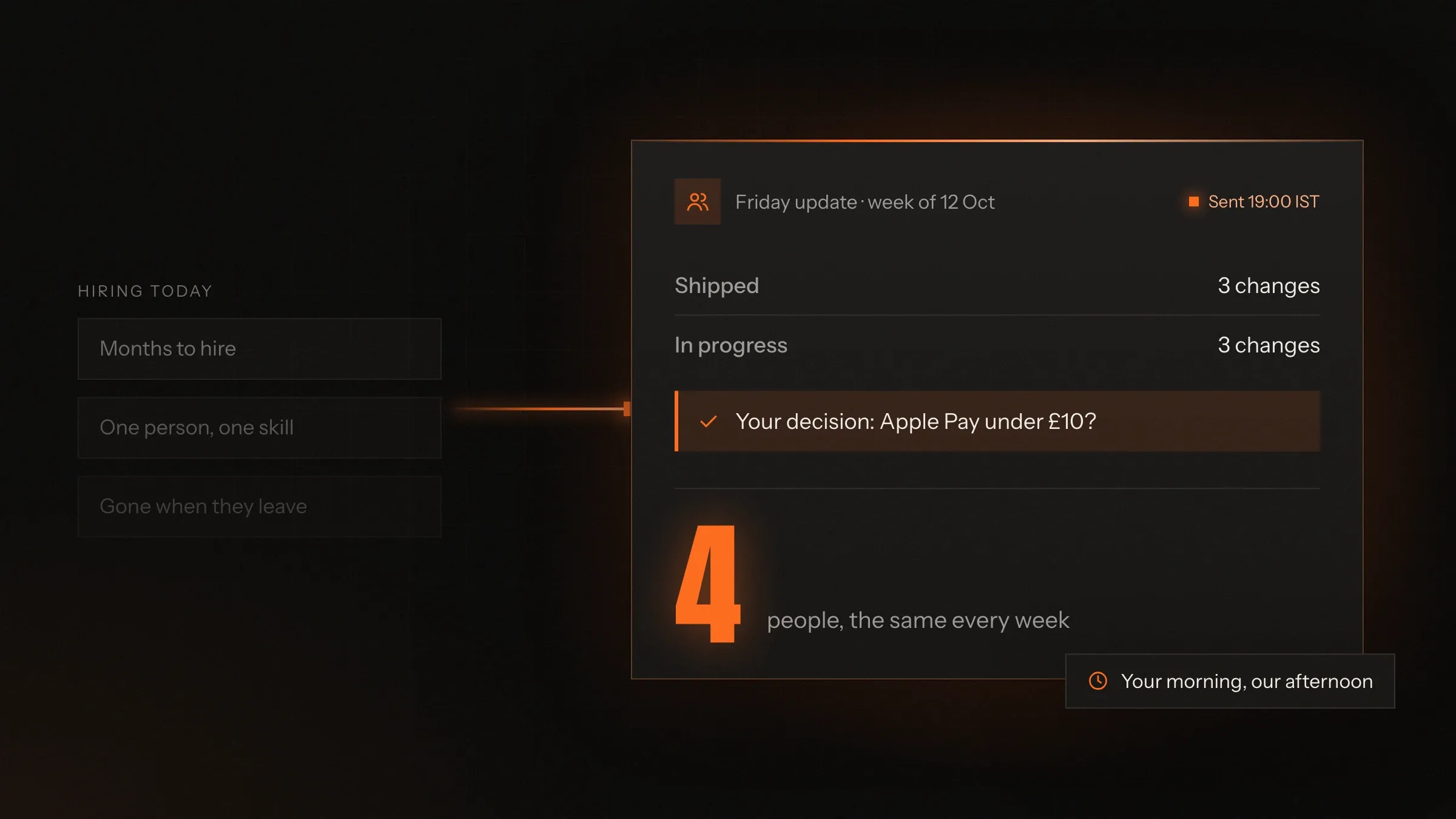
After: You see the shared board any time, get a written update every week and review it all monthly.
-
Today: Every release means late nights and crossed fingers.
After: Each change is reviewed by a second person and tested before it goes live.
-
Today: When a developer leaves, the knowledge leaves with them.
After: Decisions, set-up and how-tos are written down, so the knowledge stays with your product.
What it does for you
-
Build new features
Plan, design, build, test and release new work in a steady rhythm, not in rare big launches.
For exampleA new booking flow goes from sketch to release with tests and a note of what changed.
-
Look after what's live
Monitoring, fixes, security updates and backups for the software you already run.
For exampleA slow search on phones is found in the logs, fixed and released in the same week.
-
Work under your name
For agencies, the team builds client websites, online stores and apps under your brand.
For exampleA London agency briefs a landing page in its morning, and the work carries on through India's evening.
-
Bring AI into your business
AI agents, automation and AI features built into your product, by a team that uses AI in its own work.
For exampleMonthly client reports are drafted by AI for account managers to check and send.
-
Cloud and releases
Hosting set-up, automated deployments, monitoring and environments created the same way every time.
For exampleA new test environment is created from code in minutes instead of by hand.
-
Product thinking, not just tickets
We question requests, suggest simpler options and say plainly when something isn't worth building.
For exampleA requested monthly report becomes an alert that answers the real question the day it matters.
How it works
-
You set the priorities
What matters now, in plain words, with the reasons behind it.
-
We plan it together
The work is broken into small pieces on a shared board you can open any time.
-
The team builds
Engineers work with AI tools, and a person reviews every change.
-
It's tested and released
Automated checks run before anything reaches your users, and releases are small and frequent.
-
You hear what happened
A short written update says what shipped, what's next and what needs your decision.
-
We review each month
Product, results and spending, reviewed together, with the next month's priorities agreed.
Where we've built it
5 from our portfolio
-
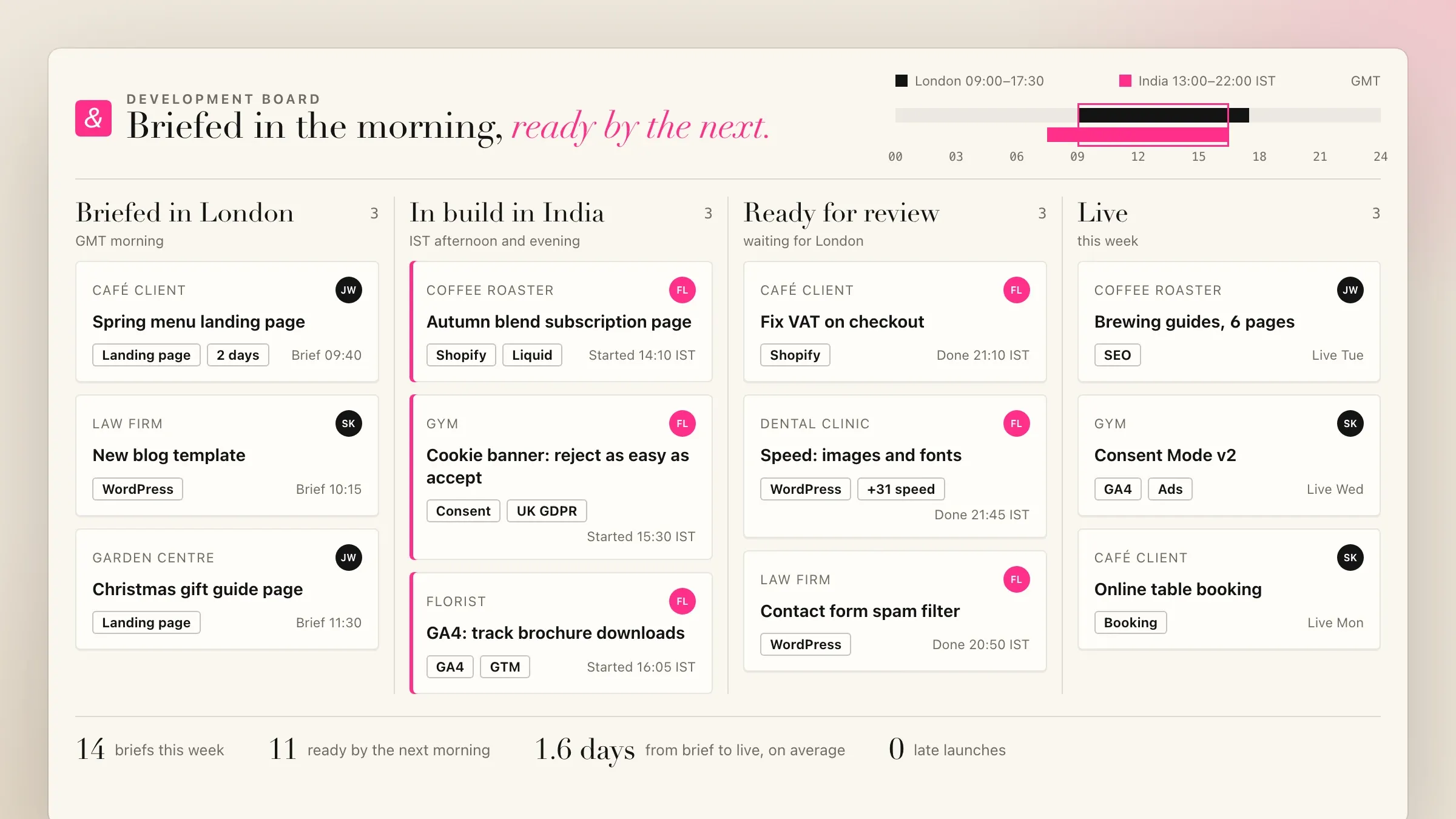 A development team under the agency's name For a digital marketing agency in London, we run a dedicated team that builds and maintains its clients' websites and stores, under the agency's name. View the investment
-
 Engineers inside a startup's product team For a JEE and NEET startup in Indore, a FIRELIFE team plans and ships with the founders every week, and reviews product, results and spending monthly. Meet the startup
-
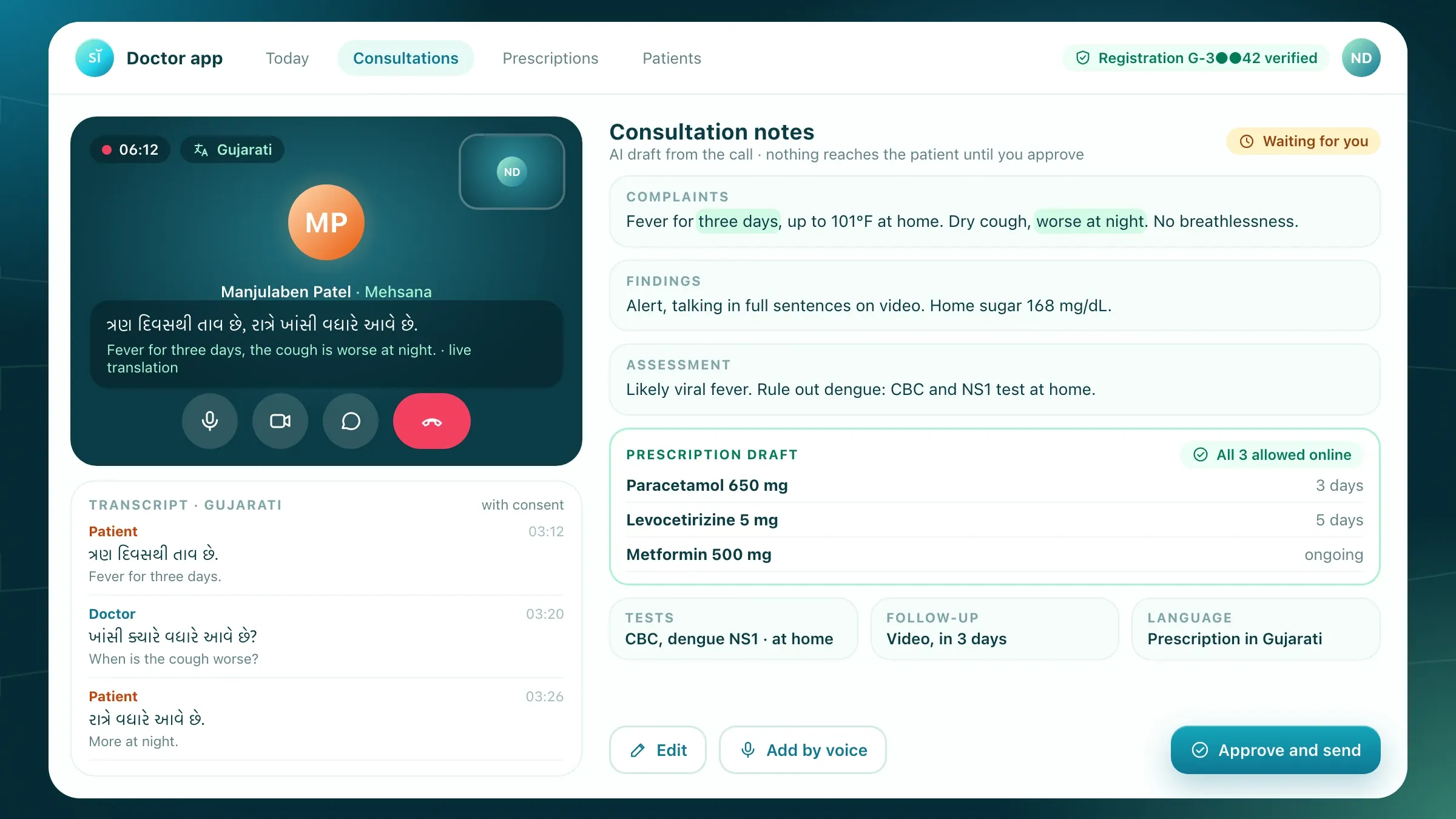 Building and running a health platform For a HealthTech startup in Ahmedabad, our engineers build and run the platform with the startup's team, from the patient app to the AI scribe. Meet the startup
-
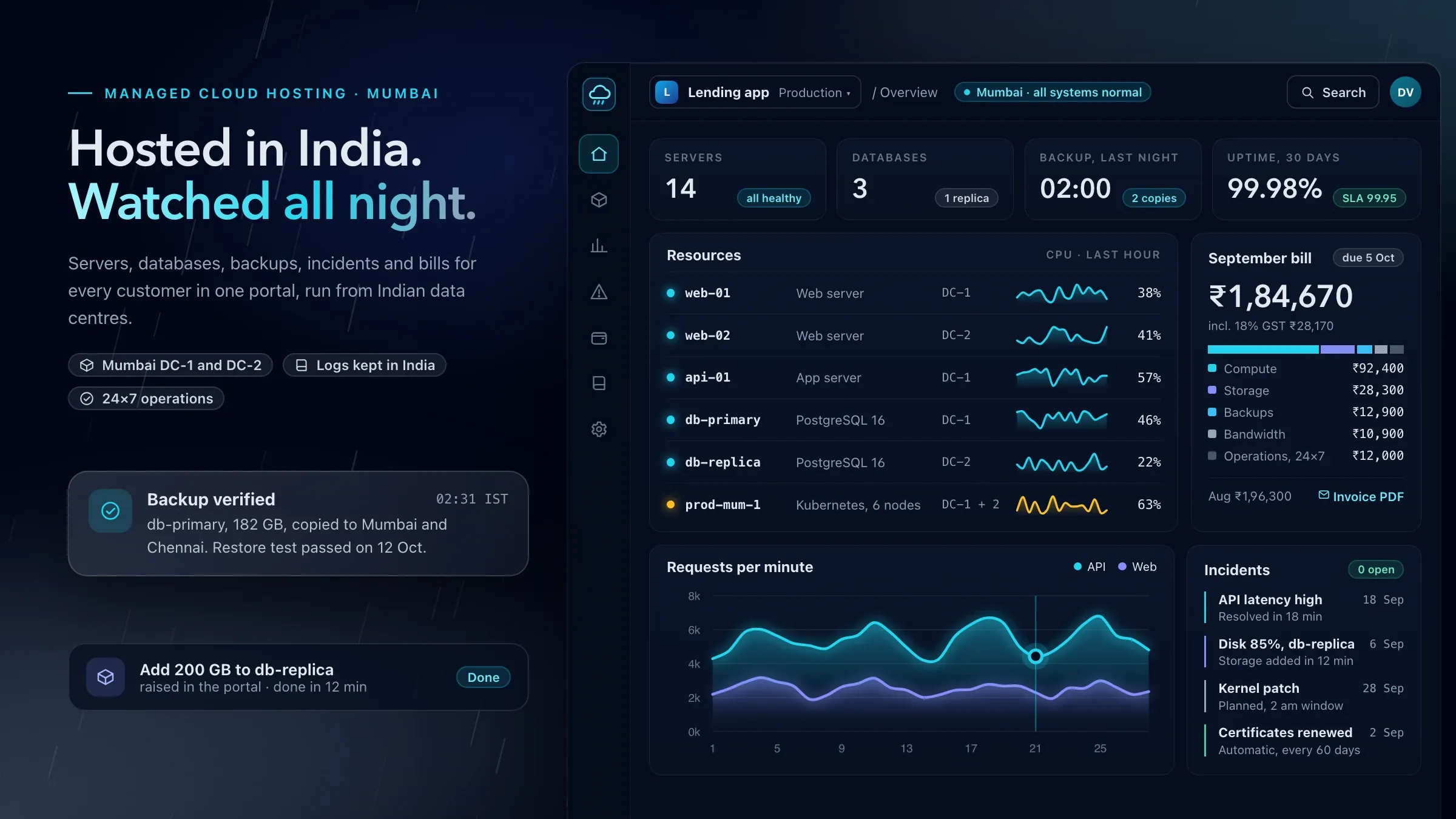 The software layer for a hosting partner For our managed cloud partner in Mumbai, we built the customer portal, the automation that sets up new environments and an AI support agent. View the investment
-
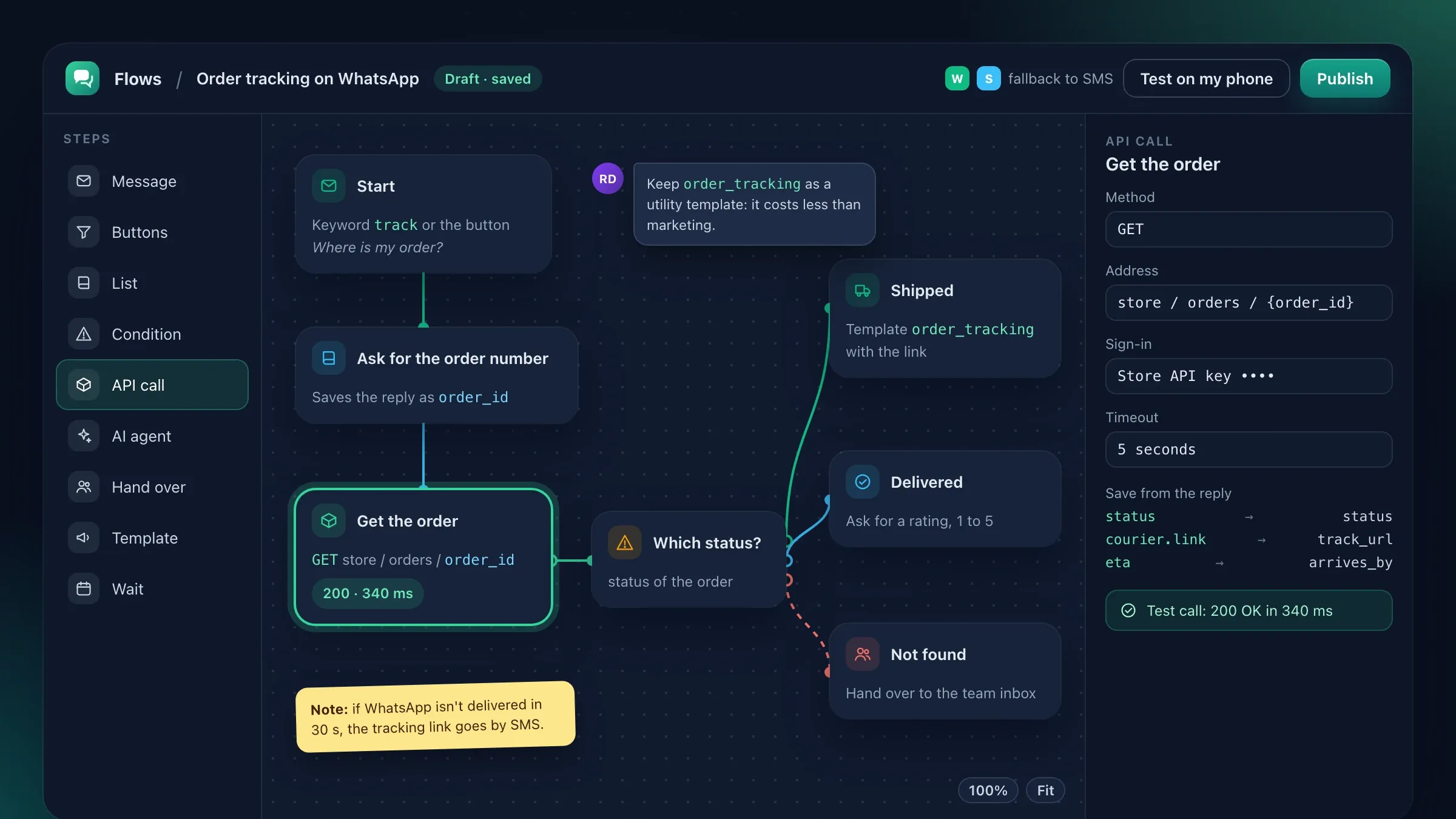 The conversation layer for a messaging platform For the messaging platform we invest in, in Noida, we built the WhatsApp flow builder, the AI agent builder and the integrations its customers use. View the investment
What a dedicated team is, and what it isn’t
A dedicated development team is a group of engineers who work on your software over time, as your tech team, without you hiring them. They learn your product, your customers and your plans, and they plan, build, test, release and look after your software with you, week after week.
It is not a staffing agency. We don’t rent out a long list of developers by the hour or rotate strangers onto your work. With FIRELIFE Ventures the team is small, the people stay the same, and you always know who is working on your product.
It is not a one-off project either. A project builds one thing and leaves. A dedicated team stays, so the knowledge of why things were built the way they were stays with your product.
A small team that works with AI
FIRELIFE Ventures is small by design: a core team of four to six people who work with AI on every project. We have been building software since 2008, under earlier names too, and we build our own products alongside our clients’ work.
AI changes what a small team can do. We use it to write and review code faster, draft tests and documentation, read unfamiliar code and compare options before choosing one. A person reviews every change, and the judgement stays human: what to build, what to leave out and when something is ready.
For you, that means the output of a capable team without the overhead of a large one: fewer hand-offs, fewer meetings, and the same people from the first week onwards.
Who it suits, and who it doesn’t
A dedicated team suits businesses that need software work all the time but don’t want to build an engineering department.
Agencies are one example. A digital marketing agency in London needed developers it could rely on for its clients’ websites, landing pages and online stores, without hiring a team of its own. We run that team for it, under the agency’s name, with quality checks before anything goes live.
Startups are another. FIRELIFE engineers work inside the product teams of startups we back, planning and shipping with the founders every week while the founders lead customers and operations. Technology partners are a third: for a managed cloud hosting company in Mumbai and a messaging platform in Noida, we build the software their customers use while they run the service.
It also suits established businesses with software already running and a list of improvements that never gets done, because nobody inside has the time.
A small team isn’t right for every job, and it is better to say so at the start. If you need dozens of engineers working in parallel from the first week, you need a much larger supplier. If you need people in your office every day, we are fully cloud-based and work remotely from Rajkot. And if your software needs someone watching it around the clock, we will show you how to cover that, for example with a hosting partner whose operations team works day and night, rather than promise it ourselves.
What a small team does well is depth: knowing one product thoroughly, moving quickly without hand-offs, and caring about it for years. For most small and mid-size businesses, agencies and startups, that is exactly what has been missing.
What we need from you
We need one person who sets priorities, access to what exists, and honest feedback.
That person can be a founder, a product owner or an operations manager. They don’t need to be technical, but they should know what matters to the business and be able to choose between two good options. They are who we plan with each week.
Access means the code, the hosting, and the app store and tool accounts, ideally held in your company’s name with a named login for each of us. If something isn’t documented, a conversation with whoever built it helps a great deal.
And feedback: tell us early when something isn’t what you expected. A small correction in the first week saves a large one later.
Getting to know your product
We start by reading before we change anything. We go through the code, the hosting and the backlog, talk to the people who use the software, and note what is fragile, what is undocumented and what has been waiting too long.
Then we start small. The first pieces of work are useful fixes and modest improvements, chosen because they teach us how the product fits together and show you how we work. Larger features follow once we know where the risks are.
If the software was built by someone else and nobody knows how it works, this is where we tell you plainly what state it is in, what needs attention first and what can wait.
How a week works
Each week starts with priorities. You tell us what matters, in plain words and with the reasons, and we break it into small pieces of work on a shared board you can open at any time.
The team builds through the week and releases pieces as they are ready, rather than saving everything for one big launch. Questions that need your decision are gathered and sent together, so you aren’t interrupted all day.
At the end of the week you get a short written update: what shipped, what is in progress, what is next and anything that needs your call. Once a month we review product, results and spending together and agree the next month’s priorities, the same rhythm we keep with the startups FIRELIFE backs.
Quality: reviews, tests and releases
Every change is reviewed by a second person before it goes live, including code written with the help of AI. Automated tests run on every change, and the parts that handle money, personal data or sign-in get the most of them.
Releases are routine rather than events. Deployments are automated, changes go out in small pieces, and a release that goes wrong can be rolled back quickly. For mobile apps, new versions reach a small share of users first.
We also look after the parts users never see: security updates, backups, monitoring and the cost of hosting. A team that only adds features leaves a product weaker every month; a dedicated team keeps it healthy.
Working across time zones
We work on India time (IST), and for many clients that is an advantage. For the London agency we work with, briefs arrive in the UK morning while India is in its afternoon, work continues through the Indian evening, and updates are often waiting when London starts the next day.
For clients further west, most of the work runs through the shared board and written updates, and calls are agreed in advance at times that suit both sides. Everything important is written down, so nobody depends on being awake at the same moment.
We work in English, Hindi and Gujarati, which helps when your own staff or customers are more comfortable in one of them.
Measuring the team’s work
We agree with you what good looks like for the team, beyond being busy. Usually it is a mix: features released and actually used, problems fixed and how quickly, the stability of what is live, and progress on the goals that matter to the business, such as sign-ups, orders or hours saved.
These come up in the monthly review, next to what the work cost. If the team is spending time on things that don’t move those numbers, the review is where we change course together.
Hand over or carry on
A dedicated team should never become a trap. Because we document decisions, set-up and how things work as we go, the knowledge of your product stays with your product, not with us.
If you decide to hire your own engineers, that is a good outcome, and we help them take over with the code, the documents and the reasons behind each decision. If you would rather keep a small, steady team that already knows your product, we carry on, month after month.
How we work with you
From the first call to running it
- Start
Get to know your product
We read the code, the set-up and the backlog, meet the people involved and agree how we will work together.
- Settle in
Small fixes first
We begin with small, useful changes, the quickest way to learn a product and to show you how we work.
- Every week
Plan and ship
We plan the week's work with you, build it, test it, release it and send a short written update.
- Every month
Review together
Product, results and spending, reviewed with you, and the next month's priorities agreed.
- As you grow
Hand over or carry on
If you hire your own engineers, we help them take over with the code, the documents and the reasons behind each decision.
Safe and in your control
Access you control
We recommend keeping code, hosting and app store accounts in your company's name, with a named login for each of us that you can remove at any time.
Every change reviewed
A second person reviews each change before it goes live, including code written with the help of AI.
AI used with care
AI tools are used through business services that don't train on your code, and your secrets and customers' data stay out of them.
Confidential by default
Your plans and your customers' details stay private, and we can sign a confidentiality agreement before you share anything sensitive.
Written down as we go
Decisions, set-up and how-tos are documented, so knowledge belongs to your product, not to one person.
Spending in the open
Work and costs are reviewed with you every month, so nothing about the bill is a surprise.
Time and cost
The cost of a dedicated team depends on how much work there is and what kind, not on a headcount you have to fill. Some clients need the team for a steady stream of new features; others need it mainly to look after software that is already live. After the first call we send a written proposal for how we would work with you and what it costs.
How much work there is
A steady stream of new features takes more of the team's time than looking after a stable product.
The skills involved
Web, mobile, AI, data and cloud work draw on different people in the team.
The state of what exists
A tidy, documented codebase is quick to pick up. Older or undocumented software needs a review first.
How quickly you need answers
Agreed response times for urgent fixes cost more than working through a planned list.
Tools and services
Hosting, licences and AI services add running costs, and the proposal shows who pays for what.
Built with
Chosen for each project, never by habit
Questions and answers
11 answered
What is a dedicated development team?
A dedicated development team is a group of engineers who work on your software over time, as your own tech team would, without you hiring them. With FIRELIFE Ventures it is the same small team each week, planning with you, building, testing, releasing and looking after what is live.
How big is the team?
Small, on purpose. FIRELIFE Ventures has a core team of four to six people who work with AI on every project. Your work gets the people it needs from that team, and you always know who is working on your product.
How much does a dedicated development team cost?
It depends on how much work there is, the skills it needs, the state of your software and how quickly you need urgent fixes. A steady stream of new features costs more than looking after a stable product. After the first call we send a written proposal with how we would work and what it costs.
How is this different from hiring freelancers?
Freelancers usually take one task at a time and move on. A dedicated team learns your product, keeps a record of decisions, reviews each other's work and stays responsible for what is live.
How do you use AI in the work?
We use AI on every project: to write and review code faster, draft tests and documentation, and compare options before choosing one. A person reviews every change, the tools are used through business services that don't train on your code, and secrets and customer data are kept out of them.
What time zone do you work in?
India time (IST). Our afternoon overlaps the morning in the UK and Europe, so work briefed there in the morning can move the same day. For clients further west, most of the work runs through the shared board and written updates, and calls are agreed in advance.
Can you work under our agency's name?
Yes. We already run a dedicated development team for a digital marketing agency in London, building and maintaining its clients' websites and online stores under the agency's name.
Can you take over software another team built?
Yes, after a review. We read the code and the set-up, tell you plainly what state it is in, and start with small fixes while we learn how it fits together.
Can the team work in Hindi or Gujarati?
Yes. The team works in English, Hindi and Gujarati, which helps when your own staff or customers are more comfortable in one of them.
Do you work with businesses outside India?
Yes. FIRELIFE Ventures works with small and mid-size businesses worldwide, from Rajkot, India, on India time, and has been building software since 2008. Our long-running partnerships include a digital marketing agency in London.
What if we want to build our own team later?
That is a good outcome. Because we document as we go, your new engineers can take over with the code, the set-up and the reasons behind decisions, and we help them through the handover.
Tell us what you want to build
Write a few lines about the idea and who it is for. We reply with our questions, a first plan and how we would start.
Write to us