Build something new AI agent development
Put an AI agent to work in your business
We design, build and run AI agents that do real work inside your business: they answer customers, read documents, update your systems and hand everything else to your team with what they need to decide.
- We start with one task you pick
- A person signs off what matters
- English, Hindi, Gujarati and more

Sound familiar?
What we hear before we start
- Your team answers the same twenty questions every day, on WhatsApp, email and the phone.
- Customers wait hours for a reply that takes a minute to find.
- Someone copies details from invoices and forms into your software, one field at a time.
- Follow-ups slip because nobody had the time to send them.
- You tried a chatbot once. It answered from a script and annoyed your customers.
What changes
-
Today: Questions wait in a queue until someone is free.
After: The agent answers in seconds, at any hour, in the customer's language.
-
Today: Staff look up orders, bookings and accounts in three different tools.
After: The agent checks your systems itself and replies with the real answer.
-
Today: Invoices and forms are typed into your software by hand.
After: The agent reads them, fills in the fields and flags anything unusual.
-
Today: Enquiries that arrive on Saturday night get a reply on Monday.
After: Every enquiry gets an answer and a follow-up, then lands with your team.
-
Today: Hard cases reach your team with no history and no context.
After: Your team gets the case with the chat, the files and a suggested next step.
What it does for you
-
Answer customers
On WhatsApp, your website, email or the phone, from your own information: orders, bookings, prices and policies.
For exampleA customer asks where her order is. The agent checks the courier and answers in Hindi.
-
Read documents
Invoices, purchase orders, KYC papers, forms and contracts, read, checked and entered where they belong.
For exampleA supplier's invoice arrives by email and appears in your accounts, matched to the order.
-
Update your systems
Create orders, book appointments, update the CRM and raise tickets, through the same tools your team uses and only with the access you give it.
For exampleA patient asks to move a visit. The agent finds a free slot and rebooks it.
-
Draft for a person to send
Quotes, replies and reports written in your tone, waiting for one tap to approve.
For exampleA sales rep opens a quote the agent drafted from the price list and the chat.
-
Follow up on time
Reminders, renewals, unpaid invoices and unanswered enquiries, chased politely and never forgotten.
For exampleA lead who didn't reply gets a second message after two days, then goes to your team.
-
Answer your own team
An assistant that knows your policies, products and numbers, so staff stop asking around.
For exampleA new hire asks how to process a return and gets the steps, with a link to the policy.
How it works
-
Something comes in
A message, an email, a document, or an event in one of your systems.
-
It understands
The agent works out what is being asked, by whom and in which language.
-
It checks the facts
It looks things up in your systems instead of guessing what it can check.
-
It acts or drafts
It replies, updates a record or prepares a draft, within the rules you set.
-
It hands over
Anything outside its rules goes to the right person, with the context attached.
-
It keeps a record
Every step is logged, so you can see what it did and why.
Where we've built it
5 from our portfolio
-
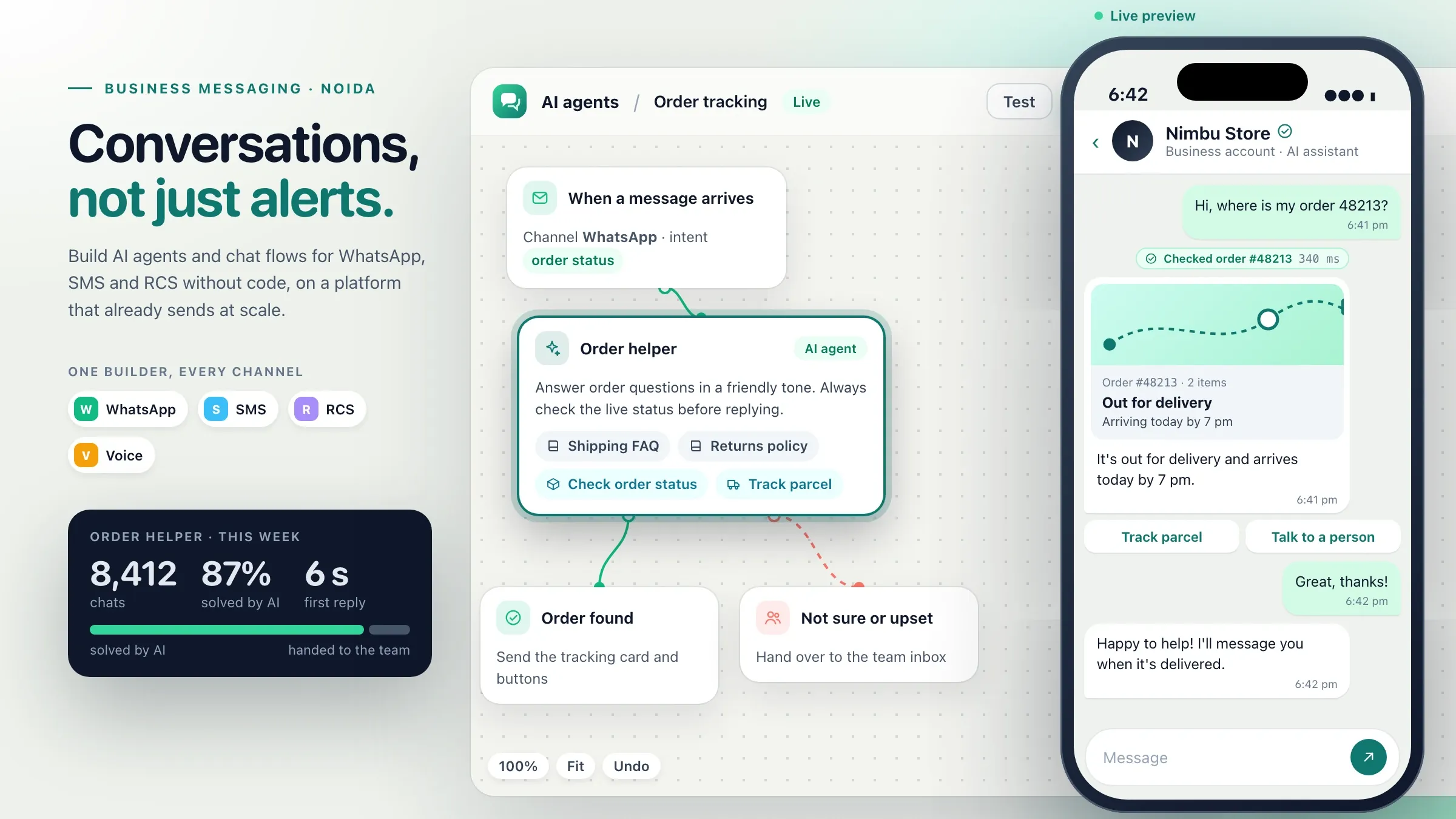 AI agents on WhatsApp For the messaging platform we invest in, we built the agent builder its customers use to answer order questions on WhatsApp and hand over to a person. View the investment
-
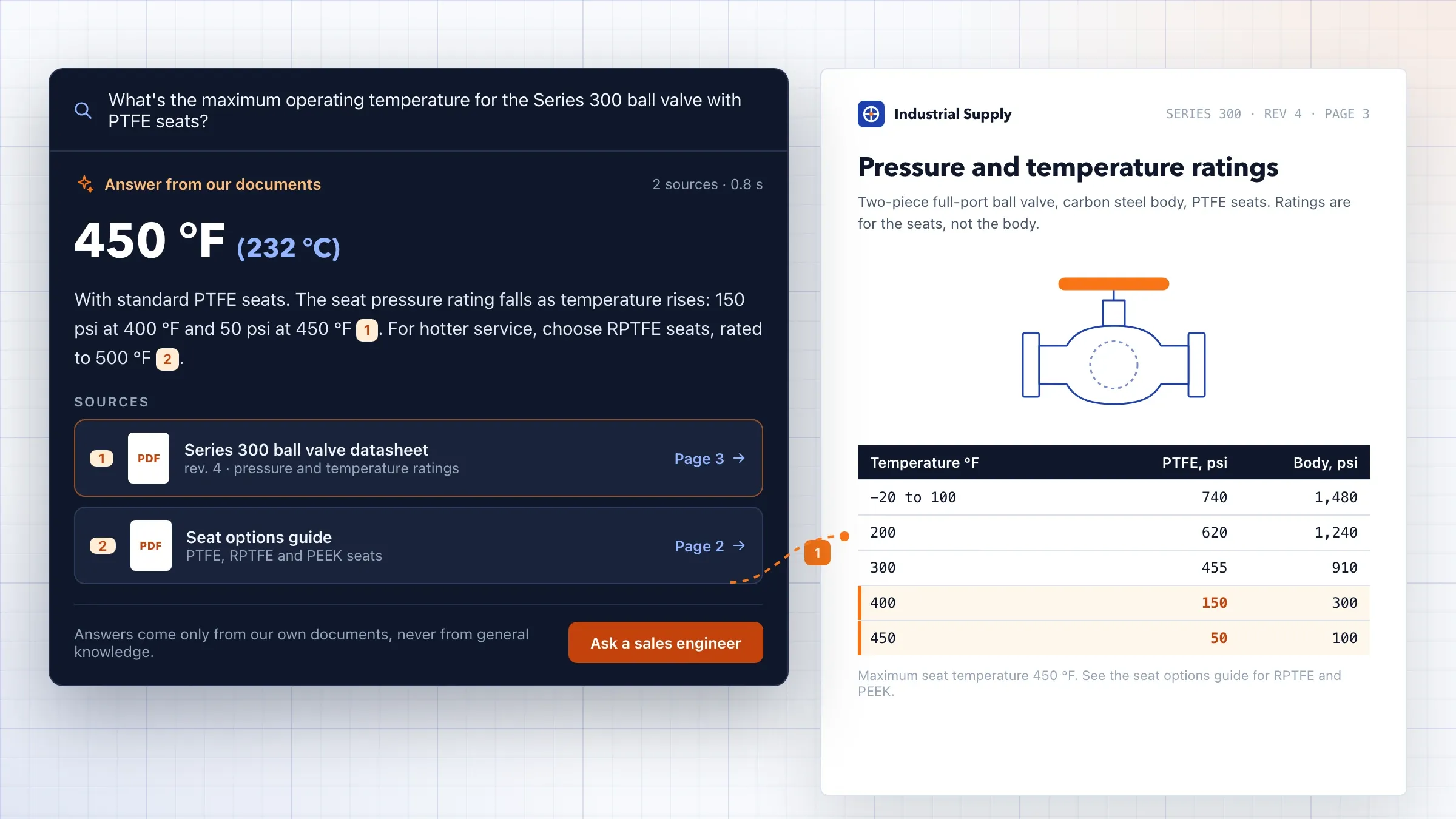 Answers from datasheets, with the source For an industrial equipment distributor in Ohio, an AI search answers technical questions from product documents and links the exact page it used. Read the case study
-
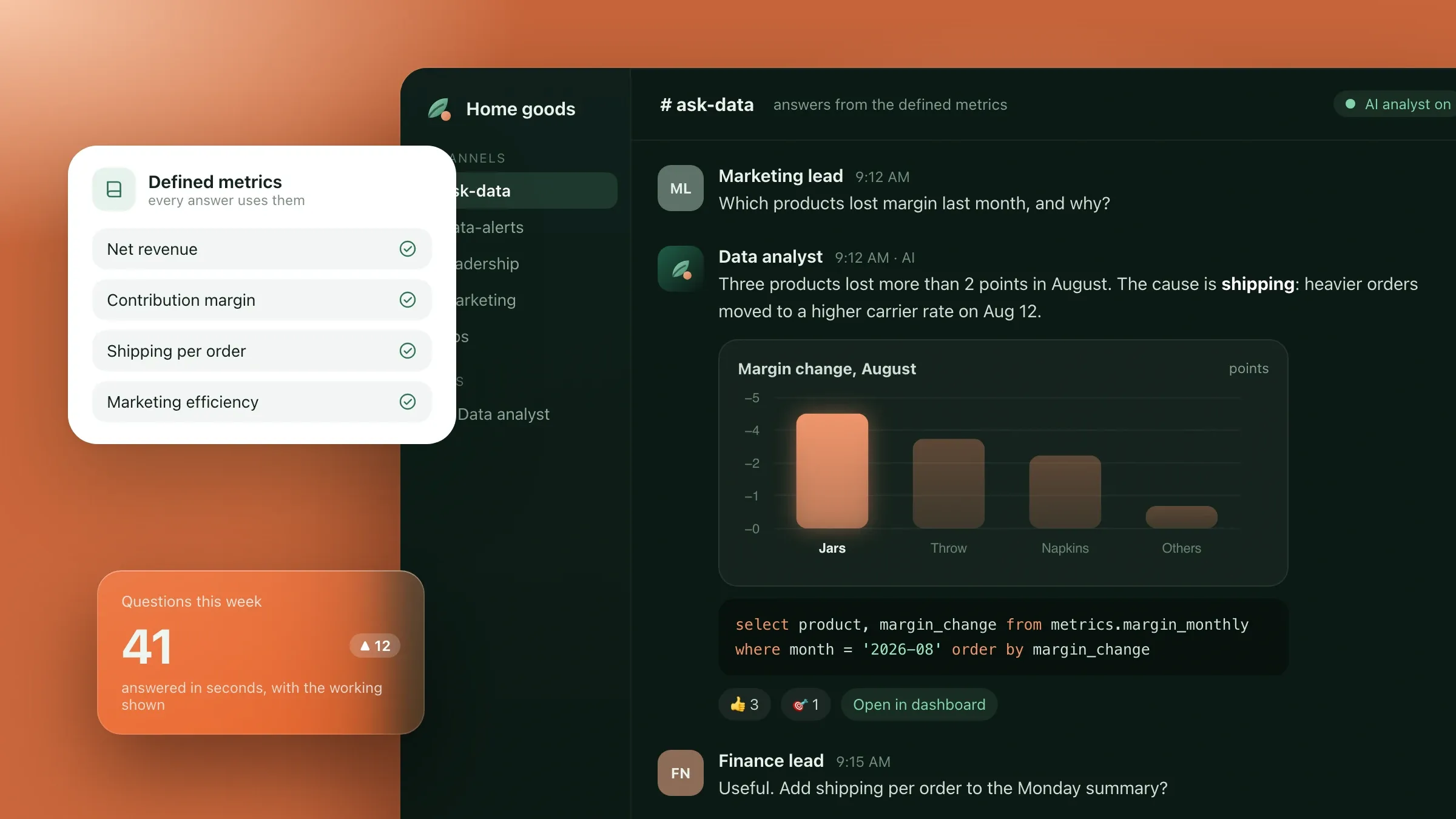 An AI analyst in Slack For a home goods brand in Denver, an agent answers questions about sales and stock in plain English and shows the query behind every figure. Read the case study
-
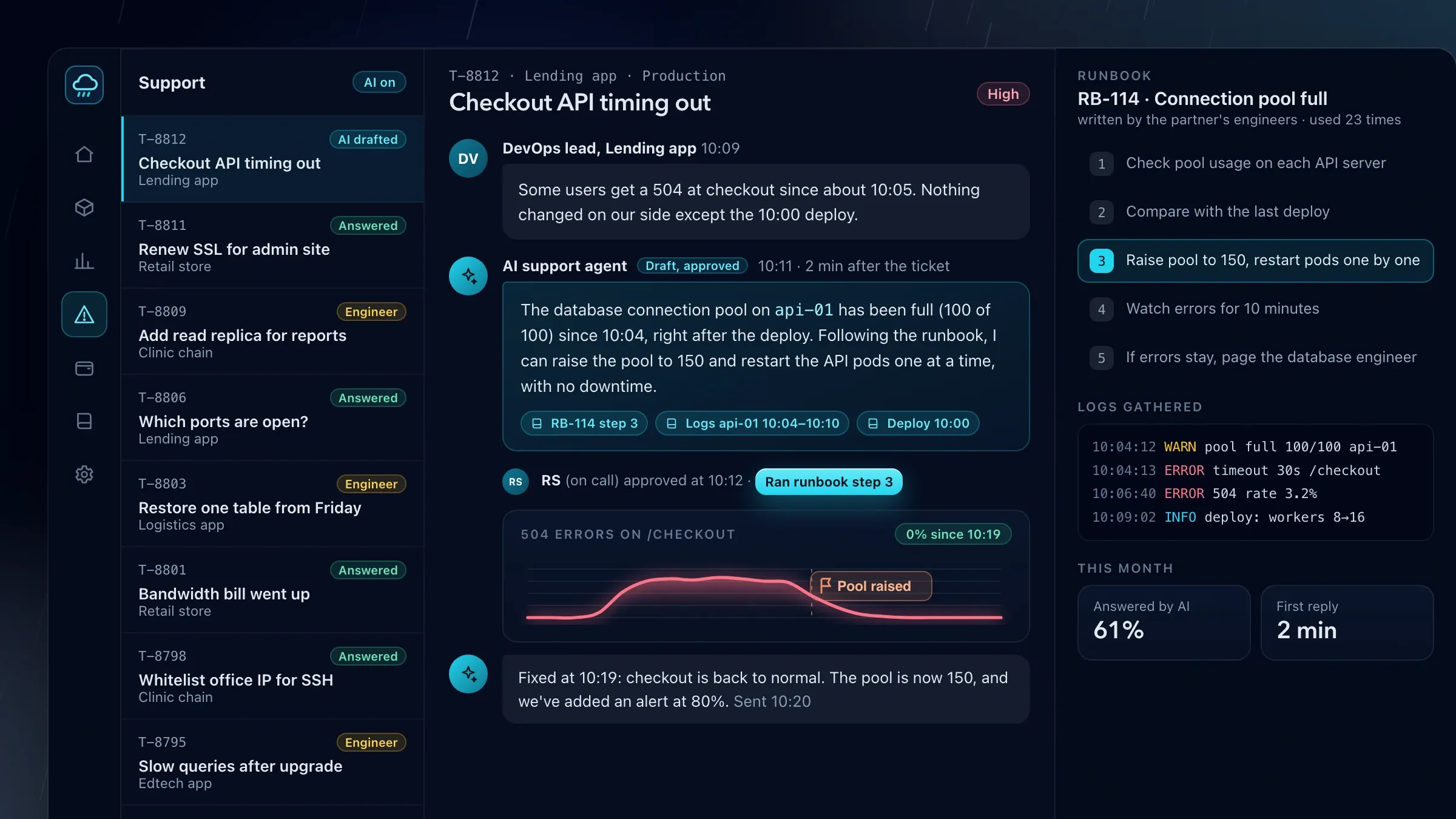 First-line support from runbooks For our managed cloud partner in Mumbai, an agent answers support tickets from the team's runbooks and passes the rest to engineers with the context gathered. View the investment
-
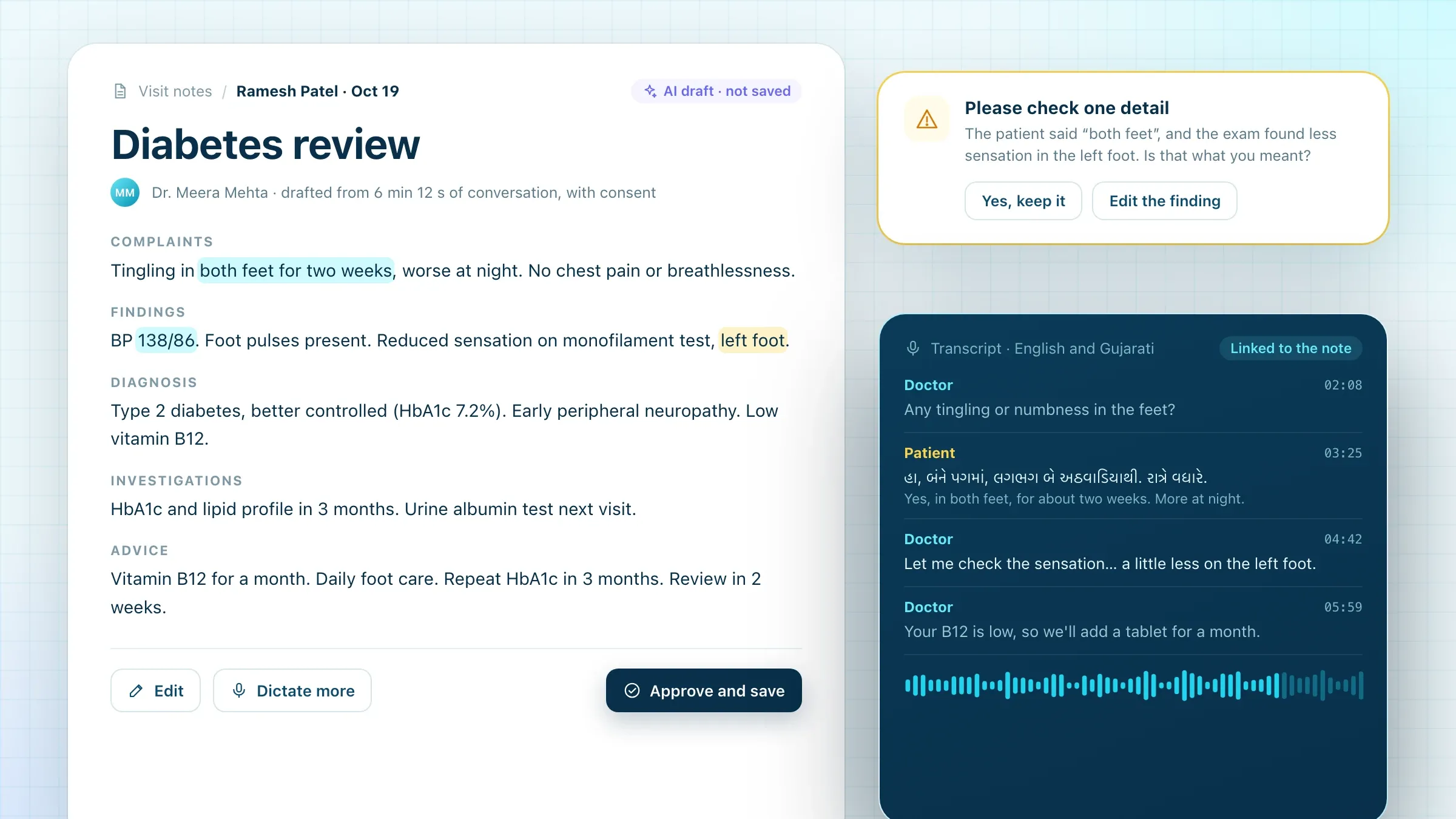 Visit notes from the doctor's voice In Pulse Clinic, our own clinic software, AI drafts the visit notes from the consultation for the doctor to check and approve. See the product
What an AI agent actually does
An AI agent is software that takes a request, finds out what it needs to know, does something about it and tells someone what it did. The request can be a WhatsApp message, an email, a scanned invoice or a change in one of your systems. The action can be a reply, a booking, an updated record or a draft waiting for approval.
What makes it an agent rather than a chatbot is that it uses tools. A chatbot can only repeat what it was given. An agent can look up an order in your store, ask the courier for the latest scan, check a customer’s history in the CRM and then decide what to say, all within rules your team has agreed.
That is also why an agent is only as good as the access and the rules around it. Most of our work is not the AI model itself but the plumbing and the judgement around it: which systems it can read, what it is allowed to change, and when it must stop and hand over to a person.
Where agents pay off first
The best first task is one that comes up many times a day, follows clear rules and is easy to check. Order and booking questions, first-line support, invoice and form entry, and follow-ups on enquiries are the usual places to start.
We look for work that people do today by switching between screens and copying information from one to another. If a person can describe the steps and the exceptions, an agent can usually do most of the cases and pass the rest on.
Tasks that rely on taste, negotiation or a long relationship are better left with your team. An agent can still help there by preparing the facts, drafting a first reply or reminding someone that a follow-up is due.
In practice the first agent often looks like this: an online store hands order and delivery questions to an agent on WhatsApp; a clinic lets an agent book, move and remind appointments; a distributor lets an agent read supplier invoices into its accounts; a software company lets an agent answer first-line tickets from its runbooks. Each starts small and grows once the team trusts it.
What an agent needs from you
An agent needs three things: access to the information it should use, the actions it is allowed to take, and rules for when to stop. We work these out with the people who do the job today, because they know the exceptions no document mentions.
Information usually means your product catalogue, prices, policies, past tickets or chats, and the records in your systems. Actions are the few things it may do on its own, such as replying, booking or updating a status. Rules cover the rest: what it must never promise, which topics always go to a person, and how it should hand over.
You also need someone on your side who owns the agent: a person who approves its rules, reads its reports and decides what it should learn next. It does not have to be a technical person; it should be someone who knows the work.
Agents that speak your customers’ language
Customers write the way they talk. In India that often means Hindi or Gujarati written in English letters, mixed with English in the same sentence. An agent can understand that and reply in the same style, or switch to the language the customer prefers.
We build agents that work in English, Hindi and Gujarati, and in other languages when a business needs them. Each language is tested on real past messages before launch, because a reply that is correct but sounds wrong still loses the customer’s trust.
The same applies to tone. An agent for a clinic should sound calm and careful; one for a fashion store can be light and quick. We write the tone into its instructions with examples from your own team.
Keeping a person in charge
A good agent knows its limits. It answers what it is sure of, drafts what a person should approve, and hands over everything else with the history, the files and a suggested next step.
Most businesses start with a person approving every reply. As the agent proves itself on real cases, you widen what it may do on its own, one kind of case at a time. Refunds, price changes, medical or legal questions and anything unusual can stay with your team for good.
Every run is logged: what came in, what the agent read, what it did and why. That record lets your team check any answer, and it is how we find and fix mistakes.
Connecting to the tools you already use
Agents work through the software you already have: your online store, CRM, accounting or ERP software, booking system, helpdesk, WhatsApp, email or Slack. Modern tools with an API connect quickly; older or in-house software may need a small bridge, which we build.
The agent gets its own account in each system, with only the permissions its task needs, never a person’s login. That way every change it makes is visible, limited and easy to switch off.
Where your own data is involved, such as product documents or past tickets, we set up a searchable store of it so the agent can find the right page and show where an answer came from.
How we measure whether it works
Before we build, we agree what success looks like for the task: how many cases the agent should handle on its own, how fast customers should get an answer, how many hand-overs are acceptable and how mistakes will be counted.
During the pilot the agent runs beside your team on real cases, and we compare its answers with what your team would have done. Launch happens only when those numbers look right to you.
After launch the same measures go into a simple monthly report, so you can see what the agent handled, where it handed over and what changed.
The report also shows what the agent could not do. Those hand-overs are the best guide to what it should learn next: a missing policy, a question nobody wrote down, or a system it still cannot reach.
Choosing the right AI model
We choose the model for each task rather than using one for everything. Large models from providers such as OpenAI and Anthropic are strong at understanding messy requests and writing natural replies; smaller or open-source models can be cheaper and faster for narrow jobs such as reading a fixed form.
We use the providers’ business services, where your data is not used to train their models, and we can keep data in the region your business needs. Because the agent’s rules, tools and tests are ours rather than the model’s, we can change the model later without rebuilding the agent.
After launch: running and improving
An agent is not finished at launch. Your products, prices and policies change, customers ask new questions, and the agent needs to keep up.
We run the agent with you: we watch the hand-overs, correct mistakes, update what it knows and keep its tests passing. When the first task is settled, we add the next one, often in the same systems, which makes each new task quicker than the last.
How we work with you
From the first call to running it
- Start
Pick the first task
We sit with the people who do the work today, choose one task worth handing to an agent, and agree how we will measure it.
- Build
Build and connect
We build the agent, connect it to your systems with the least access it needs, and write its rules with you in plain words.
- Pilot
Test it on real cases
It runs beside your team on real messages and documents. A person checks every answer before it goes out.
- Launch
Switch it on
It starts working on its own for the cases you have approved, and hands everything else to your team.
- Every month
Run and improve
We review what it handled, fix what it got wrong, update what it knows and add the next task when you are ready.
Safe and in your control
Only the access it needs
The agent gets its own account with the narrowest permissions that do the job, never a person's login.
Rules you can read
What it may answer, what it may change and what it must hand over is written in plain words and agreed with you.
A person for what matters
Refunds, prices, medical or legal questions and anything unusual go to your team, not to the agent.
Every step on record
Each run is logged with what it read, what it did and why, so any answer can be checked.
Your data stays yours
We use AI providers' business services, where your data is not used to train their models, and keep data in the region you need.
Tested before it talks to anyone
We test the agent on your own past cases before launch, and again after every change.
Time and cost
The cost depends on what the agent has to do, not on a package. Most businesses start with one task, see it work, then add the next. After the first call we send a written plan and a quote for the first agent.
How many tasks
One clear task is the quickest start. Each extra task adds rules, tests and examples.
Which systems it connects to
Modern tools with an API connect quickly. Older software can need a small bridge first.
Languages and channels
Each language and each channel (WhatsApp, website, email, phone) is tested on its own.
How much it handles
Running costs follow volume: the number of conversations or documents each month.
How much a person checks
Starting with a person approving every answer costs less to build and earns trust. You widen what it does alone over time.
Built with
Chosen for each project, never by habit
Questions and answers
11 answered
What is an AI agent?
An AI agent is software that understands a request, looks up what it needs in your systems, takes an action such as replying or updating a record, and hands anything outside its rules to a person. Unlike a scripted chatbot, it works from your real data and tools.
How is an AI agent different from a chatbot?
A chatbot follows a script and can only say what it was given. An agent can check an order, read a document or book a slot through your systems, and it decides when a person should take over.
Which task should we give an agent first?
Start with a task that comes up often, follows clear rules and is easy to check: order or booking questions, document entry, lead follow-up or first-line support. We help you choose one at the start.
Will an AI agent replace my team?
No. It takes the repetitive part of the work so your team spends its time on the cases that need judgement. Anything outside its rules goes to a person, with the context attached.
Can the agent work in Hindi, Gujarati and other languages?
Yes. An agent can understand and reply in English, Hindi, Gujarati and many other languages, and mix them the way customers do. We test each language on real messages before launch.
Which systems can an AI agent connect to?
Most tools with an API: online stores, CRMs, accounting and ERP software, booking systems, WhatsApp, email, Slack and your own databases. Older software can be connected through a small bridge we build.
Is our data safe with an AI agent?
The agent gets only the access it needs, every step is logged, and we use AI providers' business services, where your data is not used to train their models. Data can stay in the region you need.
What happens if the agent gets something wrong?
It checks facts in your systems instead of guessing, follows rules you approve and hands over when it isn't sure. Every run is logged, so a wrong answer can be traced and fixed, and we test again after every change.
How long does it take to build an AI agent?
It depends on the task and the systems involved. One clear task on modern tools is a matter of weeks; an agent that works across several systems takes longer. The written plan after the first call sets out the timeline.
Do you build AI agents for businesses outside India?
Yes. FIRELIFE Ventures works with small and mid-size businesses worldwide, from Rajkot, India, on India time, and our portfolio includes AI work for clients in the United States and India.
What happens after the agent goes live?
We run it with you: we review what it handled, correct mistakes, update what it knows when your products or policies change, and add new tasks when you are ready.
Tell us what you want to build
Write a few lines about the idea and who it is for. We reply with our questions, a first plan and how we would start.
Write to us